












![2-Azaspiro[4.5]decane-3,8-dione structure](https://static.chemtradehub.com/structs/914/914780-96-4-e94b.webp "2-Azaspiro[4.5]decane-3,8-dione structure")
Water driven adsorption of amino acids on the (101) anatase TiO2 surface: an ab initio study
Literature Information
Publication Date
2014-11-24
DOI
10.1039/C4CP03056G
Impact Factor
3.676
Authors
Giuseppe Zollo, Fabrizio Gala
View Original
Abstract
Arg, Lys and Asp amino acids are known to play a critical role in the adhesion of the RKLPDA engineered peptide on the (101) surface of the titania anatase phase. To understand their contribution to peptide adhesion, we have considered the relevant charge states due to protonation (Arg and Lys) or deprotonation (Asp) occurring in neutral water solution, and studied their adsorption on the (101) anatase TiO2 surface by ab initio total energy calculations based on density functional theory. The adsorption configurations on the hydrated surface are compared to those on the dry surface considering also the presence of the hydration shell around amino acid side-chains. This study explains how water molecules mediate the adsorption of charged amino acids showing that protonated amino acids are chemically adsorbed much more strongly than de-protonated Asp. Moreover it is shown that the polar screening of the hydration shell reduces the adsorption energy of the protonated amino acids to a small extent, thus evidencing that both Arg and Lys strongly adhere on the (101) anatase TiO2 surface in neutral water solution and that they play a major role in the adhesion of the RKLPDA peptide.
Related Literature
Molecular motors pulling cargos in the viscoelastic cytosol: how power strokes beat subdiffusion
Igor Goychuk, Vasyl O. Kharchenko
2014-06-26
Paper
DOI: 10.1039/C4CP01234H
Role of supramolecular synthons in the formation of the supramolecular architecture of molecular crystals revisited from an energetic viewpoint
Roman I. Zubatyuk, Svitlana V. Shishkina, Viktoriya V. Dyakonenko, Volodymyr V. Medviediev
2014-01-22
Paper
DOI: 10.1039/C3CP55390F
Efficiency limitations in a low band-gap diketopyrrolopyrrole-based polymer solar cell
Sebastian Albert-Seifried, Sven Hüttner, Catherine Kanimozhi, Satish Patil, Richard H. Friend
2014-02-10
Paper
DOI: 10.1039/C4CP00485J
Ab initio molecular dynamics simulations of aqueous triflic acid confined in carbon nanotubes
Jeffrey K. Clark II, Bradley F. Habenicht, Stephen J. Paddison
2014-06-20
Paper
DOI: 10.1039/C4CP01066C
Molecular collisions coming into focus
Jolijn Onvlee, Sjoerd N. Vogels, Alexander von Zastrow, David H. Parker, Sebastiaan Y. T. van de Meerakker
2014-06-13
Perspective
DOI: 10.1039/C4CP01519C
A new exchange–correlation functional free of delocalization and static correlation errors
Yu Liu, Jianzhong Wu
2014-06-23
Communication
DOI: 10.1039/C4CP01987C
Optical rotation calculations on large molecules using the approximate coupled cluster model CC2 and the resolution-of-the-identity approximation
Daniel H. Friese, Christof Hättig
2014-01-09
Paper
DOI: 10.1039/C3CP54338B
A bolaamphiphilic amino acid appended photo-switching supramolecular gel and tuning of photo-switching behaviour
Subhasish Roy, Dibakar Kumar Maiti, Shrabani Panigrahi, Durga Basak, Arindam Banerjee
2014-02-03
Paper
DOI: 10.1039/C3CP55108C
You might also like
Compound Q&A
What are the main uses of (5-Sulfamoyl-3-pyridinyl)boronic acid (CAS: 951233-61-7)?
(5-Sulfamoyl-3-pyridinyl)boronic acid is primarily used in chemical synthesis, p...
951233-61-7(5-Sulfamoyl-3-pyrid...
Compound Q&A
How is Benzyl 2-methyl-2-(methylsulfonyl)-4-pentenoate (CAS: 1942858-50-5) typically synthesized?
Benzyl 2-methyl-2-(methylsulfonyl)-4-pentenoate is typically synthesized via est...
1942858-50-5Benzyl 2-methyl-2-(m...
Compound Q&A
What precautions should be taken when handling 8-Fluoroquinolin-6-ol (CAS: 209353-22-0)?
When handling 8-Fluoroquinolin-6-ol (CAS: 209353-22-0), it is important to use p...
209353-22-08-Fluoroquinolin-6-o...
Compound Q&A
What are the physical and chemical properties of 1,3-Dibromo-5-(2-methyl-2-propanyl)benzene (CAS: 129316-09-2)?
1,3-Dibromo-5-(2-methyl-2-propanyl)benzene (CAS: 129316-09-2) is a crystalline c...
129316-09-21,3-Dibromo-5-(2-met...
Compound Q&A
What industries use Ethyl 7-chloro-4-oxo-1-(1,3-thiazol-2-yl)-1,4-dihydro-1,8-naphthyridine-3-carboxylate (CAS: 174726-87-5)?
Ethyl 7-chloro-4-oxo-1-(1,3-thiazol-2-yl)-1,4-dihydro-1,8-naphthyridine-3-carbox...
174726-87-5Ethyl 7-chloro-4-oxo...
Compound Q&A
What precautions should be taken when handling Delta-7-Avenasterol (CAS: 23290-26-8)?
When handling Delta-7-Avenasterol (CAS: 23290-26-8), it is important to wear app...
23290-26-8Delta-7-Avenasterol
Compound Q&A
What precautions should be taken when handling N-({(5R)-3-[3-Fluoro-4-(4-morpholinyl)phenyl]-2-oxo-1,3-oxazolidin-5-yl}methyl)acetamide (CAS: 872992-20-6)?
Proper handling involves the use of personal protective equipment such as gloves...
872992-20-6N-({(5R)-3-[3-Fluoro...
Compound Q&A
What precautions should be taken when handling 2-Methyl-2-proanyl 4-[(2-aminophenyl)amino]-1-piperidinecarboxylate (CAS: 79099-00-6)?
When handling 2-Methyl-2-proanyl 4-[(2-aminophenyl)amino]-1-piperidinecarboxylat...
79099-00-62-Methyl-2-propanyl ...
Compound Q&A
What is N-Methyl-4-chlorobenzylamine hydrochloride (CAS: 65542-24-7)?
N-Methyl-4-chlorobenzylamine hydrochloride (CAS: 65542-24-7) is a organic compou...
65542-24-7N-Methyl-4-chloroben...
Compound Q&A
Is [2-(Dodecyloxy)ethoxy]acetic acid (CAS: 27306-90-7) safe?
[2-(Dodecyloxy)ethoxy]acetic acid (CAS: 27306-90-7) is generally considered safe...
27306-90-7[2-(Dodecyloxy)ethox...
Source Journal
Physical Chemistry Chemical Physics

CiteScore:
5.5
Self-citation Rate:
10.3%
Articles per Year:
3036
Physical Chemistry Chemical Physics (PCCP) is an international journal co-owned by 19 physical chemistry and physics societies from around the world. This journal publishes original, cutting-edge research in physical chemistry, chemical physics and biophysical chemistry. To be suitable for publication in PCCP, articles must include significant innovation and/or insight into physical chemistry; this is the most important criterion that reviewers and Editors will judge against when evaluating submissions. The journal has a broad scope and welcomes contributions spanning experiment, theory, computation and data science. Topical coverage includes spectroscopy, dynamics, kinetics, statistical mechanics, thermodynamics, electrochemistry, catalysis, surface science, quantum mechanics, quantum computing and machine learning. Interdisciplinary research areas such as polymers and soft matter, materials, nanoscience, energy, surfaces/interfaces, and biophysical chemistry are welcomed if they demonstrate significant innovation and/or insight into physical chemistry. Joined experimental/theoretical studies are particularly appreciated when complementary and based on up-to-date approaches.
Recommended Compounds
![2-Methyl-2-propanyl 4-oxo-3,9-diazabicyclo[4.2.1]nonane-9-carboxylate structure](https://static.chemtradehub.com/structs/131/1312456-05-5-9a15.webp "2-Methyl-2-propanyl 4-oxo-3,9-diazabicyclo[4.2.1]nonane-9-carboxylate structure")
2-Methyl-2-propanyl 4-oxo-3,9-diazabicyclo[4.2.1]nonane-9-carboxylate
CAS Number:
1312456-05-5
Molecular Formula:
C12H20N2O3
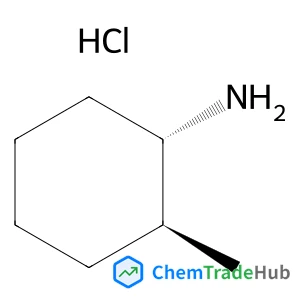
(1R,2R)-2-Methylcyclohexanamine hydrochloride (1:1)
CAS Number:
39558-31-1
Molecular Formula:
C7H16ClN
Recommended Suppliers







Disclaimer
This page provides academic journal information for reference and research purposes only. We are not affiliated with any journal publishers and do not handle publication submissions. For publication-related inquiries, please contact the respective journal publishers directly.
If you notice any inaccuracies in the information displayed, please contact us at support@chemtradehub.com. We will promptly review and address your concerns.