


Influence of various nanoparticle shapes on the interfacial chain mobility: a molecular dynamics simulation
Literature Information
Publication Date
2014-08-19
DOI
10.1039/C4CP03019B
Impact Factor
3.676
Authors
Yangyang Gao, Jianxiang Shen, Youping Wu
View Original
Abstract
To fully understand the polymer–filler interfacial interaction mechanism, we use a coarse-grained molecular dynamics simulation to mainly investigate the interfacial dynamic properties by tuning the polymer–filler interaction, temperature, chain length, volume fraction of filler, and size and shape of filler. The polymer beads around the filler exhibit an obvious layering behavior and a gradient of polymer dynamics is observed for systems filled with three kinds of fillers (spherical, rod-like and sheet-like). By analyzing the dynamics of the interfacial beads in the first adsorbed layer, we find that the mobility of interfacial beads becomes greater at lower polymer–filler interaction strength and higher temperature. The adsorption/desorption dynamics of interfacial beads decreases with the increase of the chain length, and then becomes nearly unchanged when the chain length exceeds the entanglement molecular weight. It is found that the influence of the different size of nanospheres on the mobility of interfacial beads is just induced by the curvature. However, for systems filled with nanorods and nanosheets, besides the curvature, the force exerted on the polymer beads also plays an important role. For systems filled with three kinds of fillers, the mobility of interfacial beads is the slowest for the nanosheet filled system and only in this case the “glassy layer” exists for strongly attractive interfacial interaction. By comparing the dynamics of the adsorbed polymer beads for three different shapes of filler, it is concluded that it is the total force exerted on the polymer beads by the filler that determines the mobility of the interfacial beads. In short, this work could provide valuable information on the fundamental understanding of polymer–filler interfacial behavior, especially for systems filled with fillers of different shapes.
Recommended Journals

Green Chemistry

Advanced Engineering Materials

Angewandte Chemie International Edition

Current Pharmaceutical Biotechnology

Physical Chemistry Chemical Physics

Photochemical & Photobiological Sciences

European Journal of Organic Chemistry

Environmental Toxicology and Pharmacology

Journal of Medical Biochemistry

Coloration Technology
Related Literature
Huperzine alkaloids: forty years of total syntheses
Lili Song
2023-10-11
Review Article
DOI: 10.1039/D3NP00029J
Ligand-modified eggshells for rapid naked-eye detection and removal of trace level Ni2+ ions
P. Rosaiah, S. Vadivel, Kalaivani Dayanidhi, Mohammad Rezaul Karim, Ibrahim A. Alnaser, Sambasivam Sangaraju, M. Dhananjaya, Sang Woo Joo
2024-01-02
Paper
DOI: 10.1039/D3NJ05321K
Recent advances of hydrogels as smart dressings for diabetic wounds
Xu Wang, Yuhan Yang, Weifeng Zhao, Zhou Zhu, Xibo Pei
2024-01-11
Review Article
DOI: 10.1039/D3TB02355A
A phenylboronic acid-based smart photonic crystal hydrogel sensor for colorimetric detection of glucose
Jingya Wen, Xi Wang
2023-12-26
Paper
DOI: 10.1039/D3NJ04656G
Multifunctional underwater superoleophobic cellulose-based composite aerogel with oil/water separation, dye adsorption, and antibacterial activities
Zhen Zhang, Linyan Zhao, Lin Cui, DongMei Li, Xing Tian, Zhiyong Liu, Shenglin Liu
2023-12-15
Paper
DOI: 10.1039/D3NJ05042D
Microporous organic nanoparticles bearing tri-Zn macrocycles: heterogeneous catalysts for the conversion of biomass-derived furan esters to polymer platforms
June Young Jang, Gang Min Lee, Jong Doo Lee, Seung Uk Son
2023-10-20
Communication
DOI: 10.1039/D3TA04797K
Removal of total chromium in wastewater via simultaneous photocatalysis and adsorption using calcium silicate hydrate-based composites
Min Liu, Qi Liu, Xue-Ting Jin, Ya-Chen Zou, Di-Ning Li, Pan Feng, Yang-Hui Luo
2023-10-19
Paper
DOI: 10.1039/D3TA05384A
Ionic plastic crystals and ionic liquids containing quaternary cations with alkenyl substituents: chemical phase transformations by bromine vapor
Yosuke Nakazono, Ryota Inoue, Ryo Sumitani
2024-01-08
Paper
DOI: 10.1039/D3NJ05633C
Mechanistic understanding of 3d-metal phthalocyanine catalysts: heterostructure regulation of dz2 orbitals for efficient CO2 reduction
Jiayong Xiao, Hao Dong, Hui Zhang, Haolan Yang, Ming Qiu, Ying Yu
2023-10-24
Paper
DOI: 10.1039/D3TA05834D
You might also like
Compound Q&A
How should waste containing N-Methoxy-N-methyl-1,3-thiazole-5-carboxamide (CAS: 898825-89-3) be handled?
Waste containing N-Methoxy-N-methyl-1,3-thiazole-5-carboxamide (CAS: 898825-89-3...
898825-89-3N-Methoxy-N-methyl-1...
Compound Q&A
How should N-(4-Biphenylyl)dibenzo[b,d]furan-4-amine (CAS: 1318338-47-4) be stored?
N-(4-Biphenylyl)dibenzo[b,d]furan-4-amine should be stored in a tightly sealed c...
1318338-47-4N-(4-Biphenylyl)dibe...
Compound Q&A
What is the market or research trend for 3-Acetamido-5-amino-2,4,6-triiodobenzoic acid (CAS: 1713-07-1)?
The market for 3-Acetamido-5-amino-2,4,6-triiodobenzoic acid (CAS: 1713-07-1) is...
1713-07-13-Acetamido-5-amino-...
Compound Q&A
How should Benzyl 2-O-acetyl-3,4,6-tri-O-benzyl-beta-D-galactopyranoside (CAS: 61820-03-9) be stored?
Benzyl 2-O-acetyl-3,4,6-tri-O-benzyl-beta-D-galactopyranoside (CAS: 61820-03-9) ...
61820-03-9Benzyl 2-O-acetyl-3,...
Compound Q&A
What regulatory guidelines apply to 2-Ethylpiperazine dihydrochloride (CAS: 438050-52-3)?
2-Ethylpiperazine dihydrochloride (CAS: 438050-52-3) is regulated under the Glob...
438050-52-32-Ethylpiperazine di...
Compound Q&A
What regulatory guidelines apply to 1,1'-[1,3-Phenylenebis(methylene)]bis(3-methyl-1H-pyrrole-2,5-dione) (CAS: 119462-56-5)?
1,1'-[1,3-Phenylenebis(methylene)]bis(3-methyl-1H-pyrrole-2,5-dione) (CAS: 11946...
119462-56-51,1'-[1,3-Phenyleneb...
Compound Q&A
Are there alternatives to 5-Fluoro-2-(1-pyrrolidinyl)pyridine (CAS: 1287217-79-1) in synthesis?
Several alternatives can be used in the synthesis of 5-Fluoro-2-(1-pyrrolidinyl)...
1287217-79-15-Fluoro-2-(1-pyrrol...
Compound Q&A
What precautions should be taken when handling 1-((2R,3R,4R,5R)-5-((bis(4-methoxyphenyl)(phenyl)methoxy)methyl)-4-hydroxy-3-methoxytetrahydrofuran-2-yl)-5-methylpyrimidine-2,4(1H,3H)-dione (CAS: 153631-19-7)?
Proper personal protective equipment (PPE) must be worn when handling this compo...
153631-19-71-((2R,3R,4R,5R)-5-(...
Compound Q&A
What precautions should be taken when handling 6-Bromoimidazo[1,2-a]pyridin-8-amine (CAS: 676371-00-9)?
When handling 6-Bromoimidazo[1,2-a]pyridin-8-amine, it is important to wear appr...
676371-00-96-Bromoimidazo[1,2-a...
Compound Q&A
Are there alternatives to (2S,4R)-4-(4-Nitrobenzyl)pyrrolidine-2-carboxylic acid hydrochloride (CAS: 1049740-22-8) in synthesis?
Alternatives to (2S,4R)-4-(4-Nitrobenzyl)pyrrolidine-2-carboxylic acid hydrochlo...
1049740-22-8(2S,4R)-4-(4-Nitrobe...
Source Journal
Physical Chemistry Chemical Physics
CiteScore:
5.5
Self-citation Rate:
10.3%
Articles per Year:
3036
Physical Chemistry Chemical Physics (PCCP) is an international journal co-owned by 19 physical chemistry and physics societies from around the world. This journal publishes original, cutting-edge research in physical chemistry, chemical physics and biophysical chemistry. To be suitable for publication in PCCP, articles must include significant innovation and/or insight into physical chemistry; this is the most important criterion that reviewers and Editors will judge against when evaluating submissions. The journal has a broad scope and welcomes contributions spanning experiment, theory, computation and data science. Topical coverage includes spectroscopy, dynamics, kinetics, statistical mechanics, thermodynamics, electrochemistry, catalysis, surface science, quantum mechanics, quantum computing and machine learning. Interdisciplinary research areas such as polymers and soft matter, materials, nanoscience, energy, surfaces/interfaces, and biophysical chemistry are welcomed if they demonstrate significant innovation and/or insight into physical chemistry. Joined experimental/theoretical studies are particularly appreciated when complementary and based on up-to-date approaches.
Recommended Compounds
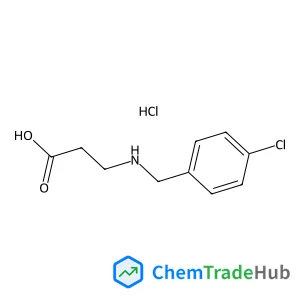
N-(4-Chlorobenzyl)-beta-alanine hydrochloride (1:1)
CAS Number:
1172479-10-5
Molecular Formula:
C10H13Cl2NO2
Recommended Suppliers





Disclaimer
This page provides academic journal information for reference and research purposes only. We are not affiliated with any journal publishers and do not handle publication submissions. For publication-related inquiries, please contact the respective journal publishers directly.
If you notice any inaccuracies in the information displayed, please contact us at support@chemtradehub.com. We will promptly review and address your concerns.