












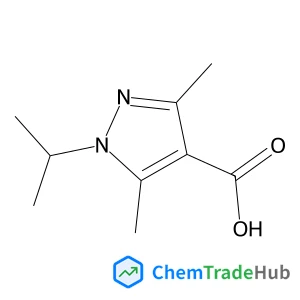
1-isopropyl-3,5-dimethyl-1H-pyrazole-4-carboxylic acid
CAS Number:
1007542-01-9
Molecular Formula:
C9H14N2O2
Stefano Protti, Angelo Albini, Nick Serpone
The application of photocatalysis in environment remediation as well as in the generation of useful fuels from the reduction of water (hydrogen) and of carbon dioxide (methanol, carbon monoxide and/or methane) has been investigated largely in the last four decades. A significant part (12–13%) of the literature on the generation of such fuels is found in patents. Accordingly, the present article presents a selection of the patent literature on the theme. Photocatalysts, whether pure or doped, solid solutions or composites, reported in patents are reviewed along with the corresponding preparative methods and the photocatalytic performance. The absorption of light by such materials has been extended toward the red side of the spectrum, so that a better use of solar irradiation has been obtained, but the expected improvement of the catalytic effect has not always been achieved. The causes of these results and the way for improving the performance in the various steps of the process (e.g. avoiding charge recombination or catalyst corrosion) have been documented. The correct use of the term water splitting and the fundamentals of photochemical hydrogen evolution in the presence of a sacrificial electron donor (e.g., alcohols) are discussed. Quantitative data about the amount of hydrogen evolved or carbon-based fuels produced are indicated whenever available.
Chunlei Wang, Qi Wang, Min Zhong, Xianwen Kan
DOI: 10.1039/C6AN01294A
Nacéra Aboud, Davide Ferraro, Myriam Taverna, Stéphanie Descroix, Claire Smadja, N. Thuy Tran
DOI: 10.1039/C6AN00821F
Feiran Hao, Jiabin Li, Rui Zhai, Fenglong Jiao, Yangjun Zhang, Xiaohong Qian
DOI: 10.1039/C6AN00780E
Yih Hong Lee, Jonathan Yong Chew Ho, Yijie Yang, Xing Yi Ling
DOI: 10.1039/C6AN01239F
Mengyue Gao, Wei Fang, Jiaqiang Ren, Aiguo Shen, Jiming Hu
DOI: 10.1039/C6AN00880A
Christopher B. Lietz, Zhengwei Chen, Chang Yun Son, Xueqin Pang, Qiang Cui
DOI: 10.1039/C5AN00835B
K. Faulds, D. Graham
DOI: 10.1039/C6AN00911E
Huimin Sui, Yue Wang, Xiaolei Zhang, Xiaolei Wang, Weina Cheng, Hongyang Su, Xu Wang, Xiaoying Sun, Xiao Xia Han, Bing Zhao, Yukihiro Ozaki
DOI: 10.1039/C6AN00884D
Guijie Zhu, Liangliang Sun, Norman J. Dovichi
DOI: 10.1039/C6AN01140C
Qiang Su, Gilbert Nöll
DOI: 10.1039/C6AN01129B
When handling 2-Chloro-1,2-bis(4-methylphenyl)ethanone (CAS: 71193-32-3), it is ...
4-Ethoxy-3-(5-methyl-4-oxo-7-propyl-1,4-dihydroimidazo[5,1-f][1,2,4]triazin-2-yl...
Methyl 3-Oxo-4-Androsten-17-Carboxylate (CAS: 2681-55-2) should be stored in a c...
(R)-3-Amino-4-(3-hexylphenylamino)-4-oxobutylphosphonic acid is primarily used i...
2-Methyl-2-propanyl 3-amino-3-carbamoyl-1-azetidinecarboxylate (CAS: 1254120-14-...
There are alternative reagents that can be used in synthesis instead of (E)-4-(t...
[2-(3-Chlorophenyl)-1,3-thiazol-4-yl]methanol (CAS: 121202-20-8) is a crystallin...
The market and research trends for Methyl (2S)-[(4S)-2,2-dimethyl-1,3-dioxolan-4...
The market for 1-Bromo-2-isocyanatoethane (CAS: 42865-19-0) is driven by its use...
4-Nitro-D-phenylalanine hydrochloride (CAS: 147065-06-3) is primarily used in re...

Physical Chemistry Chemical Physics (PCCP) is an international journal co-owned by 19 physical chemistry and physics societies from around the world. This journal publishes original, cutting-edge research in physical chemistry, chemical physics and biophysical chemistry. To be suitable for publication in PCCP, articles must include significant innovation and/or insight into physical chemistry; this is the most important criterion that reviewers and Editors will judge against when evaluating submissions. The journal has a broad scope and welcomes contributions spanning experiment, theory, computation and data science. Topical coverage includes spectroscopy, dynamics, kinetics, statistical mechanics, thermodynamics, electrochemistry, catalysis, surface science, quantum mechanics, quantum computing and machine learning. Interdisciplinary research areas such as polymers and soft matter, materials, nanoscience, energy, surfaces/interfaces, and biophysical chemistry are welcomed if they demonstrate significant innovation and/or insight into physical chemistry. Joined experimental/theoretical studies are particularly appreciated when complementary and based on up-to-date approaches.
![6-Nitro-2-(4-nitrophenyl)imidazo[1,2-a]pyridine structure](https://static.chemtradehub.com/structs/118/118000-57-0-cb82.webp "6-Nitro-2-(4-nitrophenyl)imidazo[1,2-a]pyridine structure")
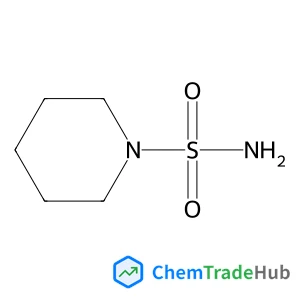
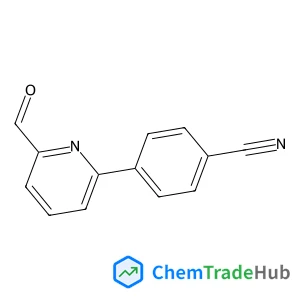
![4-[(2-Oxo-1,2,3,4-tetrahydroquinolin-7-yl)oxy]butanoic acid structure](https://static.chemtradehub.com/structs/588/58899-27-7-1f86.webp "4-[(2-Oxo-1,2,3,4-tetrahydroquinolin-7-yl)oxy]butanoic acid structure")







