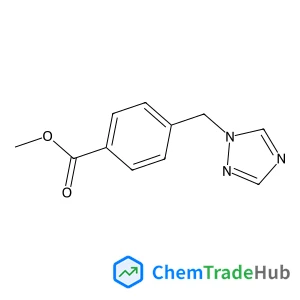
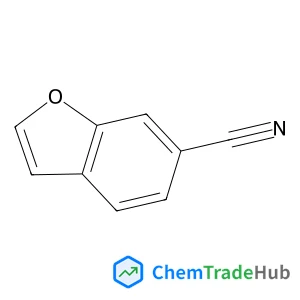
![2-Methyl-2-propanyl [1-(3-nitro-2-pyridinyl)-4-piperidinyl]carbamate structure](https://static.chemtradehub.com/structs/833/833452-36-1-7af5.webp "2-Methyl-2-propanyl [1-(3-nitro-2-pyridinyl)-4-piperidinyl]carbamate structure")
2-Methyl-2-propanyl [1-(3-nitro-2-pyridinyl)-4-piperidinyl]carbamate
CAS Number:
833452-36-1
Molecular Formula:
C15H22N4O4
Guijie Zhu, Liangliang Sun, Norman J. Dovichi
Capillary zone electrophoresis (CZE)-electrospray ionization (ESI)-mass spectrometry (MS) is an interesting complimentary technique to reversed phase liquid chromatography (RPLC)-ESI-MS for proteomics research. However, the low sample loading capacity of CZE (typically a few nL) can limit its application for large-scale proteomics. A number of on-line sample preconcentration methods have been developed to increase sample loading volumes. This review considers the dynamic pH junction as a simple on-line sample preconcentration method; this method is well suited for amphiprotic analytes. In the pH junction, these analytes are suspended in a basic buffer, injected by pressure into the capillary, and separated in an acidic background electrolyte, with no changes in either CZE-MS operations or instrumentation. We have demonstrated that the dynamic pH junction method can improve the sample loading volume to sub-μL volumes without significant loss of separation capacity for bottom-up proteomic analysis. The dynamic pH junction based CZE-ESI-MS system has been applied for a number of complex biological samples, including the E. coli proteome, impurities in recombinant antibody therapeutics, and the characterization of the phosphoproteome from a human cell line.
L. Bonnet, P. Larrégaray, J.-C. Rayez
DOI: 10.1039/B700906B
Matthias Batzill, Ulrike Diebold
DOI: 10.1039/B617710G
Nam Joon Kim, Hyuk Kang, Young Dong Park, Seong Keun Kim
DOI: 10.1039/B313467A
P. G. Etchegoin, M. Meyer, E. C. Le Ru
DOI: 10.1039/B704013J
DOI: 10.1039/B700960G
Stephen King, Clive Washington, Richard Heenan
DOI: 10.1039/B414175J
Bertrand Retail, Stuart J. Greaves, Julie K. Pearce, Rebecca A. Rose, Andrew J. Orr-Ewing
DOI: 10.1039/B704463A
When handling 2-Chloro-1,2-bis(4-methylphenyl)ethanone (CAS: 71193-32-3), it is ...
4-Ethoxy-3-(5-methyl-4-oxo-7-propyl-1,4-dihydroimidazo[5,1-f][1,2,4]triazin-2-yl...
Methyl 3-Oxo-4-Androsten-17-Carboxylate (CAS: 2681-55-2) should be stored in a c...
(R)-3-Amino-4-(3-hexylphenylamino)-4-oxobutylphosphonic acid is primarily used i...
2-Methyl-2-propanyl 3-amino-3-carbamoyl-1-azetidinecarboxylate (CAS: 1254120-14-...
There are alternative reagents that can be used in synthesis instead of (E)-4-(t...
[2-(3-Chlorophenyl)-1,3-thiazol-4-yl]methanol (CAS: 121202-20-8) is a crystallin...
The market and research trends for Methyl (2S)-[(4S)-2,2-dimethyl-1,3-dioxolan-4...
The market for 1-Bromo-2-isocyanatoethane (CAS: 42865-19-0) is driven by its use...
4-Nitro-D-phenylalanine hydrochloride (CAS: 147065-06-3) is primarily used in re...

Analyst publishes analytical and bioanalytical research that reports premier fundamental discoveries and inventions, and the applications of those discoveries, unconfined by traditional discipline barriers.
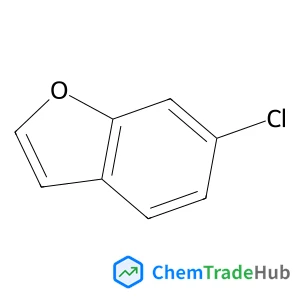
![Ethyl 2-[(3-bromo-4-pyridinyl)sulfanyl]-2-methylpropanoate structure](https://static.chemtradehub.com/structs/135/1352794-86-5-a8aa.webp "Ethyl 2-[(3-bromo-4-pyridinyl)sulfanyl]-2-methylpropanoate structure")