












Significant evidence of C⋯O and C⋯C long-range contacts in several heterodimeric complexes of CO with CH3–X, should one refer to them as carbon and dicarbon bonds!
Literature Information
Publication Date
2014-06-06
DOI
10.1039/C4CP01775G
Impact Factor
3.676
Authors
Pradeep R. Varadwaj, Arpita Varadwaj, Bih-Yaw Jin
View Original
Abstract
Noncovalent interactions in 18 weakly bound binary complexes formed between either of the two end-on orientations of the CO molecule and the methylated carbon positive σ-hole associated with the hydrophobic part of the CH3–X molecules are exploited using the density functional theory to examine the physical chemistry of the recently introduced ‘carbon bonds’ (Phys. Chem. Chem. Phys., 2013, 15, 14377), where X = –NO2, –CN, –F, –Cl, –Br, –OH, –CF3, –CCl3, and –NH2. The two important types of interactions are identified as C⋯O and C⋯C, the latter has probably never studied before, and are found to be stabilized by charge-transfer delocalizations between the electron-acceptor and -donor natural bond orbitals of the interacting partners involved, unveiled using natural bond orbital analysis. Application of atoms in molecular theory revealed preferable quantum mechanical exchange–correlation energy channels and (3, −1) bond critical points (bcps) between the atoms of noncovalently bonded pairs in these complexes, in excellent agreement with the results of the noncovalent-interaction reduced-density-gradient (NCI-RDG) theory that revealed expected isosurfaces and troughs in the low density region of the RDG vs. sign(λ2)ρ plots. The dependencies of the C⋯O and C⋯C bcp charge densities on their corresponding local energy densities, as well as on their corresponding bond electron delocalization indices are found to exhibit nontrivial roles of these topological descriptors to explain the stabilities of the investigated binary complexes. Moreover, the vibrational red- and blue-shifts in the CO bond stretching frequencies, and concomitant elongations and contractions of the corresponding bond lengths, both with respect to the monomer values, are observed upon the formation of the C⋯O- and C⋯C-bonded complexes, respectively. The increase and decrease in the complex dipole moments, relative to the sum of their respective monomer values, are found to be a characteristic that separates the aforementioned red- and blue-shifted interactions. In analogy with dihydrogen bonding, as well as that with the charge and electrostatic surface potential model descriptions, we suggest the C⋯C interactions to be referred to as dicarbon bonds.
Related Literature
Effects of the Hofmeister series of sodium salts on the solvent properties of water
L. A. Ferreira, V. N. Uversky, B. Y. Zaslavsky
2017-01-09
Paper
DOI: 10.1039/C6CP08214A
A theoretical study of the potential energy surfaces for the double proton transfer reaction of model DNA base pairs
Chaozheng Li, Yonggang Yang, Donglin Li, Yufang Liu
2017-01-17
Paper
DOI: 10.1039/C6CP07716A
Correction: First-principles analysis of the spectroscopic limited maximum efficiency of photovoltaic absorber layers for CuAu-like chalcogenides and silicon
Marnik Bercx, Nasrin Sarmadian, Rolando Saniz, Bart Partoens, Dirk Lamoen
2017-02-10
Correction
DOI: 10.1039/C7CP90033C
Anions coordinating anions: analysis of the interaction between anionic Keplerate nanocapsules and their anionic ligands
Josep Bonet Avalos
2017-01-25
Paper
DOI: 10.1039/C6CP08511C
Novel high-temperature ferroelectric domain morphology in PbTiO3 ultrathin films
Dorothy M. Duffy
2017-01-13
Paper
DOI: 10.1039/C6CP08157F
Room-temperature ferromagnetism in the two-dimensional layered Cu2MoS4 nanosheets
Ke Zhang, Rashid Khan, Hongyan Guo, Irfan Ali, Xiuling Li, Yunxiang Lin, Haiping Chen, Wensheng Yan, Xiaojun Wu, Li Song
2016-12-12
Communication
DOI: 10.1039/C6CP07270D
Fast and accurate MAS–DNP simulations of large spin ensembles
Shimon Vega
2017-01-05
Paper
DOI: 10.1039/C6CP07881H
Role of polar side chains in Li+ coordination and transport properties of polyoxetane-based polymer electrolytes
Ryansu Sai, Kazuhide Ueno, Kenta Fujii, Yohei Nakano, Naho Shigaki, Hiromori Tsutsumi
2017-01-23
Paper
DOI: 10.1039/C6CP08386B
Charge transport in organic donor–acceptor mixed-stack crystals: the role of nonlocal electron–phonon couplings
Lingyun Zhu, Hua Geng, Yuanping Yi, Zhixiang Wei
2017-01-06
Paper
DOI: 10.1039/C6CP07417K
You might also like
Compound Q&A
What are the main uses of (5-Sulfamoyl-3-pyridinyl)boronic acid (CAS: 951233-61-7)?
(5-Sulfamoyl-3-pyridinyl)boronic acid is primarily used in chemical synthesis, p...
951233-61-7(5-Sulfamoyl-3-pyrid...
Compound Q&A
How is Benzyl 2-methyl-2-(methylsulfonyl)-4-pentenoate (CAS: 1942858-50-5) typically synthesized?
Benzyl 2-methyl-2-(methylsulfonyl)-4-pentenoate is typically synthesized via est...
1942858-50-5Benzyl 2-methyl-2-(m...
Compound Q&A
What precautions should be taken when handling 8-Fluoroquinolin-6-ol (CAS: 209353-22-0)?
When handling 8-Fluoroquinolin-6-ol (CAS: 209353-22-0), it is important to use p...
209353-22-08-Fluoroquinolin-6-o...
Compound Q&A
What are the physical and chemical properties of 1,3-Dibromo-5-(2-methyl-2-propanyl)benzene (CAS: 129316-09-2)?
1,3-Dibromo-5-(2-methyl-2-propanyl)benzene (CAS: 129316-09-2) is a crystalline c...
129316-09-21,3-Dibromo-5-(2-met...
Compound Q&A
What industries use Ethyl 7-chloro-4-oxo-1-(1,3-thiazol-2-yl)-1,4-dihydro-1,8-naphthyridine-3-carboxylate (CAS: 174726-87-5)?
Ethyl 7-chloro-4-oxo-1-(1,3-thiazol-2-yl)-1,4-dihydro-1,8-naphthyridine-3-carbox...
174726-87-5Ethyl 7-chloro-4-oxo...
Compound Q&A
What precautions should be taken when handling Delta-7-Avenasterol (CAS: 23290-26-8)?
When handling Delta-7-Avenasterol (CAS: 23290-26-8), it is important to wear app...
23290-26-8Delta-7-Avenasterol
Compound Q&A
What precautions should be taken when handling N-({(5R)-3-[3-Fluoro-4-(4-morpholinyl)phenyl]-2-oxo-1,3-oxazolidin-5-yl}methyl)acetamide (CAS: 872992-20-6)?
Proper handling involves the use of personal protective equipment such as gloves...
872992-20-6N-({(5R)-3-[3-Fluoro...
Compound Q&A
What precautions should be taken when handling 2-Methyl-2-proanyl 4-[(2-aminophenyl)amino]-1-piperidinecarboxylate (CAS: 79099-00-6)?
When handling 2-Methyl-2-proanyl 4-[(2-aminophenyl)amino]-1-piperidinecarboxylat...
79099-00-62-Methyl-2-propanyl ...
Compound Q&A
What is N-Methyl-4-chlorobenzylamine hydrochloride (CAS: 65542-24-7)?
N-Methyl-4-chlorobenzylamine hydrochloride (CAS: 65542-24-7) is a organic compou...
65542-24-7N-Methyl-4-chloroben...
Compound Q&A
Is [2-(Dodecyloxy)ethoxy]acetic acid (CAS: 27306-90-7) safe?
[2-(Dodecyloxy)ethoxy]acetic acid (CAS: 27306-90-7) is generally considered safe...
27306-90-7[2-(Dodecyloxy)ethox...
Source Journal
Physical Chemistry Chemical Physics

CiteScore:
5.5
Self-citation Rate:
10.3%
Articles per Year:
3036
Physical Chemistry Chemical Physics (PCCP) is an international journal co-owned by 19 physical chemistry and physics societies from around the world. This journal publishes original, cutting-edge research in physical chemistry, chemical physics and biophysical chemistry. To be suitable for publication in PCCP, articles must include significant innovation and/or insight into physical chemistry; this is the most important criterion that reviewers and Editors will judge against when evaluating submissions. The journal has a broad scope and welcomes contributions spanning experiment, theory, computation and data science. Topical coverage includes spectroscopy, dynamics, kinetics, statistical mechanics, thermodynamics, electrochemistry, catalysis, surface science, quantum mechanics, quantum computing and machine learning. Interdisciplinary research areas such as polymers and soft matter, materials, nanoscience, energy, surfaces/interfaces, and biophysical chemistry are welcomed if they demonstrate significant innovation and/or insight into physical chemistry. Joined experimental/theoretical studies are particularly appreciated when complementary and based on up-to-date approaches.
Recommended Compounds
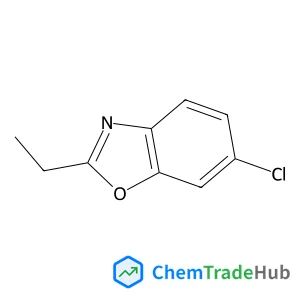
![2-Azaspiro[4.5]decane-3,8-dione structure](https://static.chemtradehub.com/structs/914/914780-96-4-e94b.webp "2-Azaspiro[4.5]decane-3,8-dione structure")
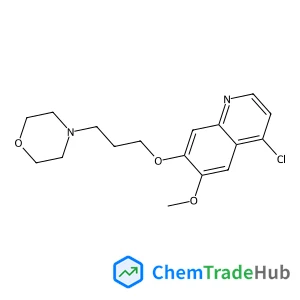
4-(3-((4-Chloro-6-methoxyquinolin-7-yl)oxy)propyl)morpholine
CAS Number:
205448-32-4
Molecular Formula:
C17H21ClN2O3
Recommended Suppliers





Disclaimer
This page provides academic journal information for reference and research purposes only. We are not affiliated with any journal publishers and do not handle publication submissions. For publication-related inquiries, please contact the respective journal publishers directly.
If you notice any inaccuracies in the information displayed, please contact us at support@chemtradehub.com. We will promptly review and address your concerns.