












Sc2S@C68: an obtuse di-scandium sulfide cluster trapped in a C2v fullerene cage
Literature Information
Publication Date
2014-05-21
DOI
10.1039/C4CP01218F
Impact Factor
3.676
Authors
Yi-Jun Guo, Bo-Chao Gao, Tao Yang, Shigeru Nagase, Xiang Zhao
View Original
Abstract
The spectrum-detected smallest sulfide clusterfullerene Sc2S@C68 has not been characterized yet. Herein, we explored a series of Sc2S@C68 species to determine which could be the most promising isomer. The results suggest that a sulfide cluster encapsulated in the C2v(6073)-C68 cage which violates the isolated pentagon rule (IPR) with two opposite pentalenes has the lowest energy and an overwhelming thermodynamic stability. Two scandium atoms coordinate with the two opposite pentalenes, leading to an obtuse Sc–S–Sc angle of 151°. The bond lengths of the two Sc–S bonds are equivalent. Frontier molecular orbital distributions exhibit substantial overlaps between metallic orbitals and cage orbitals, indicating that covalent interactions cannot be ignored, which have been unambiguously identified in terms of Mayer bond order and bonding critical point (BCP) indicator methods. Electrochemical properties as well as 13C NMR, UV-vis-NIR, and IR spectra of Sc2S@C2v(6073)-C68 have been theoretically studied to assist further experimental characterization.
Related Literature
Preparation, X-ray structure and reactivity of a stable glycosyl iodide
Jamie Bickley, Jennifer A. Cottrell, John R. Ferguson, Robert A. Field, John R. Harding, David L. Hughes, K. P. Ravindanathan Kartha, Jayne L. Law, Feodor Scheinmann, Andrew V. Stachulski
2003-05-01
Communication
DOI: 10.1039/B302629A
Construction of functional porphyrin polystyrene nano-architectures by ATRP
Femke de Loos, Irene C. Reynhout, Jeroen J. L. M. Cornelissen, Alan E. Rowan, Roeland J. M. Nolte
2004-12-01
Communication
DOI: 10.1039/B412067A
The first unequivocally ferromagnetically coupled squarato complex: origin of the ferromagnetism in an interlocked 3D Fe(ii) system
Sanjit Konar, Montserrat Corbella, Ennio Zangrando, Joan Ribas, Nirmalendu Ray Chaudhuri
2003-05-16
Communication
DOI: 10.1039/B302076B
A soluble pentacene: synthesis, EPR and electrochemical studies of 2,3,9,10-tetrakis(trimethylsilyl)pentacene‡
Hung Kay Lee, Xiao Ming Chen, Zong Wei Cai
2004-11-25
Communication
DOI: 10.1039/B411831F
Addition reactions of O-bound cyclic nickel enolates to α,β-unsaturated ketones
Juan Cámpora, Celia M. Maya, Pilar Palma, Ernesto Carmona, Claudia Graiff, Antonio Tiripicchio
2003-06-16
Communication
DOI: 10.1039/B303062H
3-Chloropropenyl pivaloate in organic synthesis: the first asymmetric catalytic entry to syn-alk-1-ene-3,4-diols
Marco Lombardo, Sebastiano Licciulli, Stefano Morganti, Claudio Trombini
2003-06-18
Communication
DOI: 10.1039/B304485H
Chiral-at-metal organolanthanides: enantioselective aminoalkene hydroamination/cyclisation with non-cyclopentadienyls
Paul N. O'Shaughnessy, Paul D. Knight, Colin Morton, Kevin M. Gillespie, Peter Scott
2003-06-18
Communication
DOI: 10.1039/B305105F
Observation of DNA transport through a single carbon nanotube channel using fluorescence microscopy
Takashi Ito, Li Sun, Richard M. Crooks
2003-05-29
Communication
DOI: 10.1039/B302511J
Syntheses of second generation, 14-membered ring β-turn mimics
Hong Boon Lee, Mookda Pattarawarapan, Sudipta Roy, Kevin Burgess
2003-06-18
Communication
DOI: 10.1039/B304454H
Unprecedented preparation of pincer bis(oxazolinyl)phenyl ligands on solid support and their use in the first heterogeneously-catalyzed enantioselective allylation of aldehydes
Avi Weissberg, Moshe Portnoy
2003-05-29
Communication
DOI: 10.1039/B301308A
You might also like
Compound Q&A
What are the main uses of (3.beta.)-3-Hydroxy-N,N-dimethyl-chol-5-en-24-amide (CAS: 79066-03-8)?
(3.beta.)-3-Hydroxy-N,N-dimethyl-chol-5-en-24-amide (CAS: 79066-03-8) is primari...
79066-03-8(3.beta.)-3-Hydroxy-...
Compound Q&A
What regulatory guidelines apply to 5-(aminomethyl)-2-methoxyphenol (CAS: 89702-89-6)?
5-(Aminomethyl)-2-methoxyphenol (CAS: 89702-89-6) is classified under GHS as a s...
89702-89-65-(aminomethyl)-2-me...
Compound Q&A
What is Thieno[2,3-c]pyridin-7(6H)-one (CAS: 28981-13-7)?
Thieno[2,3-c]pyridin-7(6H)-one (CAS: 28981-13-7) is a heterocyclic organic compo...
28981-13-7Thieno[2,3-c]pyridin...
Compound Q&A
Is 1-[(6-Methoxy-3-pyridinyl)methyl]-4-piperidinamine dihydrochloride (CAS: 1185311-28-7) safe?
1-[(6-Methoxy-3-pyridinyl)methyl]-4-piperidinamine dihydrochloride is generally ...
1185311-28-71-[(6-Methoxy-3-pyri...
Compound Q&A
What regulatory guidelines apply to [(2E)-3-Phenyl-2-propen-1-yl]phosphonic acid (CAS: 146404-58-2)?
[(2E)-3-Phenyl-2-propen-1-yl]phosphonic acid (CAS: 146404-58-2) is regulated und...
146404-58-2[(2E)-3-Phenyl-2-pro...
Compound Q&A
What regulatory guidelines apply to 6-Bromo-7-methoxyquinoline (CAS: 1620515-86-7)?
6-Bromo-7-methoxyquinoline (CAS: 1620515-86-7) falls under the scope of the Glob...
1620515-86-76-Bromo-7-methoxyqui...
Compound Q&A
What industries use (2R)-1-(1-Benzofuran-2-yl)-N-propyl-2-pentanamine (CAS: 260550-89-8)?
This compound is primarily used in the pharmaceutical industry for the developme...
260550-89-8(2R)-1-(1-Benzofuran...
Compound Q&A
What are the main uses of 1-Ethyl-7-[2-methyl-6-(4H-1,2,4-triazol-3-yl)-3-pyridinyl]-3,5-dihydropyrazino[2,3-b]pyrazin-2(1H)-one (CAS: 1228013-15-7)?
1-Ethyl-7-[2-methyl-6-(4H-1,2,4-triazol-3-yl)-3-pyridinyl]-3,5-dihydropyrazino[2...
1228013-15-71-Ethyl-7-[2-methyl-...
Compound Q&A
Are there alternatives to {5-(Acryloylamino)-2-[(dimethylamino)methyl]phenyl}boronic acid (CAS: 1217500-78-1) in synthesis?
Alternative reagents such as 2-[(dimethylamino)methyl]phenylboronic acid or rela...
1217500-78-1{5-(Acryloylamino)-2...
Compound Q&A
What is 3-(Piperidin-4-yloxy)pyridine (CAS: 310881-48-2)?
3-(Piperidin-4-yloxy)pyridine (CAS: 310881-48-2) is an organic compound with the...
310881-48-23-(Piperidin-4-yloxy...
Source Journal
Physical Chemistry Chemical Physics

CiteScore:
5.5
Self-citation Rate:
10.3%
Articles per Year:
3036
Physical Chemistry Chemical Physics (PCCP) is an international journal co-owned by 19 physical chemistry and physics societies from around the world. This journal publishes original, cutting-edge research in physical chemistry, chemical physics and biophysical chemistry. To be suitable for publication in PCCP, articles must include significant innovation and/or insight into physical chemistry; this is the most important criterion that reviewers and Editors will judge against when evaluating submissions. The journal has a broad scope and welcomes contributions spanning experiment, theory, computation and data science. Topical coverage includes spectroscopy, dynamics, kinetics, statistical mechanics, thermodynamics, electrochemistry, catalysis, surface science, quantum mechanics, quantum computing and machine learning. Interdisciplinary research areas such as polymers and soft matter, materials, nanoscience, energy, surfaces/interfaces, and biophysical chemistry are welcomed if they demonstrate significant innovation and/or insight into physical chemistry. Joined experimental/theoretical studies are particularly appreciated when complementary and based on up-to-date approaches.
Recommended Compounds
![Bis(N,N''-dimethylpiperazine)tetra[copper(I) iodide] structure](https://static.chemtradehub.com/structs/140/1401708-91-5-2b86.webp "Bis(N,N''-dimethylpiperazine)tetra[copper(I) iodide] structure")
Bis(N,N''-dimethylpiperazine)tetra[copper(I) iodide]
CAS Number:
1401708-91-5
Molecular Formula:
C12H28Cu4I4N4
![(3E)-3-[4-Hydroxy-3,5-bis(2-methyl-2-propanyl)benzylidene]dihydro-2(3H)-furanone structure](https://static.chemtradehub.com/structs/102/102271-49-8-cba7.webp "(3E)-3-[4-Hydroxy-3,5-bis(2-methyl-2-propanyl)benzylidene]dihydro-2(3H)-furanone structure")
(3E)-3-[4-Hydroxy-3,5-bis(2-methyl-2-propanyl)benzylidene]dihydro-2(3H)-furanone
CAS Number:
102271-49-8
Molecular Formula:
C19H26O3
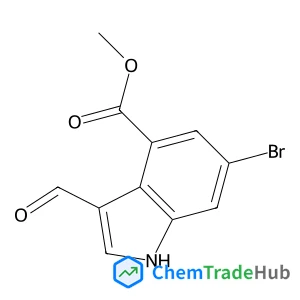
methyl 6-bromo-3-formyl-1H-indole-4-carboxylate
CAS Number:
1353636-63-1
Molecular Formula:
C11H8BrNO3
Recommended Suppliers






Disclaimer
This page provides academic journal information for reference and research purposes only. We are not affiliated with any journal publishers and do not handle publication submissions. For publication-related inquiries, please contact the respective journal publishers directly.
If you notice any inaccuracies in the information displayed, please contact us at support@chemtradehub.com. We will promptly review and address your concerns.