












![tert-butyl 8-benzyl-2,8-diazaspiro[4.5]decane-2-carboxylate structure](https://static.chemtradehub.com/structs/336/336191-16-3-bb55.webp "tert-butyl 8-benzyl-2,8-diazaspiro[4.5]decane-2-carboxylate structure")
tert-butyl 8-benzyl-2,8-diazaspiro[4.5]decane-2-carboxylate
CAS Number:
336191-16-3
Molecular Formula:
C20H30N2O2
J. Engel, H. L. Tuller
Hematite or α-Fe2O3 has emerged as a highly promising photoanode candidate for photoelectrochemical cells. While significant improvements in its performance have recently been achieved, it remains unclear why the maximum photocurrents still remain well below their theoretical predictions. Here, we report, for the first time, a detailed correlation between the electrical conductivity of undoped and 1 atom% Ti doped hematite and the conditions under which it was annealed (20 ≤ T ≤ 800 °C and 10−4 ≤ pO2 ≤ 1 atm). Hematite thin films grown by pulsed laser deposition onto sapphire single crystals were evaluated by impedance spectroscopy. Hematite's room temperature conductivity can be increased from ∼10−11 S cm−1 for undoped films by as much as nine orders of magnitude by doping with the Ti donor. Furthermore, by controlling the non-stoichiometry of Ti-doped hematite, one can tune its conductivity by up to five orders of magnitude. Depending on processing conditions, donor dopants in hematite may be compensated largely by electrons or by ionic defects (Fe vacancies). A defect model was derived to explain this phenomenon. In addition, a temperature independent value for the electron mobility of 0.01 cm2 V−1 s−1 for a donor density of 4.0 × 1020 cm−3 (1% Ti) was derived. These results highlight the importance of carefully controlling photoanode processing conditions, even when operating within the material's extrinsic dopant regime, and more generally, provide a model for the electronic properties of semiconducting metal oxide photoanodes.
Hyun Jin Yoo, Changyoon Baek, Min-Ho Lee, Junhong Min
DOI: 10.1039/C9AN02435B
Rui Xiao, Hassan Idris Abdu, Liping Wei, Tieying Wang, Shuhui Huo, Jing Chen
DOI: 10.1039/C9AN02481F
Xiang-Juan Kong, Shuang Wu, Yao Cen, Ting-Ting Chen, Ru-Qin Yu, Xia Chu
DOI: 10.1039/C6AN00738D
Ai-Li Sun, Qing-An Qi
DOI: 10.1039/C6AN00696E
Ziyin Yang, Xiaohui Zheng, Zhi Li, Jianbin Zheng
DOI: 10.1039/C6AN00640J
I. Martínez-Rovira, S. Brons, I. Yousef
DOI: 10.1039/C9AN02350J
Soham Samanta, Barun Kumar Datta, Madhurima Boral, Abhijit Nandan, Gopal Das
DOI: 10.1039/C6AN00657D
When handling lithium chloride hydrate (1:1:1) (CAS: 16712-20-2), it is importan...
4-(4H-1,2,4-Triazol-4-yl)piperidine is generally considered safe for use in phar...
Waste containing 1,3-Thiazole-2-carboxamide (CAS: 16733-85-0) should be collecte...
5-(Difluoromethyl)-2-fluorobenzonitrile (CAS: 934175-58-3) is subject to regulat...
Methyl 3-acetamido-2-thiophenecarboxylate can be synthesized by the reaction of ...
4-Isoquinolinecarbonitrile is a chemical compound with the CAS number 34846-65-6...
Store Methyl 1H-1,2,3-triazole-4-carboxylate (CAS: 877309-59-6) in a cool, dry p...
6-Bromo[1,3]thiazolo[5,4-b]pyridin-2-amine (CAS: 1160791-13-8) is subject to the...
(2S,3S)-2-Ammonio-3-(3,4-dihydroxyphenyl)-3-hydroxypropanoate (CAS: 23651-95-8) ...
7-Bromo-3-methyl-3,4-dihydroquinazolin-4-one is a solid with a crystalline form....

Physical Chemistry Chemical Physics (PCCP) is an international journal co-owned by 19 physical chemistry and physics societies from around the world. This journal publishes original, cutting-edge research in physical chemistry, chemical physics and biophysical chemistry. To be suitable for publication in PCCP, articles must include significant innovation and/or insight into physical chemistry; this is the most important criterion that reviewers and Editors will judge against when evaluating submissions. The journal has a broad scope and welcomes contributions spanning experiment, theory, computation and data science. Topical coverage includes spectroscopy, dynamics, kinetics, statistical mechanics, thermodynamics, electrochemistry, catalysis, surface science, quantum mechanics, quantum computing and machine learning. Interdisciplinary research areas such as polymers and soft matter, materials, nanoscience, energy, surfaces/interfaces, and biophysical chemistry are welcomed if they demonstrate significant innovation and/or insight into physical chemistry. Joined experimental/theoretical studies are particularly appreciated when complementary and based on up-to-date approaches.
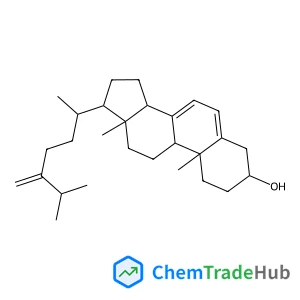
![N-[2-(2-Pyridinyl)ethyl]-1-propanamine structure](https://static.chemtradehub.com/structs/554/55496-57-6-22b4.webp "N-[2-(2-Pyridinyl)ethyl]-1-propanamine structure")
![Ethyl 4-[8-chloro(5,5,6,6,7-~2~H_5_)-5,6-dihydro-11H-benzo[5,6]cyclohepta[1,2-b]pyridin-11-ylidene]-1-piperidinecarboxylate structure](https://static.chemtradehub.com/structs/102/1020719-57-6-37e2.webp "Ethyl 4-[8-chloro(5,5,6,6,7-~2~H_5_)-5,6-dihydro-11H-benzo[5,6]cyclohepta[1,2-b]pyridin-11-ylidene]-1-piperidinecarboxylate structure")
![(1R,5R)-3-{[(2-Methyl-2-propanyl)oxy]carbonyl}-3-azabicyclo[3.1.0]hexane-1-carboxylic acid structure](https://static.chemtradehub.com/structs/116/1165450-63-4-bfe1.webp "(1R,5R)-3-{[(2-Methyl-2-propanyl)oxy]carbonyl}-3-azabicyclo[3.1.0]hexane-1-carboxylic acid structure")





