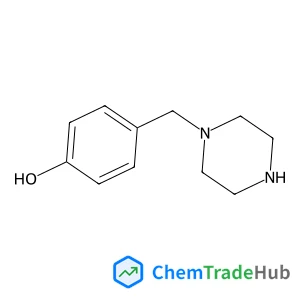
![tert-butyl 8-benzyl-2,8-diazaspiro[4.5]decane-2-carboxylate structure](https://static.chemtradehub.com/structs/336/336191-16-3-bb55.webp "tert-butyl 8-benzyl-2,8-diazaspiro[4.5]decane-2-carboxylate structure")
tert-butyl 8-benzyl-2,8-diazaspiro[4.5]decane-2-carboxylate
CAS Number:
336191-16-3
Molecular Formula:
C20H30N2O2
Maciej J. Marczewski, Bernhard Stanje, Martin Wilkening
A novel electrolyte concept for lithium-ion batteries, termed “ionic liquid-in-salt”, is introduced. Our feasibility study on (1 − x)EMIMTFSI:(x)LiTFSI, 0.66 ≤ x ≤ 0.97, showed that at elevated temperatures the various dual liquid and solid phase regions are characterized by a wide thermal stability window, high ionic conductivities and appreciable mechanical integrity. The highest conductivity values are obtained for the compositions x = 0.70 and x = 0.75 (σ ≈ 6 × 10⁻³ S cm−1) and are related to the final melting of the materials. Overall, high conductivities are observed for 0.70 < x < 0.90 while low ones are found for x > 0.90. Raman and NMR spectroscopies reveal the presence of highly mobile Li-containing species, partly identified as [Li(TFSI)2]−, albeit rather unexpected for these high x values, which might explain the high ionic conductivities observed. To prove the general value of our concept in more detail, some first results on BMIMTFSI and PY13TFSI based systems are also presented.
Qinqin Xu, Tao Zhao, Zhihua Sun
DOI: 10.1039/C6AN00721J
Linfeng Chen, Xike Tian, Yuan Zhao, Yong Li, Chao Yang, Zhaoxin Zhou
DOI: 10.1039/C6AN00740F
Pradeep Sachan, Prakash Chandra Mondal
DOI: 10.1039/C9AN01948K
Wei-Wei Zhao, Jing-Juan Xu, Hong-Yuan Chen
DOI: 10.1039/C6AN01123C
Jorge M. G. Sarraguça, Catarina Lima, Filipe Machado, João A. Lopes, Agostinho Almeida, Luís Fernandes
DOI: 10.1039/C6AN00247A
Xiang-Juan Kong, Shuang Wu, Yao Cen, Ting-Ting Chen, Ru-Qin Yu, Xia Chu
DOI: 10.1039/C6AN00738D
Jia Li
DOI: 10.1039/C9AN90127B
Sally A. N. Gowers, Isabelle C. Samper, De-Shaine R. K. Murray, Georgia K. Smith, Sarah Jeyaprakash, Michelle L. Rogers, Michael Karlsson, Markus Harboe Olsen, Kirsten Møller, Martyn G. Boutelle
DOI: 10.1039/C9AN01950B
Zhaoyin Wang, Jian Zhao, Zhihui Dai
DOI: 10.1039/C6AN00816J
Rui Xiao, Hassan Idris Abdu, Liping Wei, Tieying Wang, Shuhui Huo, Jing Chen
DOI: 10.1039/C9AN02481F
When handling lithium chloride hydrate (1:1:1) (CAS: 16712-20-2), it is importan...
4-(4H-1,2,4-Triazol-4-yl)piperidine is generally considered safe for use in phar...
Waste containing 1,3-Thiazole-2-carboxamide (CAS: 16733-85-0) should be collecte...
5-(Difluoromethyl)-2-fluorobenzonitrile (CAS: 934175-58-3) is subject to regulat...
Methyl 3-acetamido-2-thiophenecarboxylate can be synthesized by the reaction of ...
4-Isoquinolinecarbonitrile is a chemical compound with the CAS number 34846-65-6...
Store Methyl 1H-1,2,3-triazole-4-carboxylate (CAS: 877309-59-6) in a cool, dry p...
6-Bromo[1,3]thiazolo[5,4-b]pyridin-2-amine (CAS: 1160791-13-8) is subject to the...
(2S,3S)-2-Ammonio-3-(3,4-dihydroxyphenyl)-3-hydroxypropanoate (CAS: 23651-95-8) ...
7-Bromo-3-methyl-3,4-dihydroquinazolin-4-one is a solid with a crystalline form....

Physical Chemistry Chemical Physics (PCCP) is an international journal co-owned by 19 physical chemistry and physics societies from around the world. This journal publishes original, cutting-edge research in physical chemistry, chemical physics and biophysical chemistry. To be suitable for publication in PCCP, articles must include significant innovation and/or insight into physical chemistry; this is the most important criterion that reviewers and Editors will judge against when evaluating submissions. The journal has a broad scope and welcomes contributions spanning experiment, theory, computation and data science. Topical coverage includes spectroscopy, dynamics, kinetics, statistical mechanics, thermodynamics, electrochemistry, catalysis, surface science, quantum mechanics, quantum computing and machine learning. Interdisciplinary research areas such as polymers and soft matter, materials, nanoscience, energy, surfaces/interfaces, and biophysical chemistry are welcomed if they demonstrate significant innovation and/or insight into physical chemistry. Joined experimental/theoretical studies are particularly appreciated when complementary and based on up-to-date approaches.
![Ethyl 4-[8-chloro(5,5,6,6,7-~2~H_5_)-5,6-dihydro-11H-benzo[5,6]cyclohepta[1,2-b]pyridin-11-ylidene]-1-piperidinecarboxylate structure](https://static.chemtradehub.com/structs/102/1020719-57-6-37e2.webp "Ethyl 4-[8-chloro(5,5,6,6,7-~2~H_5_)-5,6-dihydro-11H-benzo[5,6]cyclohepta[1,2-b]pyridin-11-ylidene]-1-piperidinecarboxylate structure")
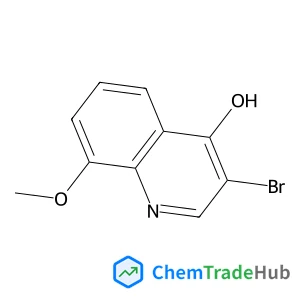
![5,10-Dihydroindeno[2,1-a]indene structure](https://static.chemtradehub.com/structs/654/6543-29-9-71ca.webp "5,10-Dihydroindeno[2,1-a]indene structure")