












Selectivity assessment in host–guest complexes from single-crystal X-ray diffraction data: the cavitand–alcohol case
Literature Information
Publication Date
2014-10-06
DOI
10.1039/C4CE01813C
Impact Factor
3.545
Authors
Rita De Zorzi, Giovanna Brancatelli, Monica Melegari, Roberta Pinalli, Enrico Dalcanale, Silvano Geremia
View Original
Abstract
The determination of selectivity is central to the development of molecular receptors. Competition binding experiments based on the relative binding ratios are commonly used to evaluate relative binding constants. When more than one species binds to the same active site of a receptor, the crystallographic evaluation of the occupancy factors of each ligand could be very informative about their relative affinity. However, in the presence of overlapped electron densities, the statistical occupancy factors are hard to retrieve using conventional crystal structure refinement. Here, we present an original method to evaluate the relative binding constants based on the direct treatment of the diffraction intensities obtained from isomorphous single crystals grown in the presence of binary mixtures of competitive ligands. This method was developed and first applied to evaluate the affinity of a tetraphosphonate cavitand receptor towards short-chain alcohols. In the easier cases, wherein the electron densities of the two alcohols are less overlapped, the occupancy factors for guest molecules obtained in conventional structural refinement are in good agreement with the values calculated from the direct comparison of diffraction intensities. The affinity constants were estimated from the calculated occupancy factors, considering the molar ratios of alcohols used in the competition experiments. The congruence of the method has been tested on several binary mixtures using different concentration ratios of alcoholic guests. In general, for a given alcoholic pair, the different molar ratios of alcohols, used in the crystallization batch, produce a trend of the occupancy factors in agreement with the binding constant ratios of the two alcohols. From 32 data sets collected at the Elettra synchrotron for six short alkylic chain guest molecules, we evaluated the binding constant ratios with a good internal consistency. The relative binding constants for these six alcohols were evaluated from the entire statistical sample (EtOH, 8.8 > 1-PrOH, 2.2 > MeOH, 1.3 > 2-PrOH, 1.00 > 2-BuOH, 0.32 > 1-BuOH, 0.11, using 2-PrOH as reference with an arbitrary value of 1) and are in good agreement with the structural parameters of host–guest interactions observed in the corresponding crystal structures. In particular, the binding constant decreases with the increase in the host–guest H-bond distance, which follows the increase in the length of the alkyl chain of the alcoholic guest. Moreover, quartz crystal microbalance (QCM) measurements and fluorescence data have been compared and discussed with respect to the relative affinity scale obtained by crystallography.
Related Literature
Determination of the cationic conformational structure of tetrahydrothiophene by one-photon MATI spectroscopy and Franck–Condon fitting
Yu Ran Lee, Hong Lae Kim, Chan Ho Kwon
2020-02-27
Paper
DOI: 10.1039/D0CP00073F
Dynamics in the BMIM PF6/acetonitrile mixtures observed by femtosecond optical Kerr effect and molecular dynamics simulations
Kamil Polok, Matthieu Beisert, Adam Świątek, Nishith Maity, Piotr Piatkowski, Wojciech Gadomski, François Alexandre Miannay, Abdenacer Idrissi
2020-10-14
Paper
DOI: 10.1039/D0CP03847D
Oxidation of isoprene by titanium oxide cluster cations in the gas phase
Shu-Qiang Li, Hai-Yan Zhou, Yong-Qi Ding, Qing-Yu Liu, Jia-Bi Ma
2020-11-14
Paper
DOI: 10.1039/D0CP05472K
A modelling algorithm for amorphous covalent triazine-based polymers
Fangyuan Hu, Zhaoliang Meng, Shengming Li, Tianpeng Zhang, Wenlong Shao, Siyang Liu
2020-08-17
Paper
DOI: 10.1039/D0CP01277G
End-capped group manipulation of non-fullerene acceptors for efficient organic photovoltaic solar cells: a DFT study
Shahnaz Ahmed, Dhruba Jyoti Kalita
2020-09-25
Paper
DOI: 10.1039/D0CP03814H
Crystal facet-dependent activity of h-WO3 for selective conversion of furfuryl alcohol to ethyl levulinate
Guoming Gao, Mingxuan Lv, Yuewen Shao, Guanggang Gao, Hui Zhao, Shu Zhang, Yi Wang, Ran Duan, Qifeng Chen, Xun Hu
2020-11-03
Paper
DOI: 10.1039/D0CP04347H
Mechanistic insights into the optical limiting performance of carbonaceous nanomaterials embedded with core–shell type graphite encapsulated Co nanoparticles
Rajeev Kumar, Ajay Kumar, Nancy Verma, Reji Philip, Balaram Sahoo
2020-11-09
Paper
DOI: 10.1039/D0CP03328F
Impact of electronic polarizability on protein-functional group interactions
Himanshu Goel, Wenbo Yu, Vincent D. Ustach, Asaminew H. Aytenfisu, Delin Sun, Alexander D. MacKerell, Jr
2020-03-13
Paper
DOI: 10.1039/D0CP00088D
A multiscale investigation elucidating the structural complexities and electrochemical properties of layered–layered composite cathode materials synthesized at low temperatures
Songyoot Kaewmala, Narinthorn Wiriya, Patcharapohn Chantrasuwan, Visittapong Yordsri, Wanwisa Limphirat, Shoaib Muhammad, Won-Sub Yoon, Jeffrey Nash, Pimpa Limthongkul
2020-01-21
Paper
DOI: 10.1039/C9CP06165G
You might also like
Compound Q&A
What are the main uses of (5-Sulfamoyl-3-pyridinyl)boronic acid (CAS: 951233-61-7)?
(5-Sulfamoyl-3-pyridinyl)boronic acid is primarily used in chemical synthesis, p...
951233-61-7(5-Sulfamoyl-3-pyrid...
Compound Q&A
How is Benzyl 2-methyl-2-(methylsulfonyl)-4-pentenoate (CAS: 1942858-50-5) typically synthesized?
Benzyl 2-methyl-2-(methylsulfonyl)-4-pentenoate is typically synthesized via est...
1942858-50-5Benzyl 2-methyl-2-(m...
Compound Q&A
What precautions should be taken when handling 8-Fluoroquinolin-6-ol (CAS: 209353-22-0)?
When handling 8-Fluoroquinolin-6-ol (CAS: 209353-22-0), it is important to use p...
209353-22-08-Fluoroquinolin-6-o...
Compound Q&A
What are the physical and chemical properties of 1,3-Dibromo-5-(2-methyl-2-propanyl)benzene (CAS: 129316-09-2)?
1,3-Dibromo-5-(2-methyl-2-propanyl)benzene (CAS: 129316-09-2) is a crystalline c...
129316-09-21,3-Dibromo-5-(2-met...
Compound Q&A
What industries use Ethyl 7-chloro-4-oxo-1-(1,3-thiazol-2-yl)-1,4-dihydro-1,8-naphthyridine-3-carboxylate (CAS: 174726-87-5)?
Ethyl 7-chloro-4-oxo-1-(1,3-thiazol-2-yl)-1,4-dihydro-1,8-naphthyridine-3-carbox...
174726-87-5Ethyl 7-chloro-4-oxo...
Compound Q&A
What precautions should be taken when handling Delta-7-Avenasterol (CAS: 23290-26-8)?
When handling Delta-7-Avenasterol (CAS: 23290-26-8), it is important to wear app...
23290-26-8Delta-7-Avenasterol
Compound Q&A
What precautions should be taken when handling N-({(5R)-3-[3-Fluoro-4-(4-morpholinyl)phenyl]-2-oxo-1,3-oxazolidin-5-yl}methyl)acetamide (CAS: 872992-20-6)?
Proper handling involves the use of personal protective equipment such as gloves...
872992-20-6N-({(5R)-3-[3-Fluoro...
Compound Q&A
What precautions should be taken when handling 2-Methyl-2-proanyl 4-[(2-aminophenyl)amino]-1-piperidinecarboxylate (CAS: 79099-00-6)?
When handling 2-Methyl-2-proanyl 4-[(2-aminophenyl)amino]-1-piperidinecarboxylat...
79099-00-62-Methyl-2-propanyl ...
Compound Q&A
What is N-Methyl-4-chlorobenzylamine hydrochloride (CAS: 65542-24-7)?
N-Methyl-4-chlorobenzylamine hydrochloride (CAS: 65542-24-7) is a organic compou...
65542-24-7N-Methyl-4-chloroben...
Compound Q&A
Is [2-(Dodecyloxy)ethoxy]acetic acid (CAS: 27306-90-7) safe?
[2-(Dodecyloxy)ethoxy]acetic acid (CAS: 27306-90-7) is generally considered safe...
27306-90-7[2-(Dodecyloxy)ethox...
Source Journal
CrystEngComm

CiteScore:
5.5
Self-citation Rate:
7.7%
Articles per Year:
643
CrystEngComm is the forum for the design and understanding of crystalline materials. We welcome studies on the investigation of molecular behaviour within crystals, control of nucleation and crystal growth, engineering of crystal structures, and construction of crystalline materials with tuneable properties and functions. We publish hypothesis-driven research into… how crystal design affects thermodynamics, phase transitional behaviours, polymorphism, morphology control, solid state reactivity (crystal-crystal solution-crystal, and gas-crystal reactions), optoelectronics, ferroelectric materials, non-linear optics, molecular and bulk magnetism, conductivity and quantum computing, catalysis, absorption and desorption, and mechanical properties. Using Techniques and methods including… Single crystal and powder X-ray, electron, and neutron diffraction, solid-state spectroscopy, spectrometry, and microscopy, modelling and data mining, and empirical, semi-empirical and ab-initio theoretical evaluations. On crystalline and solid-state materials. We particularly welcome work on MOFs, coordination polymers, nanocrystals, host-guest and multi-component molecular materials. We also accept work on peptides and liquid crystals. All papers should involve the use or development of a design or optimisation strategy. Routine structural reports or crystal morphology descriptions, even when combined with an analysis of properties or potential applications, are generally considered to be outside the scope of the journal and are unlikely to be accepted.
Recommended Compounds
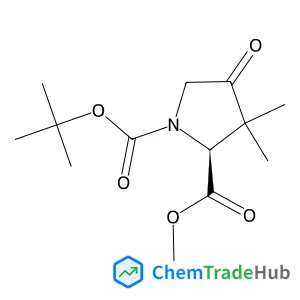
2-Methyl 1-(2-methyl-2-propanyl) (2S)-3,3-dimethyl-4-oxo-1,2-pyrrolidinedicarboxylate
CAS Number:
478698-30-5
Molecular Formula:
C13H21NO5
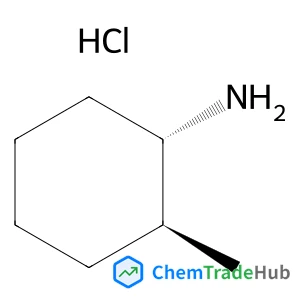
(1R,2R)-2-Methylcyclohexanamine hydrochloride (1:1)
CAS Number:
39558-31-1
Molecular Formula:
C7H16ClN
Recommended Suppliers



Disclaimer
This page provides academic journal information for reference and research purposes only. We are not affiliated with any journal publishers and do not handle publication submissions. For publication-related inquiries, please contact the respective journal publishers directly.
If you notice any inaccuracies in the information displayed, please contact us at support@chemtradehub.com. We will promptly review and address your concerns.