












Living carbocationic polymerization of a vinyl ether monomer derived from soybean oil, 2-(vinyloxy)ethyl soyate
Literature Information
Publication Date
2013-05-10
DOI
10.1039/C3GC40605A
Impact Factor
10.182
Authors
Andrey Chernykh, Samim Alam, Anurad Jayasooriya, James Bahr
View Original
Abstract
A novel vinyl ether monomer was produced from soybean oil by base-catalyzed transesterification of 2-(vinyloxy)ethanol with soybean oil. The cationic polymerization of this monomer, which is being referred to as 2-(vinyloxy)ethyl soyate (2-VOES), was investigated using a polymerization system involving a difunctional cationogen, ethylaluminum sesquichloride as the coinitiator, toluene as the solvent, and a polymerization temperature of 0 °C. With this polymerization system, the polymerization was first order with respect to monomer and molecular weight increased linearly with monomer conversion. Further, the molecular weight distribution of the polymers obtained were below 1.2. The addition of fresh monomer to a polymerization that had reach approximately 90 percent monomer conversion resulted in a further increase in molecular weight without an increase in molecular weight distribution. These results indicate that the polymerization was a living polymerization, which will enable well-defined polymer architectures, such as triblock copolymers, to be produced in the future.
Related Literature
Phosphine-mediated domino reactions of phthalimidomalonates with allenoates or but-2-ynoate: facile entry into highly functionalized pyrroloisoindolinone derivatives
Zhusheng Huang, Qingqing Chen, Xiuqin Yang, Yang Liu, Li Zhang, Tao Lu, Qingfa Zhou
2017-01-04
Research Article
DOI: 10.1039/C6QO00775A
Iodine(iii)-induced regioselective carbocyclization of terminal alkynes: a facile approach to prepare 1,1-diiodomethylene substituted cyclic compounds
Zeyu Wang, Jiang Zhong, Chen Zheng, Renhua Fan
2017-02-08
Research Article
DOI: 10.1039/C6QO00822D
The influence of the central acceptor unit on the optoelectronic properties and photovoltaic performance of A–D–A–D–A-type co-oligomers
Ibrahim Ata, Duško Popovic, Mika Lindén, Amaresh Mishra, Peter Bäuerle
2017-02-10
Research Article
DOI: 10.1039/C7QO00043J
From glucose to enantiopure morpholino β-amino acid: a new tool for stabilizing γ-turns in peptides
Raffaella Bucci, Alessandro Contini, Francesca Clerici, Sara Pellegrino, Maria Luisa Gelmi
2019-02-12
Research Article
DOI: 10.1039/C8QO01116H
Enantioselective synthesis of naturally occurring isoquinoline alkaloids: (S)-(−)-trolline and (R)-(+)-oleracein E
Weilong Lin
2017-03-06
Research Article
DOI: 10.1039/C7QO00062F
PIFA-Mediated oxidative cyclization of 1-aroyl-N-arylcyclopropane-1-carboxamides and their application in the synthesis of pyrrolo[3,2-c]quinolinones
Xiaolong Gao, Zhonglian Li, Guisheng Zhang, Nana Ma, Qingfeng Liu, Tongxin Liu
2016-12-13
Research Article
DOI: 10.1039/C6QO00598E
Synthesis of a [20]phenacene dodeca-ester by controlled condensation of seven naphthalene-based building blocks
Guillaume Naulet, Stéphanie Huet-Exiga, Harald Bock, Fabien Durola
2019-02-20
Research Article
DOI: 10.1039/C9QO00125E
Organocatalytic C–C bond activation of cyclopropenones for ring-opening formal [3 + 2] cycloaddition with isatins
Junyu Xu, Jing Cao, Chao Fang, Tao Lu, Ding Du
2017-01-16
Research Article
DOI: 10.1039/C6QO00734A
Rhodium-catalyzed regiospecific C–H ortho-phenylation of benzoic acids with Cu/air as an oxidant
Shiguang Li, Guo-Jun Deng, Feifei Yin, Chao-Jun Li, Hang Gong
2016-12-16
Research Article
DOI: 10.1039/C6QO00663A
You might also like
Compound Q&A
What precautions should be taken when handling 4-Methyl-6-(trifluoromethyl)quinoline (CAS: 40716-16-3)?
When handling 4-Methyl-6-(trifluoromethyl)quinoline (CAS: 40716-16-3), safety go...
40716-16-34-Methyl-6-(trifluor...
Compound Q&A
What is 4-(3,5-Difluorophenyl)aniline (CAS: 405058-00-6)?
4-(3,5-Difluorophenyl)aniline is an aromatic organic compound with the CAS numbe...
405058-00-64-(3,5-Difluoropheny...
Compound Q&A
How is 5-{[4-(Trifluoromethyl)phenyl]sulfanyl}-1,2,3-thiadiazole-4-carboxylic acid (CAS: 338982-07-3) typically synthesized?
5-{[4-(Trifluoromethyl)phenyl]sulfanyl}-1,2,3-thiadiazole-4-carboxylic acid can ...
338982-07-35-{[4-(Trifluorometh...
Compound Q&A
What is the market or research trend for 4-Benzylaniline hydrochloride (CAS: 6317-57-3)?
The market for 4-Benzylaniline hydrochloride (CAS: 6317-57-3) is steadily growin...
6317-57-34-Benzylaniline hydr...
Compound Q&A
Is [3-(Diethylsulfamoyl)phenyl]boronic acid (CAS: 871329-58-7) safe?
[3-(Diethylsulfamoyl)phenyl]boronic acid is generally considered safe when handl...
871329-58-7[3-(Diethylsulfamoyl...
Compound Q&A
What are the main uses of 3-Bromo-2,5-dimethoxyaniline (CAS: 115929-62-9)?
3-Bromo-2,5-dimethoxyaniline is mainly used in the pharmaceutical and chemical i...
115929-62-93-Bromo-2,5-dimethox...
Compound Q&A
What regulatory guidelines apply to N-Methyl-1-(5-methyl-1H-indol-3-yl)methanamine (CAS: 915922-67-7)?
N-Methyl-1-(5-methyl-1H-indol-3-yl)methanamine (CAS: 915922-67-7) is subject to ...
915922-67-7N-Methyl-1-(5-methyl...
Compound Q&A
What industries use Carbamic acid, N-[(5S)-5,6-diamino-6-oxohexyl]-, 1,1-dimethylethyl ester (CAS: 24828-96-4)?
This compound is primarily used in the pharmaceutical industry for the synthesis...
24828-96-4Carbamic acid, N-[(5...
Compound Q&A
How should 2-Methyl-2-propanyl [(1S,3R)-3-aminocyclohexyl]carbamate (CAS: 1298101-47-9) be stored?
2-Methyl-2-propanyl [(1S,3R)-3-aminocyclohexyl]carbamate (CAS: 1298101-47-9) sho...
1298101-47-92-Methyl-2-propanyl ...
Compound Q&A
What industries use Ethyl 2-bromo-4,4,4-trifluorobutanoate (CAS: 367-33-9)?
Ethyl 2-bromo-4,4,4-trifluorobutanoate (CAS: 367-33-9) is utilized in the pharma...
367-33-9Ethyl 2-bromo-4,4,4-...
Source Journal
Green Chemistry

CiteScore:
16.1
Self-citation Rate:
7.5%
Articles per Year:
944
Green Chemistry provides a unique forum for the publication of innovative research on the development of alternative green and sustainable technologies. The scope of Green Chemistry is based on, but not limited to, the definition proposed by Anastas and Warner (Green Chemistry: Theory and Practice, P T Anastas and J C Warner, Oxford University Press, Oxford, 1998). Green chemistry is the utilisation of a set of principles that reduces or eliminates the use or generation of hazardous substances in the design, manufacture and application of chemical products. Green Chemistry is at the frontiers of this continuously-evolving interdisciplinary science and publishes research that attempts to reduce the environmental impact of the chemical enterprise by developing a technology base that is inherently non-toxic to living things and the environment. Submissions on all aspects of research relating to the endeavour are welcome. The journal publishes original and significant cutting-edge research that is likely to be of wide general appeal. To be published, work must present a significant advance in green chemistry. Papers must contain a comparison with existing methods and demonstrate advantages over those methods before publication can be considered. For more information please see this Editorial. Coverage includes the following, but is not limited to: Design (e.g. biomimicry, design for degradation/recycling/reduced toxicity…) Reagents & Feedstocks (e.g. renewables, CO2, solvents, auxiliary agents, waste utilization…) Synthesis (e.g. organic, inorganic, synthetic biology…) Catalysis (e.g. homogeneous, heterogeneous, enzyme, whole cell…) Process (e.g. process design, intensification, separations, recycling, efficiency…) Energy (e.g. renewable energy, fuels, photovoltaics, fuel cells, energy storage, energy carriers…) Applications (e.g. electronics, dyes, consumer products, coatings, pharmaceuticals, preservatives, building materials, chemicals for industry/agriculture/mining…) Impact (e.g. safety, metrics, LCA, sustainability, (eco)toxicology…) Green chemistry is, by definition, a continuously-evolving frontier. Therefore, the inclusion of a particular material or technology does not, of itself, guarantee that a paper is suitable for the journal. To be suitable, the novel advance should have the potential for reduced environmental impact relative to the state of the art. Green Chemistry does not normally deal with research associated with 'end-of-pipe' or remediation issues.
Recommended Compounds
![(4aR,5S,6R,8aS)-5-[2-(3-Furyl)ethyl]-8a-(hydroxymethyl)-5,6-dimethyl-3,4,4a,5,6,7,8,8a-octahydro-1-naphthalenecarboxylic acid structure](https://static.chemtradehub.com/structs/184/18411-75-1-d4cd.webp "(4aR,5S,6R,8aS)-5-[2-(3-Furyl)ethyl]-8a-(hydroxymethyl)-5,6-dimethyl-3,4,4a,5,6,7,8,8a-octahydro-1-naphthalenecarboxylic acid structure")
(4aR,5S,6R,8aS)-5-[2-(3-Furyl)ethyl]-8a-(hydroxymethyl)-5,6-dimethyl-3,4,4a,5,6,7,8,8a-octahydro-1-naphthalenecarboxylic acid
CAS Number:
18411-75-1
Molecular Formula:
C20H28O4
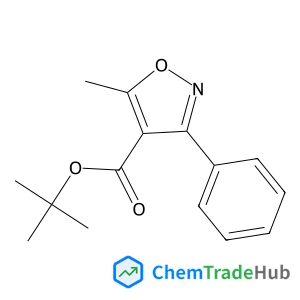
2-Methyl-2-propanyl 5-methyl-3-phenyl-1,2-oxazole-4-carboxylate
CAS Number:
211429-79-7
Molecular Formula:
C15H17NO3
Recommended Suppliers






Disclaimer
This page provides academic journal information for reference and research purposes only. We are not affiliated with any journal publishers and do not handle publication submissions. For publication-related inquiries, please contact the respective journal publishers directly.
If you notice any inaccuracies in the information displayed, please contact us at support@chemtradehub.com. We will promptly review and address your concerns.