












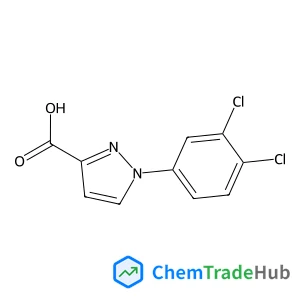
1-(3,4-Dichlorophenyl)-1H-pyrazole-3-carboxylic acid
CAS Number:
1152949-12-6
Molecular Formula:
C10H6Cl2N2O2
Dae Won Cho, Mamoru Fujitsuka, Akira Sugimoto, Ung Chan Yoon, Dae Won Cho, Tetsuro Majima
This study examines the effects of cyclodextrin (CD) on the photophysical properties of 1,8-naphthalimide (NI) derivatives including NI–linker–phenothiazine (NI–L–PTZ) dyads in a H2O/CH3CN solution (v/v = 9 : 1). Peculiar excimer and exciplex emissions were observed with reference NI and NI–L–PTZ, respectively, in an aqueous environment. The NI–CD complexes exhibited monomeric emission spectral features, which resulted from their inclusion into the CD cavity. The complex formation constants of CDs with the NI derivatives were determined. The T1–Tn absorption band of 3NI* was observed at around 470 nm during nanosecond-laser flash photolysis. Photoinduced electron transfer in NI–L–PTZ led to NI˙− and PTZ˙+ from the T1 state. In protic polar solvents, NI˙− easily formed a ketyl radical (NIH˙) by hydrogen abstraction from H2O, and showed a transient absorption band at around 400 nm. The charge recombination (CR) time of the transient species at 400 nm showed a strong CD dependency, and the CR time of the dyad in γ-CD was increased markedly compared with in β-CD. This suggests that the PTZ moiety can also be included in the γ-CD cavity.
Yan Sun, Zhongzhu Jiang, Yang Li, Lanxin Liu, Hui Liang, Yiyan Wang, Dandan Wu, Na Li, Ying Zhou, Qiuju Li, Xiaoyu Yue, Wei Tong, Xuan Luo, Jianghe Lan, Xuefeng Sun
DOI: 10.1039/D3CP03854H
Miaomiao Zhang, Cunyuan Pei, Qiqi Xiang, Lintao Liu, Zhongxu Dai, Huijuan Ma, Shibing Ni
DOI: 10.1039/D3CP04952C
Martin Hager, Frédéric Laquai, Yingping Zou
DOI: 10.1039/D3SE00987D
Japheth Joseph Yeow Wan Foong, Herlina Arianita Dewi, Ayan A. Zhumekenov, Benny Febriansyah, Annalisa Bruno, Teddy Salim, Hesham R. Abuzeid, Teck Ming Koh
DOI: 10.1039/D3SE01369C
Miwako Teranishi, Shin-ichi Naya, Hiroaki Tada
DOI: 10.1039/D3SE01513K
Zhichao Liu, Tianle Zhou, Gui Jin, Jiangbin Su, Bin Tang
DOI: 10.1039/D3CP05095E
Ekaterina A. Konopkina, Alexander V. Gopin, Anton S. Pozdeev, Maria G. Chernysheva, Paulina Kalle, Elizaveta A. Pavlova, Stepan N. Kalmykov, Vladimir G. Petrov, Nataliya E. Borisova, Alexander A. Guda, Petr I. Matveev
DOI: 10.1039/D3CP05081E
Qian Wang, Yu Zhuang, Abuduwayiti Aierken, Qiaogang Song, Qin Zhang, Youbo Dou, Qiuli Zhang, Shuyi Zhang
DOI: 10.1039/D3CP05309A
Waste containing N-Methoxy-N-methyl-1,3-thiazole-5-carboxamide (CAS: 898825-89-3...
N-(4-Biphenylyl)dibenzo[b,d]furan-4-amine should be stored in a tightly sealed c...
The market for 3-Acetamido-5-amino-2,4,6-triiodobenzoic acid (CAS: 1713-07-1) is...
Benzyl 2-O-acetyl-3,4,6-tri-O-benzyl-beta-D-galactopyranoside (CAS: 61820-03-9) ...
2-Ethylpiperazine dihydrochloride (CAS: 438050-52-3) is regulated under the Glob...
1,1'-[1,3-Phenylenebis(methylene)]bis(3-methyl-1H-pyrrole-2,5-dione) (CAS: 11946...
Several alternatives can be used in the synthesis of 5-Fluoro-2-(1-pyrrolidinyl)...
Proper personal protective equipment (PPE) must be worn when handling this compo...
When handling 6-Bromoimidazo[1,2-a]pyridin-8-amine, it is important to wear appr...
Alternatives to (2S,4R)-4-(4-Nitrobenzyl)pyrrolidine-2-carboxylic acid hydrochlo...

Physical Chemistry Chemical Physics (PCCP) is an international journal co-owned by 19 physical chemistry and physics societies from around the world. This journal publishes original, cutting-edge research in physical chemistry, chemical physics and biophysical chemistry. To be suitable for publication in PCCP, articles must include significant innovation and/or insight into physical chemistry; this is the most important criterion that reviewers and Editors will judge against when evaluating submissions. The journal has a broad scope and welcomes contributions spanning experiment, theory, computation and data science. Topical coverage includes spectroscopy, dynamics, kinetics, statistical mechanics, thermodynamics, electrochemistry, catalysis, surface science, quantum mechanics, quantum computing and machine learning. Interdisciplinary research areas such as polymers and soft matter, materials, nanoscience, energy, surfaces/interfaces, and biophysical chemistry are welcomed if they demonstrate significant innovation and/or insight into physical chemistry. Joined experimental/theoretical studies are particularly appreciated when complementary and based on up-to-date approaches.
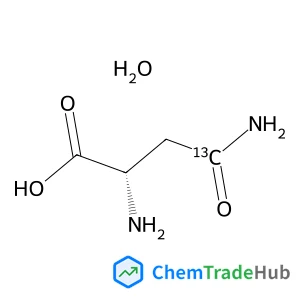
![4-[(2-{2-[2-(2-Aminoethoxy)ethoxy]ethoxy}ethyl)amino]-2-(2,6-dioxo-3-piperidinyl)-1H-isoindole-1,3(2H)-dione structure](https://static.chemtradehub.com/structs/209/2093416-31-8-3162.webp "4-[(2-{2-[2-(2-Aminoethoxy)ethoxy]ethoxy}ethyl)amino]-2-(2,6-dioxo-3-piperidinyl)-1H-isoindole-1,3(2H)-dione structure")
![2-(7,7-Difluorobicyclo[4.1.0]hept-1-yl)ethanamine structure](https://static.chemtradehub.com/structs/209/2098065-08-6-ff24.webp "2-(7,7-Difluorobicyclo[4.1.0]hept-1-yl)ethanamine structure")




