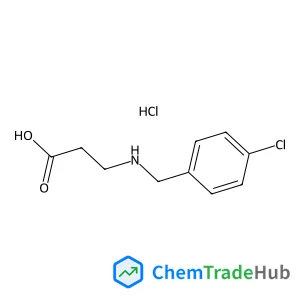
N-(4-Chlorobenzyl)-beta-alanine hydrochloride (1:1)
CAS Number:
1172479-10-5
Molecular Formula:
C10H13Cl2NO2
Julian Gebhardt, Patrick Bleiziffer, Wolfgang Hieringer
We investigate the capability of low-coordinated sites on small model clusters to act as active centers for hydrogen storage. A set of small magic clusters with the formula (XY)6 (X = Mg, Ba, Be, Zn, Cd, Na, Li, B and Y = O, Se, S, F, I, N) and a “drumlike” hexagonal shape showing a low coordination number of three was screened. Oxide clusters turned out to be the most promising candidates for hydrogen storage. For these ionic compounds we explored the suitability of different van der Waals (vdW) corrections to density-functional calculations by comparing the respective H2 physisorption profile to highly accurate CCSD(T) (Coupled Cluster Singles Doubles with perturbative Triples) calculations. The Grimme D3 vdW correction in combination with the Perdew–Burke–Ernzerhof exchange–correlation functional was found to be the best approach compared to CCSD(T) hydrogen physisorption profiles and is, therefore, suited to study these and other light metal oxide systems. H2 adsorption on sites of oxide model clusters is found to meet the adsorption energy criteria for H2 storage, with bond strengths ranging from 0.15 to 0.21 eV. Energy profiles and estimates of kinetic constants for the H2 splitting reaction reveal that H2 is likely to be adsorbed molecularly on sites of (MgO)6, (BaO)6, and (BeO)6 clusters, suggesting a rapid H2 uptake/release at operating temperatures and moderate pressures. The small mass of beryllium and magnesium makes such systems appealing for meeting the gravimetric criterion for H2 storage.
Zhichao Liu, Tianle Zhou, Gui Jin, Jiangbin Su, Bin Tang
DOI: 10.1039/D3CP05095E
Meixin Cheng
DOI: 10.1039/D3CP04975B
T. V. Pavlova, V. M. Shevlyuga
DOI: 10.1039/D3CP04962K
Ekaterina A. Konopkina, Alexander V. Gopin, Anton S. Pozdeev, Maria G. Chernysheva, Paulina Kalle, Elizaveta A. Pavlova, Stepan N. Kalmykov, Vladimir G. Petrov, Nataliya E. Borisova, Alexander A. Guda, Petr I. Matveev
DOI: 10.1039/D3CP05081E
Li Shen, Xiaobo Gao, Zhanqing Chang, Changhao Zhang, Yue Li, Jitao Lu, Qingguo Meng, Qian Wu
DOI: 10.1039/D3CP05199D
Abhishek Kalpattu, Tristan Dilbeck, Kenneth Hanson
DOI: 10.1039/D3CP90241B
Laura T. Wey, Jouko Peltonen, Yagut Allahverdiyeva
DOI: 10.1039/D3SE01185B
Riku Okamoto, Akira Kimura, Yuhi Nakayasu, Akira Yamakata, Ryota Tomizawa, Taizo Masuda, Koichiro Nakatani
DOI: 10.1039/D3SE01408H
Waste containing N-Methoxy-N-methyl-1,3-thiazole-5-carboxamide (CAS: 898825-89-3...
N-(4-Biphenylyl)dibenzo[b,d]furan-4-amine should be stored in a tightly sealed c...
The market for 3-Acetamido-5-amino-2,4,6-triiodobenzoic acid (CAS: 1713-07-1) is...
Benzyl 2-O-acetyl-3,4,6-tri-O-benzyl-beta-D-galactopyranoside (CAS: 61820-03-9) ...
2-Ethylpiperazine dihydrochloride (CAS: 438050-52-3) is regulated under the Glob...
1,1'-[1,3-Phenylenebis(methylene)]bis(3-methyl-1H-pyrrole-2,5-dione) (CAS: 11946...
Several alternatives can be used in the synthesis of 5-Fluoro-2-(1-pyrrolidinyl)...
Proper personal protective equipment (PPE) must be worn when handling this compo...
When handling 6-Bromoimidazo[1,2-a]pyridin-8-amine, it is important to wear appr...
Alternatives to (2S,4R)-4-(4-Nitrobenzyl)pyrrolidine-2-carboxylic acid hydrochlo...

Physical Chemistry Chemical Physics (PCCP) is an international journal co-owned by 19 physical chemistry and physics societies from around the world. This journal publishes original, cutting-edge research in physical chemistry, chemical physics and biophysical chemistry. To be suitable for publication in PCCP, articles must include significant innovation and/or insight into physical chemistry; this is the most important criterion that reviewers and Editors will judge against when evaluating submissions. The journal has a broad scope and welcomes contributions spanning experiment, theory, computation and data science. Topical coverage includes spectroscopy, dynamics, kinetics, statistical mechanics, thermodynamics, electrochemistry, catalysis, surface science, quantum mechanics, quantum computing and machine learning. Interdisciplinary research areas such as polymers and soft matter, materials, nanoscience, energy, surfaces/interfaces, and biophysical chemistry are welcomed if they demonstrate significant innovation and/or insight into physical chemistry. Joined experimental/theoretical studies are particularly appreciated when complementary and based on up-to-date approaches.