



Interfacial reaction of water ice on polycrystalline vanadium and its effects on thermal desorption of water
Literature Information
Publication Date
2013-11-28
DOI
10.1039/C3CP53329H
Impact Factor
3.676
Authors
View Original
Abstract
Thermal desorption and decomposition of water ice deposited onto a polycrystalline V surface were investigated using temperature-programmed desorption and secondary ion mass spectrometry. The water molecules in multilayer films dissociate preferentially at the interface, whereas water desorption from the surface is depressed considerably. The oxygen atoms (hydrogen molecules) formed at the interface are incorporated into the substrate (released into the gas phase) sequentially at temperatures higher than 140 K. The crystallization kinetics of water multilayers is not influenced by the interfacial reaction, but the water desorption rate is depressed by the interfacial reaction even after crystallization. Consequently, thermal desorption of water from the surface and its reaction at the interface are found to be correlated across thin films. This behavior is explainable as dynamic heterogeneity of water in the deeply supercooled region and premelting of metastable ice Ic, where mobile water molecules play a dominant role in both thermal desorption and the interfacial reaction.
Recommended Journals

Current Opinion in Colloid & Interface Science

Acta Materialia

Journal of Peptide Science

Russian Journal of General Chemistry

Journal of Natural Medicines

Chemical Communications

Current Opinion in Solid State & Materials Science

New Journal of Chemistry

Nature Medicine

Russian Journal of Bioorganic Chemistry
Related Literature
Computationally directed manipulation of cross-linked covalent organic frameworks for membrane applications
Alathea E. Davies, Michael J. Wenzel, Cailin L. Brugger, Jordan Johnson, Bruce A. Parkinson, John O. Hoberg, Laura de Sousa Oliveira
2023-11-10
Paper
DOI: 10.1039/D3CP04452A
Effect of the oxygen vacancy electronic state on Ni migration in Li0.5(Ni0.8Mn0.1Co0.1)O2 cathode material
Ravanny W. M. Komalig, Afriyanti Sumboja, Ryo Maezono
2023-11-04
Paper
DOI: 10.1039/D3CP03396A
Energetics of high temperature degradation of fentanyl into primary and secondary products
Bharat Poudel, Haley L. Monteith, Jason P. Sammon, Joshua J. Whiting, Matthew W. Moorman, Juan M. Vanegas, Susan B. Rempe
2023-11-04
Paper
DOI: 10.1039/D3CP03068G
Refining the thermochemical properties of CF, SiF, and their cations by combining photoelectron spectroscopy, quantum chemical calculations, and the Active Thermochemical Tables approach
Ugo Jacovella, Branko Ruscic, Ning L. Chen, Hai-Linh Le, Séverine Boyé-Péronne, Sebastian Hartweg, Madhusree Roy Chowdhury, Gustavo A. Garcia, Jean-Christophe Loison, Bérenger Gans
2023-10-10
Paper
DOI: 10.1039/D3CP04244H
Towards the generation of potential energy surfaces of weakly bound medium-sized molecular systems: the case of benzonitrile–He complex
Eya Derbali, Yosra Ajili, Bilel Mehnen, Piotr S. Żuchowski, Dariusz Kędziera, Muneerah Mogren Al-Mogren, Nejm-Edine Jaidane, Majdi Hochlaf
2023-09-20
Paper
DOI: 10.1039/D3CP02720A
Theoretical study of protein adsorption on graphene/h-BN heterostructures
Jun Lan, Yiran Peng, Lijun Liang, Xing Duan, Zhe Kong, Li Zhang
2023-11-02
Paper
DOI: 10.1039/D3CP03303A
The boson peak in silicate glasses: insight from molecular dynamics
Ahmed El Hamdaoui, El Mehdi Ghardi, Achraf Atila, Michael Badawi, Abdellatif Hasnaoui, Said Ouaskit
2023-11-13
Paper
DOI: 10.1039/D3CP02912C
Effect of annealing temperature and capping ligands on the electron mobility and electronic structure of indium oxide nanocrystal thin films: a comparative study with oleic acid, benzoic acid, and 4-aminobenzoic acid
Quang Trung Le, Hyeok Yun, Hyeonbeom Park, Hyun-Dam Jeong
2023-10-31
Paper
DOI: 10.1039/D3CP03842D
Self-assembly synthesis of hollow phosphorus-doped graphitic carbon nitride microboxes for the photodegradation of organic pollutants
Si Cheng, Lifeng Miao, Kunze Xue, Zhenhong Bao, Jian Liang, Xiaohong Li, Wenjun Zhu, Yunxia Chen, Yongzhi Yu
2023-10-30
Paper
DOI: 10.1039/D3CP04262F
You might also like
Compound Q&A
How should 2-Methylbenzene-1,4-diamine dihydrochloride (CAS: 615-45-2) be stored?
2-Methylbenzene-1,4-diamine dihydrochloride (CAS: 615-45-2) should be stored in ...
615-45-22-Methylbenzene-1,4-...
Compound Q&A
Is (1S,4S)-2,5-Diazabicyclo[2.2.1]heptane dihydrobromide (CAS: 132747-20-7) safe?
(1S,4S)-2,5-Diazabicyclo[2.2.1]heptane dihydrobromide is generally considered sa...
132747-20-7(1S,4S)-2,5-Diazabic...
Compound Q&A
What industries use (6-Chloropyridazin-3-YL)methanamine (CAS: 871826-15-2)?
(6-Chloropyridazin-3-YL)methanamine finds applications in the pharmaceutical ind...
871826-15-2(6-Chloropyridazin-3...
Compound Q&A
What are the main uses of 2-Fluoro-3-methylphenol (CAS: 77772-72-6)?
2-Fluoro-3-methylphenol is primarily used in the synthesis of pharmaceuticals, p...
77772-72-62-Fluoro-3-methylphe...
Compound Q&A
What precautions should be taken when handling 3-Methoxy-4-nitrobenzonitrile (CAS: 177476-75-4)?
When handling 3-Methoxy-4-nitrobenzonitrile, it is important to wear appropriate...
177476-75-43-Methoxy-4-nitroben...
Compound Q&A
What precautions should be taken when handling 1,3-Oxazolo[4,5-b]pyridine-2(3H)-thione (CAS: 211949-57-4)?
When handling 1,3-Oxazolo[4,5-b]pyridine-2(3H)-thione (CAS: 211949-57-4), it is ...
211949-57-4[1,3]Oxazolo[4,5-b]p...
Compound Q&A
What regulatory guidelines apply to 4-Ethynylbenzamide (CAS: 90347-86-7)?
4-Ethynylbenzamide (CAS: 90347-86-7) falls under various regulatory guidelines i...
90347-86-74-Ethynylbenzamide
Compound Q&A
What are the main uses of 3-(2-Ethylphenyl)-2-thioxo-4-imidazolidinone (CAS: 186822-57-1)?
3-(2-Ethylphenyl)-2-thioxo-4-imidazolidinone is primarily used as an intermediat...
186822-57-13-(2-Ethylphenyl)-2-...
Compound Q&A
What is (2-Fluoro-6-methoxyphenyl)acetic acid (CAS: 500912-19-6)?
(2-Fluoro-6-methoxyphenyl)acetic acid, also known as 4-fluoro-3-methoxybenzoic a...
500912-19-6(2-Fluoro-6-methoxyp...
Compound Q&A
What is the market or research trend for 2-[4-(Hydroxymethyl)phenoxy]ethanol (CAS: 102196-18-9)?
Market trends for 2-[4-(Hydroxymethyl)phenoxy]ethanol (CAS: 102196-18-9) indicat...
102196-18-92-[4-(Hydroxymethyl)...
Source Journal
Physical Chemistry Chemical Physics

CiteScore:
5.5
Self-citation Rate:
10.3%
Articles per Year:
3036
Physical Chemistry Chemical Physics (PCCP) is an international journal co-owned by 19 physical chemistry and physics societies from around the world. This journal publishes original, cutting-edge research in physical chemistry, chemical physics and biophysical chemistry. To be suitable for publication in PCCP, articles must include significant innovation and/or insight into physical chemistry; this is the most important criterion that reviewers and Editors will judge against when evaluating submissions. The journal has a broad scope and welcomes contributions spanning experiment, theory, computation and data science. Topical coverage includes spectroscopy, dynamics, kinetics, statistical mechanics, thermodynamics, electrochemistry, catalysis, surface science, quantum mechanics, quantum computing and machine learning. Interdisciplinary research areas such as polymers and soft matter, materials, nanoscience, energy, surfaces/interfaces, and biophysical chemistry are welcomed if they demonstrate significant innovation and/or insight into physical chemistry. Joined experimental/theoretical studies are particularly appreciated when complementary and based on up-to-date approaches.
Recommended Compounds
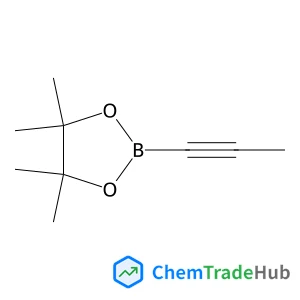
4,4,5,5-Tetramethyl-2-(1-propyn-1-YL)-1,3,2-dioxaborolane
CAS Number:
347389-75-7
Molecular Formula:
C9H15BO2
Recommended Suppliers






Disclaimer
This page provides academic journal information for reference and research purposes only. We are not affiliated with any journal publishers and do not handle publication submissions. For publication-related inquiries, please contact the respective journal publishers directly.
If you notice any inaccuracies in the information displayed, please contact us at support@chemtradehub.com. We will promptly review and address your concerns.