












The boson peak in silicate glasses: insight from molecular dynamics
Literature Information
Publication Date
2023-11-13
DOI
10.1039/D3CP02912C
Impact Factor
3.676
Authors
Ahmed El Hamdaoui, El Mehdi Ghardi, Achraf Atila, Michael Badawi, Abdellatif Hasnaoui, Said Ouaskit
View Original
Abstract
In the low-frequency regime, ≈1 THz, glasses show an anomalous excess in their vibrational density of states called the boson peak (BP). The origin of BP has been a subject of debate since its first discovery a few decades ago. Although BP has been the focus of numerous studies, no conclusive answers have been found about its origins, which remained elusive to date. Here, we present results based on molecular dynamics of several binary and ternary silicate glasses with different network intermediates and modifier oxides. The vibrational density of states and the BP are reported for all the studied glasses. Their correlation with the elastic constant C44, structural, and dynamical properties are extensively discussed in terms of Voronoi atomic volume and the vibrational mean square displacement of Q4 species specifically. We also question the classical classification of alkali oxides as modifiers, and we suggest that Li2O plays the role of pseudo-intermediate oxide in lithium silicate glasses. This claim is supported by the effect of Li on various vibrational modes, and this effect differs from the other alkali metals. Furthermore, we demonstrate a correlation between the BP intensities and both the Voronoi volume of the Q4 and Q3 units and vibrational mean square displacements.
Related Literature
Exposing the G-quadruplex to electric fields: the role played by telomeres in the propagation of DNA errors
José Pedro Cerón-Carrasco
2017-03-10
Paper
DOI: 10.1039/C7CP01034F
Outstanding Reviewers for Physical Chemistry Chemical Physics in 2016
2017-03-10
Editorial
DOI: 10.1039/C7CP90052J
Impact of sequential surface-modification of graphene oxide on ice nucleation
Caroline I. Biggs, Christopher Packer, Steven Hindmarsh, Marc Walker, Neil R. Wilson, Jonathan P. Rourke
2017-08-07
Communication
DOI: 10.1039/C7CP03219F
Potential color tunable Sr3LaNa(PO4)3F:Eu2+/Tb3+/Mn2+ phosphor induced by Eu2+ → Tb3+ and Tb3+ → Mn2+ energy transfer for WLEDs
Mengmeng Jiao, Chuanlu Yang, Yalin Li, Dongxu Wang, Hongpeng You
2017-08-21
Paper
DOI: 10.1039/C7CP04691J
Use of NH (A3Π–X3Σ−) sonoluminescence for diagnostics of nonequilibrium plasma produced by multibubble cavitation
Rachel Pflieger, Temim Ouerhani, Thierry Belmonte, Sergey I. Nikitenko
2017-09-05
Paper
DOI: 10.1039/C7CP04813K
Direct observation of the photoinduced electron transfer processes of bis(4-arylphenylamino benzo)-ortho-carborane using transient absorption spectroscopic measurements
Mi Rang Son, Yang-Jin Cho, So-Yeon Kim, Ho-Jin Son, Sang Ook Kang
2017-08-24
Paper
DOI: 10.1039/C7CP04505K
Electrochemical properties of an aluminum anode in an ionic liquid electrolyte for rechargeable aluminum-ion batteries
Sangwon Choi, Hyungho Go, Gibaek Lee, Yongsug Tak
2017-01-25
Communication
DOI: 10.1039/C6CP08776K
Investigation of superconductivity in compressed vanadium hydrides‡
Quan Zhuang, Xilian Jin, Qianqian Lv, Ying Li, Ziji Shao, Zhao Liu, Xin Li, Huadi Zhang, Xing Meng, Kuo Bao, Tian Cui
2017-08-21
Paper
DOI: 10.1039/C7CP03435K
A global coupled cluster potential energy surface for HCl + OH ↔ Cl + H2O
Junxiang Zuo, Bin Zhao, Hua Guo
2017-03-13
Paper
DOI: 10.1039/C7CP00920H
You might also like
Compound Q&A
How should 2-Methylbenzene-1,4-diamine dihydrochloride (CAS: 615-45-2) be stored?
2-Methylbenzene-1,4-diamine dihydrochloride (CAS: 615-45-2) should be stored in ...
615-45-22-Methylbenzene-1,4-...
Compound Q&A
Is (1S,4S)-2,5-Diazabicyclo[2.2.1]heptane dihydrobromide (CAS: 132747-20-7) safe?
(1S,4S)-2,5-Diazabicyclo[2.2.1]heptane dihydrobromide is generally considered sa...
132747-20-7(1S,4S)-2,5-Diazabic...
Compound Q&A
What industries use (6-Chloropyridazin-3-YL)methanamine (CAS: 871826-15-2)?
(6-Chloropyridazin-3-YL)methanamine finds applications in the pharmaceutical ind...
871826-15-2(6-Chloropyridazin-3...
Compound Q&A
What are the main uses of 2-Fluoro-3-methylphenol (CAS: 77772-72-6)?
2-Fluoro-3-methylphenol is primarily used in the synthesis of pharmaceuticals, p...
77772-72-62-Fluoro-3-methylphe...
Compound Q&A
What precautions should be taken when handling 3-Methoxy-4-nitrobenzonitrile (CAS: 177476-75-4)?
When handling 3-Methoxy-4-nitrobenzonitrile, it is important to wear appropriate...
177476-75-43-Methoxy-4-nitroben...
Compound Q&A
What precautions should be taken when handling 1,3-Oxazolo[4,5-b]pyridine-2(3H)-thione (CAS: 211949-57-4)?
When handling 1,3-Oxazolo[4,5-b]pyridine-2(3H)-thione (CAS: 211949-57-4), it is ...
211949-57-4[1,3]Oxazolo[4,5-b]p...
Compound Q&A
What regulatory guidelines apply to 4-Ethynylbenzamide (CAS: 90347-86-7)?
4-Ethynylbenzamide (CAS: 90347-86-7) falls under various regulatory guidelines i...
90347-86-74-Ethynylbenzamide
Compound Q&A
What are the main uses of 3-(2-Ethylphenyl)-2-thioxo-4-imidazolidinone (CAS: 186822-57-1)?
3-(2-Ethylphenyl)-2-thioxo-4-imidazolidinone is primarily used as an intermediat...
186822-57-13-(2-Ethylphenyl)-2-...
Compound Q&A
What is (2-Fluoro-6-methoxyphenyl)acetic acid (CAS: 500912-19-6)?
(2-Fluoro-6-methoxyphenyl)acetic acid, also known as 4-fluoro-3-methoxybenzoic a...
500912-19-6(2-Fluoro-6-methoxyp...
Compound Q&A
What is the market or research trend for 2-[4-(Hydroxymethyl)phenoxy]ethanol (CAS: 102196-18-9)?
Market trends for 2-[4-(Hydroxymethyl)phenoxy]ethanol (CAS: 102196-18-9) indicat...
102196-18-92-[4-(Hydroxymethyl)...
Source Journal
Physical Chemistry Chemical Physics

CiteScore:
5.5
Self-citation Rate:
10.3%
Articles per Year:
3036
Physical Chemistry Chemical Physics (PCCP) is an international journal co-owned by 19 physical chemistry and physics societies from around the world. This journal publishes original, cutting-edge research in physical chemistry, chemical physics and biophysical chemistry. To be suitable for publication in PCCP, articles must include significant innovation and/or insight into physical chemistry; this is the most important criterion that reviewers and Editors will judge against when evaluating submissions. The journal has a broad scope and welcomes contributions spanning experiment, theory, computation and data science. Topical coverage includes spectroscopy, dynamics, kinetics, statistical mechanics, thermodynamics, electrochemistry, catalysis, surface science, quantum mechanics, quantum computing and machine learning. Interdisciplinary research areas such as polymers and soft matter, materials, nanoscience, energy, surfaces/interfaces, and biophysical chemistry are welcomed if they demonstrate significant innovation and/or insight into physical chemistry. Joined experimental/theoretical studies are particularly appreciated when complementary and based on up-to-date approaches.
Recommended Compounds

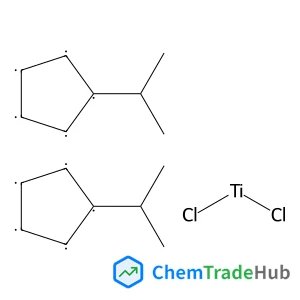
BIS(I-PROPYLCYCLOPENTADIENYL)TITANIUM DICHLORIDE
CAS Number:
12130-65-3
Molecular Formula:
C16H22Cl2Ti
Recommended Suppliers






Disclaimer
This page provides academic journal information for reference and research purposes only. We are not affiliated with any journal publishers and do not handle publication submissions. For publication-related inquiries, please contact the respective journal publishers directly.
If you notice any inaccuracies in the information displayed, please contact us at support@chemtradehub.com. We will promptly review and address your concerns.