












The exciton dynamics in tetracene thin films
Literature Information
Publication Date
2013-07-19
DOI
10.1039/C3CP52609G
Impact Factor
3.676
Authors
Murad J. Y. Tayebjee, Raphaël G. C. R. Clady, Timothy W. Schmidt
View Original
Abstract
Tetracene thin films are investigated by time-resolved photoluminescence on picosecond to nanosecond time-scales. The picosecond luminescence decay dynamics is confirmed to be independent of temperature, but the nanosecond timescale luminescence dynamics is highly temperature dependent. This is interpretted in terms of motion along an intermolecular coordinate which couples the S1 state to the multiexciton (ME) state, arising from frustrated photodimerization, and giving rise to exciton dimming through adiabatic coupling. Dull excitons persist at low temperatures, but can thermally access separated triplet states at higher temperatures, quenching the delayed fluorescence. The effects of exciton density on both the picosecond and nanosecond luminescence dynamics are investigated, and a rate constant of (1.70 ± 0.08) × 10−8 cm3 s−1 is determined for singlet–singlet annihilation.
Related Literature
Differentiating intrinsic SERS spectra from a mixture by sampling induced composition gradient and independent component analysis
Justin L. Abell, Joonsang Lee, Qun Zhao, Harold Szu, Yiping Zhao
2011-11-02
Communication
DOI: 10.1039/C1AN15623C
Note on the chemical and bacteriological examination of water, with remarks on the fever epidemic at worthing in 1893
Paper
DOI: 10.1039/AN8952000073
Ultrasensitive immunochromatographic strip for the detection of cyhalothrin in foods
Lu Lin, Shanshan Song, Xiaoling Wu, Liqiang Liu, Hua Kuang, Chuanlai Xu
2021-05-17
Paper
DOI: 10.1039/D1AY00609F
PEGylated NALC-functionalized gold nanoparticles for colorimetric discrimination of chiral tyrosine
Xin-Yue Chen, Wei Ha, Xiao-Jie Jin, Yan-Ping Shi
2020-08-20
Paper
DOI: 10.1039/D0AN01460E
Liquid chromatography-tandem mass spectrometry for monitoring vitamin D hydroxymetabolites in human aqueous humor
Neus Fabregat-Cabello, Pierre Darimont, Loreen Huyghebaert, Pascal Reynier, Caroline Le Goff, Étienne Cavalier
2019-09-24
Paper
DOI: 10.1039/C9AY01896D
NMR-based metabolomics and fluxomics: developments and future prospects
2020-03-02
Critical Review
DOI: 10.1039/D0AN00142B
Comprehensive screening of multiclass illegal adulterants in herbal supplements and Spice-type drugs using specific MS/MS fragmentations by UHPLC-Q/TOF-MS
Jisu Hur, Wonwoong Lee, Beom Hee Kim, Hyun Ji Kim, Do Hee Lee, Ji Hyun Lee, Yong Moon Lee, Han Bin Oh, Jongki Hong
2019-09-16
Paper
DOI: 10.1039/C9AY01517E
Noninvasive blood glucose detection using a quantum cascade laser
Shazzad Rassel, Chao Xu, Steven Zhang, Dayan Ban
2020-02-11
Critical Review
DOI: 10.1039/C9AN02354B
You might also like
Compound Q&A
Are there alternatives to 1-(4-Chlorophenyl)-N-hydroxymethanimine (CAS: 3848-36-0) in synthesis?
When considering alternatives to 1-(4-Chlorophenyl)-N-hydroxymethanimine (CAS: 3...
3848-36-01-(4-Chlorophenyl)-N...
Compound Q&A
How should (1R,9S,10S,12S,14E,16S,19R,20R,21S,22R)-3,9,21-Trihydroxy-5,10,12,14,16,20,22-heptamethyl-23,24-dioxatetracyclo[17.3.1.1~6,9~.0~2,7~]tetracosa-2,5,7,14-tetraen-4-one (CAS: 183202-73-5) be stored?
This compound should be stored in a cool, dry place away from direct sunlight. I...
183202-73-5(1R,9S,10S,12S,14E,1...
Compound Q&A
How is 3-(4-Bromophenyl)-5-(2-fluorophenyl)-1,2,4-oxadiazole (CAS: 419553-16-5) typically synthesized?
3-(4-Bromophenyl)-5-(2-fluorophenyl)-1,2,4-oxadiazole is synthesized through a m...
419553-16-53-(4-Bromophenyl)-5-...
Compound Q&A
How is 5-Chloro-2-(4-chlorophenyl)-4-methyl-6-[3-(1-piperidinyl)propoxy]pyrimidine (CAS: 1639220-19-1) typically synthesized?
5-Chloro-2-(4-chlorophenyl)-4-methyl-6-[3-(1-piperidinyl)propoxy]pyrimidine (CAS...
1639220-19-15-Chloro-2-(4-chloro...
Compound Q&A
What industries use 2-Chloro-4-(difluoromethoxy)pyridine (CAS: 1206978-15-5)?
2-Chloro-4-(difluoromethoxy)pyridine is used in the pharmaceutical industry for ...
1206978-15-52-Chloro-4-(difluoro...
Compound Q&A
What regulatory guidelines apply to 3-Chloro-6-methylpyridazine (CAS: 1121-79-5)?
3-Chloro-6-methylpyridazine (CAS: 1121-79-5) is classified under the Globally Ha...
1121-79-53-Chloro-6-methylpyr...
Compound Q&A
Are there alternatives to Methyl 4,5-dimethyl-2-nitrobenzoate in synthesis?
Several alternatives can be used in the synthesis of Methyl 4,5-dimethyl-2-nitro...
90922-74-0Methyl 4,5-dimethyl-...
Compound Q&A
Are there alternatives to (2E,2'E)-3,3'-(1,4-Phenylene)bisacrylaldehyde in synthesis?
Alternatives to (2E,2'E)-3,3'-(1,4-Phenylene)bisacrylaldehyde include other acry...
63405-68-5(2E,2'E)-3,3'-(1,4-P...
Compound Q&A
What is 3-Amino-5-chloropyridin-2-ol hydrochloride (CAS: 1261906-29-9)?
3-Amino-5-chloropyridin-2-ol hydrochloride is an organic compound with the CAS n...
1261906-29-93-Amino-5-chloropyri...
Compound Q&A
What precautions should be taken when handling 6,7-Difluoro-2,3-dihydro-4H-chromen-4-one (CAS: 1092349-93-3)?
When handling 6,7-Difluoro-2,3-dihydro-4H-chromen-4-one, it is essential to wear...
1092349-93-36,7-Difluoro-2,3-dih...
Source Journal
Physical Chemistry Chemical Physics

CiteScore:
5.5
Self-citation Rate:
10.3%
Articles per Year:
3036
Physical Chemistry Chemical Physics (PCCP) is an international journal co-owned by 19 physical chemistry and physics societies from around the world. This journal publishes original, cutting-edge research in physical chemistry, chemical physics and biophysical chemistry. To be suitable for publication in PCCP, articles must include significant innovation and/or insight into physical chemistry; this is the most important criterion that reviewers and Editors will judge against when evaluating submissions. The journal has a broad scope and welcomes contributions spanning experiment, theory, computation and data science. Topical coverage includes spectroscopy, dynamics, kinetics, statistical mechanics, thermodynamics, electrochemistry, catalysis, surface science, quantum mechanics, quantum computing and machine learning. Interdisciplinary research areas such as polymers and soft matter, materials, nanoscience, energy, surfaces/interfaces, and biophysical chemistry are welcomed if they demonstrate significant innovation and/or insight into physical chemistry. Joined experimental/theoretical studies are particularly appreciated when complementary and based on up-to-date approaches.
Recommended Compounds
![4-[(3-Chloro-2-fluorophenyl)amino]-7-methoxy-6-quinazolinyl acetate structure](https://static.chemtradehub.com/structs/740/740081-22-5-f58f.webp "4-[(3-Chloro-2-fluorophenyl)amino]-7-methoxy-6-quinazolinyl acetate structure")
4-[(3-Chloro-2-fluorophenyl)amino]-7-methoxy-6-quinazolinyl acetate
CAS Number:
740081-22-5
Molecular Formula:
C17H13ClFN3O3
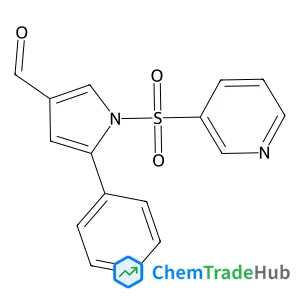
5-Phenyl-1-(pyridin-3-ylsulfonyl)-1H-pyrrole-3-carbaldehyde
CAS Number:
881676-90-0
Molecular Formula:
C16H12N2O3S
Recommended Suppliers




Disclaimer
This page provides academic journal information for reference and research purposes only. We are not affiliated with any journal publishers and do not handle publication submissions. For publication-related inquiries, please contact the respective journal publishers directly.
If you notice any inaccuracies in the information displayed, please contact us at support@chemtradehub.com. We will promptly review and address your concerns.