












Complex organic molecules are released during thermal reduction of graphite oxides
Literature Information
Publication Date
2013-05-09
DOI
10.1039/C3CP51189H
Impact Factor
3.676
Authors
Zdeněk Sofer, Petr Šimek, Martin Pumera
View Original
Abstract
Thermal exfoliation and deoxygenation of graphite oxide is one of the major routes for the preparation of large quantities of graphene-based materials. It is commonly believed that thermal exfoliation leads to the release of H2O, CO and CO2 gases. Here we show for the first time that in addition to these small simple molecules, there is a wide variety of complex organic molecules that are released from graphite oxide during the exfoliation process, such as alkanes, substituted polycyclic aromatic hydrocarbons and heterocyclic molecules. The compositions of the released volatile compounds depend on the exfoliation atmosphere (Ar, H2), pressure and the preparation methods of graphite oxide (such as Hofmann, Staudenmaier or Hummers). The structures of the decomposition products reflect the characters of graphite oxide precursors and are also directly related to the defects in the graphene products. As such, these findings have profound influences on our understanding on the structural defects of reduced graphenes, which consequently provide further insights into their properties.
Related Literature
Complementary and partially complementary DNA duplexes tethered to a functionalized substrate: a molecular dynamics approach to biosensing
Susanna Monti, Ivo Cacelli, Alessandro Ferretti, Giacomo Prampolini, Vincenzo Barone
2011-06-09
Paper
DOI: 10.1039/C1CP21115C
Stern–Brocot trees in the periodicity of mixed-mode oscillations
2011-02-21
Paper
DOI: 10.1039/C0CP02776F
Study of structural and dynamic properties of liquid phenyltrimethoxysilane
Khadga Karki, Arnulf Materny, Danilo Roccatano
2011-05-27
Paper
DOI: 10.1039/C1CP20349E
The growth of single crystal silver wires at the nitrobenzene|water interface
Ulrich Hasse, Gottfried J. Palm, Winfried Hinrichs, Fritz Scholz
2011-06-01
Paper
DOI: 10.1039/C0CP01469A
Photochemistry of hydrogen bonded heterocycles probed by photodissociation experiments and ab initio methods
Michal Fárník
2011-05-25
Perspective
DOI: 10.1039/C1CP20674E
Antiferromagnetic interactions in the quarter-filled organic conductor (EDO-TTF)2PF6
Michael Filatov
2011-06-03
Paper
DOI: 10.1039/C0CP02450C
Closely adjacent gold nanoparticles linked by chemisorption of neutral rhodamine 123 molecules providing enormous SERS intensity
Toru Yajima, Yingying Yu, Masayuki Futamata
2011-06-08
Paper
DOI: 10.1039/C1CP00046B
Comment on “The electron density vs. NICS scan: a new approach to assess aromaticity in molecules with different ring sizes” by C. Foroutan-Nejad, S. Shahbazian and P. Rashidi-Ranjbar, Phys. Chem. Chem. Phys., 2010, 12, 12630: is there a connection between electron densities at the ring critical points and NICS?
2011-06-13
Comment
DOI: 10.1039/C0CP02407D
You might also like
Compound Q&A
What are the main uses of 1H-Indazole-6-carbonitrile (CAS: 141290-59-7)?
1H-Indazole-6-carbonitrile finds applications in pharmaceuticals, where it serve...
141290-59-71H-Indazole-6-carbon...
Compound Q&A
How should waste containing Dioctyl (2E)-2-butenedioate (CAS: 2997-85-5) be handled?
Waste containing Dioctyl (2E)-2-butenedioate (CAS: 2997-85-5) should be collecte...
2997-85-5Dioctyl (2E)-2-buten...
Compound Q&A
What industries use Sodium [(1,2-benzoxazol-3-ylmethyl)sulfonyl]azanide (CAS: 68291-98-5)?
Sodium [(1,2-benzoxazol-3-ylmethyl)sulfonyl]azanide is primarily used in pharmac...
68291-98-5Sodium [(1,2-benzoxa...
Compound Q&A
Are there alternatives to Dimethyl 4-(4,4,5,5-tetramethyl-1,3,2-dioxaborolan-2-yl)-2,6-pyridinedicarboxylate (CAS: 741709-66-0) in synthesis?
Dimethyl 4-(4,4,5,5-tetramethyl-1,3,2-dioxaborolan-2-yl)-2,6-pyridinedicarboxyla...
741709-66-0Dimethyl 4-(4,4,5,5-...
Compound Q&A
How should waste containing 2-Fluoro-6-hydrazinopyridine (CAS: 80714-39-2) be handled?
Waste containing 2-Fluoro-6-hydrazinopyridine (CAS: 80714-39-2) should be manage...
80714-39-22-Fluoro-6-hydrazino...
Compound Q&A
What is 6-Formyl-2-pyridinecarboxylic acid (CAS: 499214-11-8)?
6-Formyl-2-pyridinecarboxylic acid is an organic compound with the molecular for...
499214-11-86-Formyl-2-pyridinec...
Compound Q&A
What is the market or research trend for 3-(3,4-dimethoxyphenyl)-2,5-dimethyl-N-(2-morpholin-4-ylethyl)pyrazolo[1,5-a]pyrimidin-7-amine (CAS: 900874-91-1)?
Research trends for this compound indicate a focus on its potential applications...
900874-91-13-(3,4-dimethoxyphen...
Compound Q&A
How is 9H-Tribenzo[b,d,f]azepine (CAS: 29875-73-8) typically synthesized?
9H-Tribenzo[b,d,f]azepine is typically synthesized via a multi-step process invo...
29875-73-89H-Tribenzo[b,d,f]az...
Compound Q&A
How is 1-Cyclopropyl-7-ethoxy-6-fluoro-8-methoxy-4-oxo-1,4-dihydro-3-quinolinecarboxylic acid (CAS: 1797982-51-4) typically synthesized?
1-Cyclopropyl-7-ethoxy-6-fluoro-8-methoxy-4-oxo-1,4-dihydro-3-quinolinecarboxyli...
1797982-51-41-Cyclopropyl-7-etho...
Compound Q&A
How should waste containing Methyl 3-oxo-1,2,3,4-tetrahydro-6-quinoxalinecarboxylate (CAS: 671820-52-3) be handled?
Waste containing Methyl 3-oxo-1,2,3,4-tetrahydro-6-quinoxalinecarboxylate (CAS: ...
671820-52-3Methyl 3-oxo-1,2,3,4...
Source Journal
Physical Chemistry Chemical Physics

CiteScore:
5.5
Self-citation Rate:
10.3%
Articles per Year:
3036
Physical Chemistry Chemical Physics (PCCP) is an international journal co-owned by 19 physical chemistry and physics societies from around the world. This journal publishes original, cutting-edge research in physical chemistry, chemical physics and biophysical chemistry. To be suitable for publication in PCCP, articles must include significant innovation and/or insight into physical chemistry; this is the most important criterion that reviewers and Editors will judge against when evaluating submissions. The journal has a broad scope and welcomes contributions spanning experiment, theory, computation and data science. Topical coverage includes spectroscopy, dynamics, kinetics, statistical mechanics, thermodynamics, electrochemistry, catalysis, surface science, quantum mechanics, quantum computing and machine learning. Interdisciplinary research areas such as polymers and soft matter, materials, nanoscience, energy, surfaces/interfaces, and biophysical chemistry are welcomed if they demonstrate significant innovation and/or insight into physical chemistry. Joined experimental/theoretical studies are particularly appreciated when complementary and based on up-to-date approaches.
Recommended Compounds

Trichloro(3,3,4,4,5,5,6,6,7,7,8,8,8-tridecafluorooctyl)silane
CAS Number:
78560-45-9
Molecular Formula:
C8H4Cl3F13Si
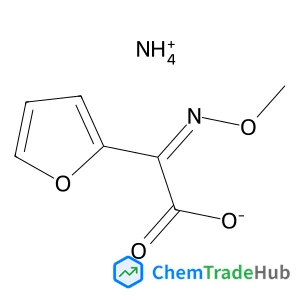
Ammonium (Z)-2-(furan-2-yl)-2-(methoxyimino)acetate
CAS Number:
97148-39-5
Molecular Formula:
C7H10N2O4
Recommended Suppliers



Disclaimer
This page provides academic journal information for reference and research purposes only. We are not affiliated with any journal publishers and do not handle publication submissions. For publication-related inquiries, please contact the respective journal publishers directly.
If you notice any inaccuracies in the information displayed, please contact us at support@chemtradehub.com. We will promptly review and address your concerns.