












Intercalation and de-intercalation pathway of proflavine through the minor and major grooves of DNA: roles of water and entropy
Literature Information
Publication Date
2013-03-25
DOI
10.1039/C3CP50501D
Impact Factor
3.676
Authors
Wilbee D. Sasikala, Arnab Mukherjee
View Original
Abstract
DNA intercalation is a clinically relevant biophysical process due to its potential to inhibit the growth and survival of tumor cells and microbes through the arrest of the transcription and replication processes. Extensive kinetic and thermodynamic studies have followed since the discovery of the intercalative binding mode. However, the molecular mechanism and the origin of the thermodynamic and kinetic profile of the process are still not clear. Here we have constructed the free energy landscape of intercalation, de-intercalation and dissociation from both the major and minor grooves of DNA using extensive all-atom metadynamics simulations, capturing both the free energy barriers and stability in close agreement with fluorescence kinetic experiments. In the intercalated state, an alternate orientation of proflavine is found with an almost equal stability compared to the crystal orientation, however, separated by a 5.0 kcal mol−1 barrier that decreases as the drug approaches the groove edges. This study provides a comprehensive picture in comparison with experiments, which indicates that the intercalation and de-intercalation of proflavine happen through the major groove side, although the effective intercalation barrier increases because the path of intercalation goes through the stable (abortive) minor groove bound state, making the process a millisecond long one in excellent agreement with the experiments. The molecular origin of the higher barrier for the intercalation from the minor groove side is attributed to the desolvation energy of DNA and the loss of entropy, while the barrier from the major groove, in the absence of desolvation energy, is primarily entropic.
Recommended Journals
Related Literature
Impact of fixation on in vitro cell culture lines monitored with Raman spectroscopy
Melissa M. Mariani, Peter Lampen, Bayden R. Wood
2009-04-28
Paper
DOI: 10.1039/B822408K
Paper-based sample processing for the fast and direct MS analysis of multiple analytes from serum samples
Fu Zhang, Bin Ji, Xiang-Hong Yan, Shuang Lv, Fang Fang, Shuang Zhao, Xiao-Lin Guo, Zhi-Yong Wu
2022-09-20
Paper
DOI: 10.1039/D2AN01261H
An electroactive fiber optic chip for spectroelectrochemical characterization of ultra-thin redox-active films
Brooke M. Beam, Neal R. Armstrong, Sergio B. Mendes
2008-12-19
Paper
DOI: 10.1039/B814338B
Switchable inhibitory behavior of divalent magnesium ion in DNA hybridization-based gene quantification
Hyowon Jin, Mark R. Liles, Beelee Chua, Ahjeong Son
2022-09-18
Paper
DOI: 10.1039/D2AN01164F
Simultaneous quantification of uranium(vi), samarium, nitric acid, and temperature with combined ensemble learning, laser fluorescence, and Raman scattering for real-time monitoring‡
Luke R. Sadergaski, Hunter B. Andrews
2022-08-08
Paper
DOI: 10.1039/D2AN00998F
Electrochemical genosensor for the rapid detection of GMO using loop-mediated isothermal amplification
Masato Saito, M. Mosharraf Hossain, S. Ramachandara Rao, Satoshi Furui, Akihiro Hino, Yuzuru Takamura, Masahiro Takagi, Eiichi Tamiya
2009-02-26
Paper
DOI: 10.1039/B812569D
Two-parameter monitoring in a lab-on-valve manifold, applied to intracellular H2O2 measurements
Ilkka Lähdesmäki, Petr Chocholouš, Andrea D. Carroll, Judy Anderson, Peter S. Rabinovitch, Jaromir Ruzicka
2009-04-27
Paper
DOI: 10.1039/B822070K
Association between ageing, brain chemistry and white matter volume revealed with complementary MRI and FTIR brain imaging
Juliette Phillips, Elizabeth Harrild, Rebecca J. Tidy, Lincoln Codd, Kirsty Richardson, Liesl Celliers
2022-11-02
Communication
DOI: 10.1039/D2AN01271E
Coil spring-powered pump with inertial microfluidic chip for size-based isolation and enrichment of biological cells
Hogyeong Gwak, Seong Min Ha, Jae-Woo Song, Kyung-A. Hyun
2022-11-11
Paper
DOI: 10.1039/D2AN01380K
Identification of two SPRY isoforms SPRY1 and SPRY3 by atomic force microscopy at the single-molecule level
Xiaomei Yang, Zhirong Li, Jun Zhang, Wenjie Zhao
2022-11-03
Paper
DOI: 10.1039/D2AN01468H
You might also like
Compound Q&A
What precautions should be taken when handling 4-(2-Furylmethyl)thiomorpholine 1,1-dioxide (CAS: 79206-94-3)?
When handling 4-(2-Furylmethyl)thiomorpholine 1,1-dioxide (CAS: 79206-94-3), it ...
79206-94-34-(2-Furylmethyl)thi...
Compound Q&A
What precautions should be taken when handling 4-Chloro-N-[2-(4-morpholinyl)ethyl]benzamide (CAS: 71320-77-9)?
When handling 4-Chloro-N-[2-(4-morpholinyl)ethyl]benzamide (CAS: 71320-77-9), it...
71320-77-94-Chloro-N-[2-(4-mor...
Compound Q&A
How should waste containing 2-[2-(2-Methoxyethoxy)ethoxy]ethyl 4-methylbenzenesulfonate (CAS: 62921-74-8) be handled?
Waste containing this compound (CAS: 62921-74-8) should be handled according to ...
62921-74-82-[2-(2-Methoxyethox...
Compound Q&A
How should waste containing (S)-Methyl 2-amino-3-cyclohexylpropanoate be handled?
Waste containing (S)-Methyl 2-amino-3-cyclohexylpropanoate should be collected i...
40056-18-6(S)-Methyl 2-amino-3...
Compound Q&A
How is 5-({4-[(2S,4R)-4-Hydroxy-2-methyltetrahydro-2H-pyran-4-yl]-2-thienyl}sulfanyl)-1-methyl-1,3-dihydro-2H-indol-2-one (CAS: 166882-70-8) typically synthesized?
This compound can be synthesized using a multi-step process involving the conjug...
166882-70-85-({4-[(2S,4R)-4-Hyd...
Compound Q&A
Are there alternatives to (2E)-3-(3,4-Dichlorophenyl)acrylic acid (CAS: 7312-27-8) in synthesis?
There are several alternatives to (2E)-3-(3,4-Dichlorophenyl)acrylic acid in syn...
7312-27-8(2E)-3-(3,4-Dichloro...
Compound Q&A
How should Ethyl 6-(2-nitrophenyl)imidazo[2,1-b][1,3]thiazole-3-carboxylate (CAS: 925437-84-9) be stored?
Ethyl 6-(2-nitrophenyl)imidazo[2,1-b][1,3]thiazole-3-carboxylate (CAS: 925437-84...
925437-84-9Ethyl 6-(2-nitrophen...
Compound Q&A
How should waste containing 2-(1,3-Thiazol-2-yl)ethanamine (CAS: 18453-07-1) be handled?
Waste containing 2-(1,3-Thiazol-2-yl)ethanamine (CAS: 18453-07-1) should be coll...
18453-07-12-(1,3-Thiazol-2-yl)...
Compound Q&A
How is Methyl 5-iodo-2-methylbenzoate (CAS: 103440-54-6) typically synthesized?
Methyl 5-iodo-2-methylbenzoate can be synthesized through the iodination of meth...
103440-54-6Methyl 5-iodo-2-meth...
Compound Q&A
How is 5-Chloro[1,2,4]triazolo[1,5-a]pyridine (CAS: 1427399-34-5) typically synthesized?
5-Chloro[1,2,4]triazolo[1,5-a]pyridine is commonly synthesized via the condensat...
1427399-34-55-Chloro[1,2,4]triaz...
Source Journal
Physical Chemistry Chemical Physics

CiteScore:
5.5
Self-citation Rate:
10.3%
Articles per Year:
3036
Physical Chemistry Chemical Physics (PCCP) is an international journal co-owned by 19 physical chemistry and physics societies from around the world. This journal publishes original, cutting-edge research in physical chemistry, chemical physics and biophysical chemistry. To be suitable for publication in PCCP, articles must include significant innovation and/or insight into physical chemistry; this is the most important criterion that reviewers and Editors will judge against when evaluating submissions. The journal has a broad scope and welcomes contributions spanning experiment, theory, computation and data science. Topical coverage includes spectroscopy, dynamics, kinetics, statistical mechanics, thermodynamics, electrochemistry, catalysis, surface science, quantum mechanics, quantum computing and machine learning. Interdisciplinary research areas such as polymers and soft matter, materials, nanoscience, energy, surfaces/interfaces, and biophysical chemistry are welcomed if they demonstrate significant innovation and/or insight into physical chemistry. Joined experimental/theoretical studies are particularly appreciated when complementary and based on up-to-date approaches.
Recommended Compounds
![5-Acetyl-2,3-dihydrobenzo[b]furan structure](https://static.chemtradehub.com/structs/908/90843-31-5-eea4.webp "5-Acetyl-2,3-dihydrobenzo[b]furan structure")
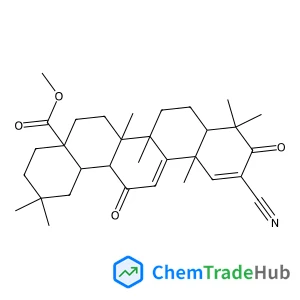
Methyl 2-cyano-3,12-dioxooleana-1,9(11)-dien-28-oate
CAS Number:
218600-53-4
Molecular Formula:
C32H43NO4
Recommended Suppliers






Disclaimer
This page provides academic journal information for reference and research purposes only. We are not affiliated with any journal publishers and do not handle publication submissions. For publication-related inquiries, please contact the respective journal publishers directly.
If you notice any inaccuracies in the information displayed, please contact us at support@chemtradehub.com. We will promptly review and address your concerns.