


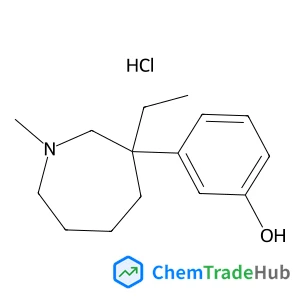
3-(3-Ethyl-1-methyl-3-azepanyl)phenol hydrochloride (1:1)
CAS Number:
59263-76-2
Molecular Formula:
C15H24ClNO
Li Liu, Li Zhang, Tianyu Wang, Minghua Liu
A series of styrylquinoxaline alkoxy derivatives, 3-(4-(alkoxy)styryl)quinoxalin-2(1H)-one substituted with different alkyl chain lengths (SQCn, n = 12, 14, 16, 18), have been synthesized. The air/water interfacial assemblies of these compounds fabricated using the Langmuir–Blodgett technique were studied. The assemblies transferred on the solid substrate showed photochemical reactions and supramolecular chirality, which depend on the length of the alkyl chain. The increment of the alkyl chain length caused the SQCn assemblies to change from an unstable molecular film to disordered and ordered arrangement in the LB films. Specifically, SQC12 could not form stable molecular films. Although SQC14 could form stable molecular films, the disordered packing of the molecules in the LB films caused the absence of supramolecular chirality as well as photodimerization. When the alkyl chain is increased to 16 or above, the SQC LB films show supramolecular chirality and topochemical photodimerization upon irradiation. These results indicated that the hydrophobic interaction between the long alkyl chains also played an important role in regulating the packing of the functional groups at the air/water interface, which would subsequently affect the photodimerization and the emergence of supramolecular chirality.

Topics in Catalysis

Atomization and Sprays

Bioorganic & Medicinal Chemistry Letters

Heteroatom Chemistry

Biocatalysis and Biotransformation

Critical Reviews in Solid State and Materials Sciences

Herald of the Russian Academy of Sciences

Journal of Asian Natural Products Research

NDT & E International

Bioorganic & Medicinal Chemistry
Waralee Srinarawat, Ruedee Hemstapat, Tulyapruek Tawonsawatruk, Nisa Patikarnmonthon, Itaru Hamachi, Akio Ojida, Jirarut Wongkongkatep
DOI: 10.1039/D2AN01257J
Hyowon Jin, Mark R. Liles, Beelee Chua, Ahjeong Son
DOI: 10.1039/D2AN01164F
Paul Bassan, Hugh J. Byrne, Joe Lee, Franck Bonnier, Colin Clarke, Paul Dumas, Ehsan Gazi, Michael D. Brown, Peter Gardner
DOI: 10.1039/B821349F
Taijie Zhan, Wenya Niu, Mengdong Cui, Hengxin Han, Ding Wang, Yi Xu
DOI: 10.1039/D2AN01288J
Miriam Fico, Jeffrey D. Maas, Scott A. Smith, Anthony B. Costa, Zheng Ouyang, William J. Chappell, R. Graham Cooks
DOI: 10.1039/B822140E
Fan Li, Juan Zhang, Xuni Cao, Lihua Wang, Di Li, Shiping Song, Bangce Ye, Chunhai Fan
DOI: 10.1039/B900900K
Yu-Chin Lin, Ying-Yu Chen, Bang-Ying Yu, Wei-Chun Lin
DOI: 10.1039/B814729A
Quan Yu, Jing Gao, Xiaohua Yu, Jianbo Shi, Lin Lin, Xiaohao Wang
DOI: 10.1039/D2AN01422J
When handling 4-(2-Furylmethyl)thiomorpholine 1,1-dioxide (CAS: 79206-94-3), it ...
When handling 4-Chloro-N-[2-(4-morpholinyl)ethyl]benzamide (CAS: 71320-77-9), it...
Waste containing this compound (CAS: 62921-74-8) should be handled according to ...
Waste containing (S)-Methyl 2-amino-3-cyclohexylpropanoate should be collected i...
This compound can be synthesized using a multi-step process involving the conjug...
There are several alternatives to (2E)-3-(3,4-Dichlorophenyl)acrylic acid in syn...
Ethyl 6-(2-nitrophenyl)imidazo[2,1-b][1,3]thiazole-3-carboxylate (CAS: 925437-84...
Waste containing 2-(1,3-Thiazol-2-yl)ethanamine (CAS: 18453-07-1) should be coll...
Methyl 5-iodo-2-methylbenzoate can be synthesized through the iodination of meth...
5-Chloro[1,2,4]triazolo[1,5-a]pyridine is commonly synthesized via the condensat...

Physical Chemistry Chemical Physics (PCCP) is an international journal co-owned by 19 physical chemistry and physics societies from around the world. This journal publishes original, cutting-edge research in physical chemistry, chemical physics and biophysical chemistry. To be suitable for publication in PCCP, articles must include significant innovation and/or insight into physical chemistry; this is the most important criterion that reviewers and Editors will judge against when evaluating submissions. The journal has a broad scope and welcomes contributions spanning experiment, theory, computation and data science. Topical coverage includes spectroscopy, dynamics, kinetics, statistical mechanics, thermodynamics, electrochemistry, catalysis, surface science, quantum mechanics, quantum computing and machine learning. Interdisciplinary research areas such as polymers and soft matter, materials, nanoscience, energy, surfaces/interfaces, and biophysical chemistry are welcomed if they demonstrate significant innovation and/or insight into physical chemistry. Joined experimental/theoretical studies are particularly appreciated when complementary and based on up-to-date approaches.
![[4-(Heptyloxy)phenyl]boronic acid structure](https://static.chemtradehub.com/structs/136/136370-19-9-ad33.webp "[4-(Heptyloxy)phenyl]boronic acid structure")




