


Do inverse dithienylethenes behave as normal ones? A joint spectroscopic and theoretical investigation
Literature Information
Publication Date
2013-02-25
DOI
10.1039/C3CP43806F
Impact Factor
3.676
Authors
Stéphane Aloïse, Michel Sliwa, Guy Buntinx, Stéphanie Delbaere, Aurélie Perrier, François Maurel, Denis Jacquemin, Michinori Takeshita
View Original
Abstract
We investigate an inverse (I) dithienylethene, the bis(3,5-dimethyl-2-thienyl) perfluorocyclopentene, using absorption, emission and NMR spectroscopies as well as state-of-art first-principles (TDDFT) calculations. First, we find in addition to the expected antiparallel AP1 and parallel P2 conformers, a new stable antiparallel conformer AP3, but its energy is too high to be significantly populated at working temperature. More importantly, we demonstrate that, instead of an equal proportion of an AP and a P conformer as in normal (N) diarylethenes, the AP conformer is present in large excess. This result is confirmed by both DFT thermodynamical analysis and temperature-dependent NMR experiments modelized with an AP1 ↔ P2 fast interconversion model. With the latter, the relative populations are estimated to be ca. 3/1 for AP1/P2. Furthermore, the 0–0 energies simulated with a model that accounts for both vibrational and state-specific media effects of the ground and the excited states indicate that AP1 and P2 have very similar absorption signatures while only the P2 conformer should give rise to emission. Eventually, within excited state manifold, important topological points along the ring-closure reaction coordinate, and more specifically the unprecedented S1(opt) of the closed isomer, have been identified.
Recommended Journals

Chinese Journal of Chemistry

Bioorganic & Medicinal Chemistry Letters

Critical Reviews in Solid State and Materials Sciences

NDT & E International

Biocatalysis and Biotransformation

Main Group Chemistry

Herald of the Russian Academy of Sciences

Atomization and Sprays

Bioorganic & Medicinal Chemistry

Cellulose
Related Literature
Fluorescence detection of the human angiotensinogen protein by the G-quadruplex aptamer
Hui Xi, Hanlin Jiang, Mario Juhas, Yang Zhang
2022-08-03
Paper
DOI: 10.1039/D2AN01057G
Circular arrays of polymer-based miniature rectilinear ion traps
Miriam Fico, Jeffrey D. Maas, Scott A. Smith, Anthony B. Costa, Zheng Ouyang, William J. Chappell, R. Graham Cooks
2009-04-03
Paper
DOI: 10.1039/B822140E
Impact of fixation on in vitro cell culture lines monitored with Raman spectroscopy
Melissa M. Mariani, Peter Lampen, Bayden R. Wood
2009-04-28
Paper
DOI: 10.1039/B822408K
Interactions of proteins with small ionised molecules: electrochemical adsorption and facilitated ion transfer voltammetry of haemoglobin at the liquid|liquid interface
Grégoire Herzog, Waleed Moujahid, Jörg Strutwolf, Damien W. M. Arrigan
2009-06-15
Paper
DOI: 10.1039/B905441N
Copper nanoclusters on specific-primer PCR fragments with magnetic capture for the label-free fluorescent sensing of the T315I single nucleotide variant in the BCR–ABL1 gene
Ke-Peng Lai, Yu-Chen Su, Bo-Siang Fu, Kung-Hung Lin, Hwang-Shang Kou
2022-11-17
Paper
DOI: 10.1039/D2AN01433E
A highly selective chromogenic and fluorogenic chemodosimeter for dual detection of Cu2+ based on a redox-active calix[4]arene with isoxazolylchloroanthracene
Kai-Chi Chang, Chan-Yu Chen, Li-Wei Lee
2022-10-11
Paper
DOI: 10.1039/D2AN01201D
Au nanoflower film-based stretchable biosensors for in situ monitoring of superoxide anion release in cell mechanotransduction
Xu Zhao, Meihong Peng, Jialu Wang, Shutong Chen, Yuqing Lin
2022-07-28
Paper
DOI: 10.1039/D2AN01095J
Specific detection of fusion transcripts based on a duplex-specific nuclease and isothermal exponential amplification reaction
Fengxia Su, Tian Li, Xiaofei He, Zhengping Li
2022-11-02
Paper
DOI: 10.1039/D2AN01665F
Simultaneous quantification of uranium(vi), samarium, nitric acid, and temperature with combined ensemble learning, laser fluorescence, and Raman scattering for real-time monitoring‡
Luke R. Sadergaski, Hunter B. Andrews
2022-08-08
Paper
DOI: 10.1039/D2AN00998F
You might also like
Compound Q&A
What precautions should be taken when handling 4-(2-Furylmethyl)thiomorpholine 1,1-dioxide (CAS: 79206-94-3)?
When handling 4-(2-Furylmethyl)thiomorpholine 1,1-dioxide (CAS: 79206-94-3), it ...
79206-94-34-(2-Furylmethyl)thi...
Compound Q&A
What precautions should be taken when handling 4-Chloro-N-[2-(4-morpholinyl)ethyl]benzamide (CAS: 71320-77-9)?
When handling 4-Chloro-N-[2-(4-morpholinyl)ethyl]benzamide (CAS: 71320-77-9), it...
71320-77-94-Chloro-N-[2-(4-mor...
Compound Q&A
How should waste containing 2-[2-(2-Methoxyethoxy)ethoxy]ethyl 4-methylbenzenesulfonate (CAS: 62921-74-8) be handled?
Waste containing this compound (CAS: 62921-74-8) should be handled according to ...
62921-74-82-[2-(2-Methoxyethox...
Compound Q&A
How should waste containing (S)-Methyl 2-amino-3-cyclohexylpropanoate be handled?
Waste containing (S)-Methyl 2-amino-3-cyclohexylpropanoate should be collected i...
40056-18-6(S)-Methyl 2-amino-3...
Compound Q&A
How is 5-({4-[(2S,4R)-4-Hydroxy-2-methyltetrahydro-2H-pyran-4-yl]-2-thienyl}sulfanyl)-1-methyl-1,3-dihydro-2H-indol-2-one (CAS: 166882-70-8) typically synthesized?
This compound can be synthesized using a multi-step process involving the conjug...
166882-70-85-({4-[(2S,4R)-4-Hyd...
Compound Q&A
Are there alternatives to (2E)-3-(3,4-Dichlorophenyl)acrylic acid (CAS: 7312-27-8) in synthesis?
There are several alternatives to (2E)-3-(3,4-Dichlorophenyl)acrylic acid in syn...
7312-27-8(2E)-3-(3,4-Dichloro...
Compound Q&A
How should Ethyl 6-(2-nitrophenyl)imidazo[2,1-b][1,3]thiazole-3-carboxylate (CAS: 925437-84-9) be stored?
Ethyl 6-(2-nitrophenyl)imidazo[2,1-b][1,3]thiazole-3-carboxylate (CAS: 925437-84...
925437-84-9Ethyl 6-(2-nitrophen...
Compound Q&A
How should waste containing 2-(1,3-Thiazol-2-yl)ethanamine (CAS: 18453-07-1) be handled?
Waste containing 2-(1,3-Thiazol-2-yl)ethanamine (CAS: 18453-07-1) should be coll...
18453-07-12-(1,3-Thiazol-2-yl)...
Compound Q&A
How is Methyl 5-iodo-2-methylbenzoate (CAS: 103440-54-6) typically synthesized?
Methyl 5-iodo-2-methylbenzoate can be synthesized through the iodination of meth...
103440-54-6Methyl 5-iodo-2-meth...
Compound Q&A
How is 5-Chloro[1,2,4]triazolo[1,5-a]pyridine (CAS: 1427399-34-5) typically synthesized?
5-Chloro[1,2,4]triazolo[1,5-a]pyridine is commonly synthesized via the condensat...
1427399-34-55-Chloro[1,2,4]triaz...
Source Journal
Physical Chemistry Chemical Physics

CiteScore:
5.5
Self-citation Rate:
10.3%
Articles per Year:
3036
Physical Chemistry Chemical Physics (PCCP) is an international journal co-owned by 19 physical chemistry and physics societies from around the world. This journal publishes original, cutting-edge research in physical chemistry, chemical physics and biophysical chemistry. To be suitable for publication in PCCP, articles must include significant innovation and/or insight into physical chemistry; this is the most important criterion that reviewers and Editors will judge against when evaluating submissions. The journal has a broad scope and welcomes contributions spanning experiment, theory, computation and data science. Topical coverage includes spectroscopy, dynamics, kinetics, statistical mechanics, thermodynamics, electrochemistry, catalysis, surface science, quantum mechanics, quantum computing and machine learning. Interdisciplinary research areas such as polymers and soft matter, materials, nanoscience, energy, surfaces/interfaces, and biophysical chemistry are welcomed if they demonstrate significant innovation and/or insight into physical chemistry. Joined experimental/theoretical studies are particularly appreciated when complementary and based on up-to-date approaches.
Recommended Compounds
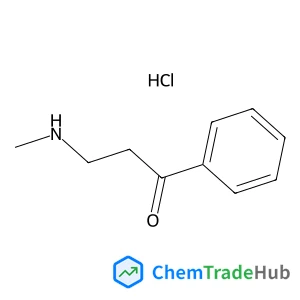
3-(Methylamino)-1-phenyl-1-propanone hydrochloride (1:1)
CAS Number:
2538-50-3
Molecular Formula:
C10H14ClNO

![[4-(Heptyloxy)phenyl]boronic acid structure](https://static.chemtradehub.com/structs/136/136370-19-9-ad33.webp "[4-(Heptyloxy)phenyl]boronic acid structure")
Recommended Suppliers




Disclaimer
This page provides academic journal information for reference and research purposes only. We are not affiliated with any journal publishers and do not handle publication submissions. For publication-related inquiries, please contact the respective journal publishers directly.
If you notice any inaccuracies in the information displayed, please contact us at support@chemtradehub.com. We will promptly review and address your concerns.