












Microspectroscopic SERS detection of interleukin-6 with rationally designed gold/silver nanoshells
Literature Information
Publication Date
2013-01-18
DOI
10.1039/C3AN36610C
Impact Factor
4.616
Authors
Yuling Wang, Mohammad Salehi, Max Schütz, Katharina Rudi, Sebastian Schlücker
View Original
Abstract
Rationally designed gold/silver nanoshells (Au/Ag-NS) with plasmon resonances optimized for red laser excitation in order to minimize autofluorescence from clinical samples exhibit scattering cross-sections, which are ca. one order of magnitude larger compared with solid quasi-spherical gold nanoparticles (Au-NPs) of the same size. Hydrophilic stabilization and sterical accessibility for subsequent bioconjugation of Au/Ag-NS is achieved by coating their surface with a self-assembled monolayer (SAM) of rationally designed Raman reporter molecules comprising terminal mono- and tri-ethylene glycol (EG) spacers, respectively. The stability of the hydrophilically stabilized metal colloid was tested under different conditions. In contrast to metal colloids coated with a SAM without terminal EG spacers, the hydrophilically stabilized SERS particles do not aggregate under physiologically relevant conditions, i.e., buffer solutions with high ionic strength. Using these rationally designed SERS particles in conjunction with a microspectroscopic acquisition scheme, a sandwich immunoassay for the sensitive detection of interleukin-6 (IL-6) was developed. Several control experiments demonstrate the high specificity of the assay towards IL-6, with a lowest detectable concentration of ca. 1 pg mL−1. The signal strength of the Au/Ag-NS is at least one order of magnitude higher compared with hydrophilically stabilized, non-aggregated solid quasi-spherical Au-NPs of the same size.
Recommended Journals
Related Literature
Spin decontamination of broken-symmetry density functional theory calculations: deeper insight and new formulations
Nicolas Ferré, Nathalie Guihéry, Jean-Paul Malrieu
2015-01-28
Paper
DOI: 10.1039/C4CP05531D
Electronic couplings for molecular charge transfer: benchmarking CDFT, FODFT and FODFTB against high-level ab initio calculations. II
Adam Kubas, Fruzsina Gajdos, Harald Oberhofer, Jochen Blumberger
2014-12-22
Paper
DOI: 10.1039/C4CP04749D
Structure and segregation of dopant–defect complexes at grain boundaries in nanocrystalline doped ceria
Pratik P. Dholabhai, Jeffery A. Aguiar, Longjia Wu, Terry G. Holesinger, Toshihiro Aoki, Ricardo H. R. Castro, Blas P. Uberuaga
2015-05-11
Paper
DOI: 10.1039/C5CP02200B
Structural differences between the active sites of the Ni-A and Ni-B states of the [NiFe] hydrogenase: an approach by quantum chemistry and single crystal ENDOR spectroscopy
Jessica L. Barilone, Hideaki Ogata, Wolfgang Lubitz, Maurice van Gastel
2015-05-27
Paper
DOI: 10.1039/C5CP01322D
Structural effects on the photophysical properties of mono-β-diketonate and bis-β-diketonate EuIII complexes
Tianyu Zhu, Peng Chen, Hongfeng Li, Wenbin Sun, Ting Gao, Pengfei Yan
2015-05-18
Paper
DOI: 10.1039/C5CP01392E
Ab initio study of the O4H+ novel species: spectroscopic fingerprints to aid its observation
F. George D. Xavier, Rámon Hernández-Lamoneda
2015-05-12
Paper
DOI: 10.1039/C5CP01822F
Structure determination of trans-cinnamaldehyde by broadband microwave spectroscopy
2015-05-15
Paper
DOI: 10.1039/C5CP02582F
Surface oxygen-vacancy induced photocatalytic activity of La(OH)3 nanorods prepared by a fast and scalable method
Xiang Xiao, Guangming Jiang, Yuxin Zhang, Wen Cui, Jinzhu Ma
2015-05-22
Paper
DOI: 10.1039/C5CP02460A
Towards an ab initio description of the optical spectra of light-harvesting antennae: application to the CP29 complex of photosystem II
Sandro Jurinovich, Lucas Viani, Ingrid G. Prandi, Thomas Renger, Benedetta Mennucci
2015-04-01
Paper
DOI: 10.1039/C4CP05647G
Understanding the role of iron in the magnetism of Fe doped ZnO nanoparticles
C. A. Barrero, A. Punnoose
2015-05-01
Paper
DOI: 10.1039/C5CP01408E
You might also like
Compound Q&A
What are the main uses of (5-Sulfamoyl-3-pyridinyl)boronic acid (CAS: 951233-61-7)?
(5-Sulfamoyl-3-pyridinyl)boronic acid is primarily used in chemical synthesis, p...
951233-61-7(5-Sulfamoyl-3-pyrid...
Compound Q&A
How is Benzyl 2-methyl-2-(methylsulfonyl)-4-pentenoate (CAS: 1942858-50-5) typically synthesized?
Benzyl 2-methyl-2-(methylsulfonyl)-4-pentenoate is typically synthesized via est...
1942858-50-5Benzyl 2-methyl-2-(m...
Compound Q&A
What precautions should be taken when handling 8-Fluoroquinolin-6-ol (CAS: 209353-22-0)?
When handling 8-Fluoroquinolin-6-ol (CAS: 209353-22-0), it is important to use p...
209353-22-08-Fluoroquinolin-6-o...
Compound Q&A
What are the physical and chemical properties of 1,3-Dibromo-5-(2-methyl-2-propanyl)benzene (CAS: 129316-09-2)?
1,3-Dibromo-5-(2-methyl-2-propanyl)benzene (CAS: 129316-09-2) is a crystalline c...
129316-09-21,3-Dibromo-5-(2-met...
Compound Q&A
What industries use Ethyl 7-chloro-4-oxo-1-(1,3-thiazol-2-yl)-1,4-dihydro-1,8-naphthyridine-3-carboxylate (CAS: 174726-87-5)?
Ethyl 7-chloro-4-oxo-1-(1,3-thiazol-2-yl)-1,4-dihydro-1,8-naphthyridine-3-carbox...
174726-87-5Ethyl 7-chloro-4-oxo...
Compound Q&A
What precautions should be taken when handling Delta-7-Avenasterol (CAS: 23290-26-8)?
When handling Delta-7-Avenasterol (CAS: 23290-26-8), it is important to wear app...
23290-26-8Delta-7-Avenasterol
Compound Q&A
What precautions should be taken when handling N-({(5R)-3-[3-Fluoro-4-(4-morpholinyl)phenyl]-2-oxo-1,3-oxazolidin-5-yl}methyl)acetamide (CAS: 872992-20-6)?
Proper handling involves the use of personal protective equipment such as gloves...
872992-20-6N-({(5R)-3-[3-Fluoro...
Compound Q&A
What precautions should be taken when handling 2-Methyl-2-proanyl 4-[(2-aminophenyl)amino]-1-piperidinecarboxylate (CAS: 79099-00-6)?
When handling 2-Methyl-2-proanyl 4-[(2-aminophenyl)amino]-1-piperidinecarboxylat...
79099-00-62-Methyl-2-propanyl ...
Compound Q&A
What is N-Methyl-4-chlorobenzylamine hydrochloride (CAS: 65542-24-7)?
N-Methyl-4-chlorobenzylamine hydrochloride (CAS: 65542-24-7) is a organic compou...
65542-24-7N-Methyl-4-chloroben...
Compound Q&A
Is [2-(Dodecyloxy)ethoxy]acetic acid (CAS: 27306-90-7) safe?
[2-(Dodecyloxy)ethoxy]acetic acid (CAS: 27306-90-7) is generally considered safe...
27306-90-7[2-(Dodecyloxy)ethox...
Source Journal
Analyst

CiteScore:
7.8
Self-citation Rate:
5.6%
Articles per Year:
653
Analyst publishes analytical and bioanalytical research that reports premier fundamental discoveries and inventions, and the applications of those discoveries, unconfined by traditional discipline barriers.
Recommended Compounds
![4,10-Dihydroxy-3H-pyrano[3,4,5-kl]xanthen-3-one structure](https://static.chemtradehub.com/structs/125/1259330-61-4-de48.webp "4,10-Dihydroxy-3H-pyrano[3,4,5-kl]xanthen-3-one structure")
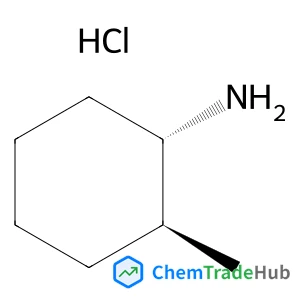
(1R,2R)-2-Methylcyclohexanamine hydrochloride (1:1)
CAS Number:
39558-31-1
Molecular Formula:
C7H16ClN
Recommended Suppliers





Disclaimer
This page provides academic journal information for reference and research purposes only. We are not affiliated with any journal publishers and do not handle publication submissions. For publication-related inquiries, please contact the respective journal publishers directly.
If you notice any inaccuracies in the information displayed, please contact us at support@chemtradehub.com. We will promptly review and address your concerns.