












Electronic structure and chemical bonding of a graphene oxide–sulfur nanocomposite for use in superior performance lithium–sulfur cells
Literature Information
Publication Date
2012-09-12
DOI
10.1039/C2CP42866K
Impact Factor
3.676
Authors
Liwen Ji, Per-Anders Glans, Yuegang Zhang, Junfa Zhu, Jinghua Guo
View Original
Abstract
We have investigated the chemical bonding and electronic structure of a graphene oxide–sulfur (GO–S) nanocomposite by X-ray Photoelectron Spectroscopy (XPS), Near-edge X-ray Absorption Fine Structure (NEXAFS), and X-ray Emission Spectroscopy (XES). The nanocomposite, synthesized by a chemical reaction–deposition approach followed by low temperature thermal treatment, is composed of a thin and uniform sulfur film anchored on a graphene oxide (GO) sheet. The GO is partially reduced during the chemical synthesis process, resulting in the appearance of a C–H bond and an increase in the ordering of GO sheets. The moderate chemical interactions between sulfur and GO can preserve the intrinsic electronic structure of GO, and on the other hand, immobilize the sulfur on the GO sheets, which should be responsible for the excellent electrochemical performance of the lithium–sulfur cells by using the GO–S nanocomposite as the cathode material.
Related Literature
Anomalous effective polarity of an air/liquid-mixture interface: a heterodyne-detected electronic and vibrational sum frequency generation study
Sudip Kumar Mondal, Ken-ichi Inoue, Shoichi Yamaguchi
2015-09-01
Communication
DOI: 10.1039/C5CP04264J
Effect of Ca2+ codoping on the Eu2+ luminescence properties in the Sr2Si5N8 host lattice: a theoretical approach
Claudio Bulloni, Amador García-Fuente, Werner Urland, Claude Daul
2015-09-07
Paper
DOI: 10.1039/C5CP02915E
Troponin structure: its modulation by Ca2+ and phosphorylation studied by molecular dynamics simulations
Juan Eiros Zamora, Maria Papadaki, Andrew E. Messer, Steven B. Marston, Ian R. Gould
2016-07-06
Paper
DOI: 10.1039/C6CP02610A
Photoionization access to cyclodextrin-encapsulated resveratrol phenoxy radicals and their repair by ascorbate across the phase boundary
Christoph Kerzig, Martin Goez
2016-06-24
Paper
DOI: 10.1039/C6CP03742A
Fluorescence fluctuation of an antigen–antibody complex: circular dichroism, FCS and smFRET of enhanced GFP and its antibody
Debmalya Bhunia, Rajdeep Chowdhury, Kankan Bhattacharyya
2015-08-28
Paper
DOI: 10.1039/C5CP04908C
Comparison of biological chromophores: photophysical properties of cyanophenylalanine derivatives
Joshua P. Martin, Natalie R. Fetto, Matthew J. Tucker
2016-07-14
Paper
DOI: 10.1039/C6CP04154J
Switchable polarization in an unzipped graphene oxide monolayer
Mohammad Noor-A-Alam, Young-Han Shin
2016-06-27
Paper
DOI: 10.1039/C6CP04242B
The efficiency of driving chemical reactions by a physical non-equilibrium is kinetically controlled
Tobias Göppel, Vladimir V. Palyulin, Ulrich Gerland
2016-04-28
Paper
DOI: 10.1039/C6CP01034B
Unified reaction pathways for the prebiotic formation of RNA and DNA nucleobases
Yassin Aweis Jeilani, Phoenix N. Williams, Sofia Walton, Minh Tho Nguyen
2016-05-10
Paper
DOI: 10.1039/C6CP02686A
Illuminating solid gas storage in confined spaces – methane hydrate formation in porous model carbons
Lars Borchardt, Winfried Nickel, Mirian Casco, Irena Senkovska, Volodymyr Bon, Dirk Wallacher, Nico Grimm, Simon Krause, Joaquín Silvestre-Albero
2016-07-07
Paper
DOI: 10.1039/C6CP03993F
You might also like
Compound Q&A
What precautions should be taken when handling 4-Methyl-6-(trifluoromethyl)quinoline (CAS: 40716-16-3)?
When handling 4-Methyl-6-(trifluoromethyl)quinoline (CAS: 40716-16-3), safety go...
40716-16-34-Methyl-6-(trifluor...
Compound Q&A
What is 4-(3,5-Difluorophenyl)aniline (CAS: 405058-00-6)?
4-(3,5-Difluorophenyl)aniline is an aromatic organic compound with the CAS numbe...
405058-00-64-(3,5-Difluoropheny...
Compound Q&A
How is 5-{[4-(Trifluoromethyl)phenyl]sulfanyl}-1,2,3-thiadiazole-4-carboxylic acid (CAS: 338982-07-3) typically synthesized?
5-{[4-(Trifluoromethyl)phenyl]sulfanyl}-1,2,3-thiadiazole-4-carboxylic acid can ...
338982-07-35-{[4-(Trifluorometh...
Compound Q&A
What is the market or research trend for 4-Benzylaniline hydrochloride (CAS: 6317-57-3)?
The market for 4-Benzylaniline hydrochloride (CAS: 6317-57-3) is steadily growin...
6317-57-34-Benzylaniline hydr...
Compound Q&A
Is [3-(Diethylsulfamoyl)phenyl]boronic acid (CAS: 871329-58-7) safe?
[3-(Diethylsulfamoyl)phenyl]boronic acid is generally considered safe when handl...
871329-58-7[3-(Diethylsulfamoyl...
Compound Q&A
What are the main uses of 3-Bromo-2,5-dimethoxyaniline (CAS: 115929-62-9)?
3-Bromo-2,5-dimethoxyaniline is mainly used in the pharmaceutical and chemical i...
115929-62-93-Bromo-2,5-dimethox...
Compound Q&A
What regulatory guidelines apply to N-Methyl-1-(5-methyl-1H-indol-3-yl)methanamine (CAS: 915922-67-7)?
N-Methyl-1-(5-methyl-1H-indol-3-yl)methanamine (CAS: 915922-67-7) is subject to ...
915922-67-7N-Methyl-1-(5-methyl...
Compound Q&A
What industries use Carbamic acid, N-[(5S)-5,6-diamino-6-oxohexyl]-, 1,1-dimethylethyl ester (CAS: 24828-96-4)?
This compound is primarily used in the pharmaceutical industry for the synthesis...
24828-96-4Carbamic acid, N-[(5...
Compound Q&A
How should 2-Methyl-2-propanyl [(1S,3R)-3-aminocyclohexyl]carbamate (CAS: 1298101-47-9) be stored?
2-Methyl-2-propanyl [(1S,3R)-3-aminocyclohexyl]carbamate (CAS: 1298101-47-9) sho...
1298101-47-92-Methyl-2-propanyl ...
Compound Q&A
What industries use Ethyl 2-bromo-4,4,4-trifluorobutanoate (CAS: 367-33-9)?
Ethyl 2-bromo-4,4,4-trifluorobutanoate (CAS: 367-33-9) is utilized in the pharma...
367-33-9Ethyl 2-bromo-4,4,4-...
Source Journal
Physical Chemistry Chemical Physics

CiteScore:
5.5
Self-citation Rate:
10.3%
Articles per Year:
3036
Physical Chemistry Chemical Physics (PCCP) is an international journal co-owned by 19 physical chemistry and physics societies from around the world. This journal publishes original, cutting-edge research in physical chemistry, chemical physics and biophysical chemistry. To be suitable for publication in PCCP, articles must include significant innovation and/or insight into physical chemistry; this is the most important criterion that reviewers and Editors will judge against when evaluating submissions. The journal has a broad scope and welcomes contributions spanning experiment, theory, computation and data science. Topical coverage includes spectroscopy, dynamics, kinetics, statistical mechanics, thermodynamics, electrochemistry, catalysis, surface science, quantum mechanics, quantum computing and machine learning. Interdisciplinary research areas such as polymers and soft matter, materials, nanoscience, energy, surfaces/interfaces, and biophysical chemistry are welcomed if they demonstrate significant innovation and/or insight into physical chemistry. Joined experimental/theoretical studies are particularly appreciated when complementary and based on up-to-date approaches.
Recommended Compounds
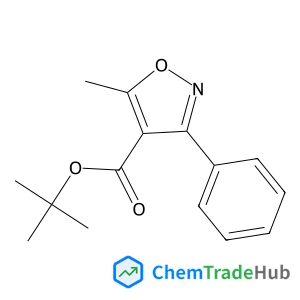
2-Methyl-2-propanyl 5-methyl-3-phenyl-1,2-oxazole-4-carboxylate
CAS Number:
211429-79-7
Molecular Formula:
C15H17NO3
![N-{3-[Benzyl(methyl)amino]propyl}-9-chloro-5,6,7,8-tetrahydro-2-acridinecarboxamide structure](https://static.chemtradehub.com/structs/142/1426944-49-1-1e4c.webp "N-{3-[Benzyl(methyl)amino]propyl}-9-chloro-5,6,7,8-tetrahydro-2-acridinecarboxamide structure")
N-{3-[Benzyl(methyl)amino]propyl}-9-chloro-5,6,7,8-tetrahydro-2-acridinecarboxamide
CAS Number:
1426944-49-1
Molecular Formula:
C25H28ClN3O
Recommended Suppliers




Disclaimer
This page provides academic journal information for reference and research purposes only. We are not affiliated with any journal publishers and do not handle publication submissions. For publication-related inquiries, please contact the respective journal publishers directly.
If you notice any inaccuracies in the information displayed, please contact us at support@chemtradehub.com. We will promptly review and address your concerns.