












Pnicogen–π complexes: theoretical study and biological implications
Literature Information
Publication Date
2012-08-31
DOI
10.1039/C2CP42672B
Impact Factor
3.676
Authors
Antonio Bauzá, David Quiñonero, Pere M. Deyà, Antonio Frontera
View Original
Abstract
The energetic and geometric features of pnicogen–π complexes involving different types of aromatic rings (benzene, trifluorobenzene, hexafluorobenzene and s-triazine) and the heavier pnicogenes (ECl3, E = As, Sb, Bi) are investigated using theoretical methods (ab initio and DFT-D3). We have analyzed how the interaction energy is affected by the π-acidity of the aromatic moieties and the pnicogen used. In addition, we have found several examples in the Protein Databank where pnicogen–π interactions are present. This likely indicates the potential use of this interaction in the design and synthesis of potential inhibitors of enzymatic reactions. Moreover, in order to know the reliability of the latest version of dispersion termed corrected DFT-D3, we have also compared the energies obtained using the ab initio MP2 method with those obtained using BP86-D3. We have also computed and analyzed the dispersion contribution to the total interaction energy in order to know if it is crucial for the favourable binding. This allows a better understanding of the physical nature of the interaction. Finally, we have used the Bader's theory of “atoms-in-molecules” to demonstrate that the electron density computed at the bond critical point that emerges upon complexation can be used as a measure of bond order in this noncovalent interaction.
Related Literature
Fluorescence fluctuation of an antigen–antibody complex: circular dichroism, FCS and smFRET of enhanced GFP and its antibody
Debmalya Bhunia, Rajdeep Chowdhury, Kankan Bhattacharyya
2015-08-28
Paper
DOI: 10.1039/C5CP04908C
Unravelling the optical responses of nanoplasmonic mirror-on-mirror metamaterials
Debabrata Sikdar, Shakeeb B. Hasan, Michael Urbakh, Joshua B. Edel, Alexei A. Kornyshev
2016-07-05
Paper
DOI: 10.1039/C6CP04551K
Thermodynamic and redox properties of graphene oxides for lithium-ion battery applications: a first principles density functional theory modeling approach
Ki Chul Kim
2016-07-04
Paper
DOI: 10.1039/C6CP02692C
THz time-domain spectroscopy of mixed CO2–CH3OH interstellar ice analogs
2016-06-07
Paper
DOI: 10.1039/C6CP00632A
Methanol electro-oxidation on platinum modified tungsten carbides in direct methanol fuel cells: a DFT study
Xiao Lin, Zhao-Yang Chen, P. Hu, Shi-Gang Sun, You-Qun Chu
2015-08-25
Paper
DOI: 10.1039/C5CP02072G
Flexible Ag–C60 nano-biosensors based on surface plasmon coupled emission for clinical and forensic applications
Pradyumna Mulpur, Sairam Yadavilli, Praharsha Mulpur, Neeharika Kondiparthi, Venkataramaniah Kamisetti
2015-09-08
Paper
DOI: 10.1039/C5CP04268B
On the fractality of the Freundlich adsorption isotherm in equilibrium and non-equilibrium cases
Przemysław Borys, Zbigniew J. Grzywna
2016-07-04
Paper
DOI: 10.1039/C6CP03356C
Semitransparent polymer solar cells with simultaneously improved efficiency and color rendering index
Wenjuan Yu, Xu Jia, Mengnan Yao, Linghui Zhu, Yongbing Long, Liang Shen
2015-07-08
Paper
DOI: 10.1039/C5CP03467A
Photodissociation of aniline N–H bonds in clusters of different nature
Viktoriya Poterya, Dana Nachtigallová, Jozef Lengyel, Michal Fárník
2015-09-01
Paper
DOI: 10.1039/C5CP04485E
Deformation twinning and the role of amino acids and magnesium in calcite hardness from molecular simulation
A. S. Côté, R. Darkins, D. M. Duffy
2015-07-13
Paper
DOI: 10.1039/C5CP03370E
You might also like
Compound Q&A
What precautions should be taken when handling 4-Methyl-6-(trifluoromethyl)quinoline (CAS: 40716-16-3)?
When handling 4-Methyl-6-(trifluoromethyl)quinoline (CAS: 40716-16-3), safety go...
40716-16-34-Methyl-6-(trifluor...
Compound Q&A
What is 4-(3,5-Difluorophenyl)aniline (CAS: 405058-00-6)?
4-(3,5-Difluorophenyl)aniline is an aromatic organic compound with the CAS numbe...
405058-00-64-(3,5-Difluoropheny...
Compound Q&A
How is 5-{[4-(Trifluoromethyl)phenyl]sulfanyl}-1,2,3-thiadiazole-4-carboxylic acid (CAS: 338982-07-3) typically synthesized?
5-{[4-(Trifluoromethyl)phenyl]sulfanyl}-1,2,3-thiadiazole-4-carboxylic acid can ...
338982-07-35-{[4-(Trifluorometh...
Compound Q&A
What is the market or research trend for 4-Benzylaniline hydrochloride (CAS: 6317-57-3)?
The market for 4-Benzylaniline hydrochloride (CAS: 6317-57-3) is steadily growin...
6317-57-34-Benzylaniline hydr...
Compound Q&A
Is [3-(Diethylsulfamoyl)phenyl]boronic acid (CAS: 871329-58-7) safe?
[3-(Diethylsulfamoyl)phenyl]boronic acid is generally considered safe when handl...
871329-58-7[3-(Diethylsulfamoyl...
Compound Q&A
What are the main uses of 3-Bromo-2,5-dimethoxyaniline (CAS: 115929-62-9)?
3-Bromo-2,5-dimethoxyaniline is mainly used in the pharmaceutical and chemical i...
115929-62-93-Bromo-2,5-dimethox...
Compound Q&A
What regulatory guidelines apply to N-Methyl-1-(5-methyl-1H-indol-3-yl)methanamine (CAS: 915922-67-7)?
N-Methyl-1-(5-methyl-1H-indol-3-yl)methanamine (CAS: 915922-67-7) is subject to ...
915922-67-7N-Methyl-1-(5-methyl...
Compound Q&A
What industries use Carbamic acid, N-[(5S)-5,6-diamino-6-oxohexyl]-, 1,1-dimethylethyl ester (CAS: 24828-96-4)?
This compound is primarily used in the pharmaceutical industry for the synthesis...
24828-96-4Carbamic acid, N-[(5...
Compound Q&A
How should 2-Methyl-2-propanyl [(1S,3R)-3-aminocyclohexyl]carbamate (CAS: 1298101-47-9) be stored?
2-Methyl-2-propanyl [(1S,3R)-3-aminocyclohexyl]carbamate (CAS: 1298101-47-9) sho...
1298101-47-92-Methyl-2-propanyl ...
Compound Q&A
What industries use Ethyl 2-bromo-4,4,4-trifluorobutanoate (CAS: 367-33-9)?
Ethyl 2-bromo-4,4,4-trifluorobutanoate (CAS: 367-33-9) is utilized in the pharma...
367-33-9Ethyl 2-bromo-4,4,4-...
Source Journal
Physical Chemistry Chemical Physics

CiteScore:
5.5
Self-citation Rate:
10.3%
Articles per Year:
3036
Physical Chemistry Chemical Physics (PCCP) is an international journal co-owned by 19 physical chemistry and physics societies from around the world. This journal publishes original, cutting-edge research in physical chemistry, chemical physics and biophysical chemistry. To be suitable for publication in PCCP, articles must include significant innovation and/or insight into physical chemistry; this is the most important criterion that reviewers and Editors will judge against when evaluating submissions. The journal has a broad scope and welcomes contributions spanning experiment, theory, computation and data science. Topical coverage includes spectroscopy, dynamics, kinetics, statistical mechanics, thermodynamics, electrochemistry, catalysis, surface science, quantum mechanics, quantum computing and machine learning. Interdisciplinary research areas such as polymers and soft matter, materials, nanoscience, energy, surfaces/interfaces, and biophysical chemistry are welcomed if they demonstrate significant innovation and/or insight into physical chemistry. Joined experimental/theoretical studies are particularly appreciated when complementary and based on up-to-date approaches.
Recommended Compounds
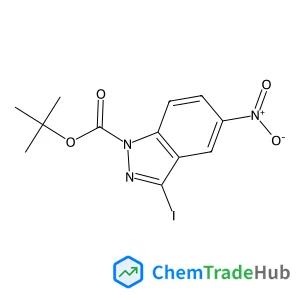
Tert-butyl 3-iodo-5-nitro-1H-indazole-1-carboxylate
CAS Number:
459133-69-8
Molecular Formula:
C12H12IN3O4
Recommended Suppliers





Disclaimer
This page provides academic journal information for reference and research purposes only. We are not affiliated with any journal publishers and do not handle publication submissions. For publication-related inquiries, please contact the respective journal publishers directly.
If you notice any inaccuracies in the information displayed, please contact us at support@chemtradehub.com. We will promptly review and address your concerns.