












![[5-fluoro-2-(morpholine-4-carbonyl)phenyl]boronic acid structure](https://static.chemtradehub.com/structs/121/1217501-26-2-505c.webp "[5-fluoro-2-(morpholine-4-carbonyl)phenyl]boronic acid structure")
[5-fluoro-2-(morpholine-4-carbonyl)phenyl]boronic acid
CAS Number:
1217501-26-2
Molecular Formula:
C11H13BFNO4
S. Selvaraj, N. Arul Murugan, H. Ågren
In order to explore the possibilities of simulating metallochromism by modern molecular modeling, we apply a sequential hybrid quantum–classical approach to a prototype metallochromic system—the Al3+ ion and pyrimidinedione (PY) dye complex. The complex shows several structural features with relevance for the metallochromism: the PY dye exhibits conformers with dynamical transitions between twisted structures, which are inhibited by the addition of the metal ion leading to planarization and a conformational arrest: the Al3+ ion behaves like a structure-modifier for both intra and intermolecular degrees of freedom and with respect to the intermolecular solvation shell structure. The sequential approach that we have employed uses DFT/MM molecular dynamics for structure modeling and TDDFT/PCM for property modeling. The computed metallochromic shift between PY and the Al(PY)3+ complex in DMSO solvent is obtained in excellent agreement with experiment. The results infer optimism for future use of such modeling techniques to design metallochromic indicators.
S. T. Aleed, T. Paulraj, Yu. A. Vladimirov, C. Duschl, R. von Klitzing, D. Volodkin
DOI: 10.1039/C5CP01213A
Mohamed Mohamed Rashad, Abd El-Hakim Taha Kandil, Mikhael Bechelany
DOI: 10.1039/C5CP00319A
Deniz Çakır, Deniz Kecik, Hasan Sahin, Engin Durgun, Francois M. Peeters
DOI: 10.1039/C5CP00414D
Haoyu S. Yu, Pragya Verma, Donald G. Truhlar
DOI: 10.1039/C5CP01425E
Masaki Hiratsuka, Ryo Ohmura, Amadeu K. Sum, Saman Alavi, Kenji Yasuoka
DOI: 10.1039/C4CP05732E
Haihan Chen, Michael J. Ezell, Kristine D. Arquero, Mychel E. Varner, Matthew L. Dawson, R. Benny Gerber, Barbara J. Finlayson-Pitts
DOI: 10.1039/C5CP00838G
Xiaoliang Zhang, Jianhua Liu, Jindan Zhang, Erik M. J. Johansson
DOI: 10.1039/C4CP06068G
Akansha Singh, Prasenjit Sen
DOI: 10.1039/C5CP01016K
Yuan Li
DOI: 10.1039/C5CP00928F
Waste containing N-Methoxy-N-methyl-1,3-thiazole-5-carboxamide (CAS: 898825-89-3...
N-(4-Biphenylyl)dibenzo[b,d]furan-4-amine should be stored in a tightly sealed c...
The market for 3-Acetamido-5-amino-2,4,6-triiodobenzoic acid (CAS: 1713-07-1) is...
Benzyl 2-O-acetyl-3,4,6-tri-O-benzyl-beta-D-galactopyranoside (CAS: 61820-03-9) ...
2-Ethylpiperazine dihydrochloride (CAS: 438050-52-3) is regulated under the Glob...
1,1'-[1,3-Phenylenebis(methylene)]bis(3-methyl-1H-pyrrole-2,5-dione) (CAS: 11946...
Several alternatives can be used in the synthesis of 5-Fluoro-2-(1-pyrrolidinyl)...
Proper personal protective equipment (PPE) must be worn when handling this compo...
When handling 6-Bromoimidazo[1,2-a]pyridin-8-amine, it is important to wear appr...
Alternatives to (2S,4R)-4-(4-Nitrobenzyl)pyrrolidine-2-carboxylic acid hydrochlo...

Physical Chemistry Chemical Physics (PCCP) is an international journal co-owned by 19 physical chemistry and physics societies from around the world. This journal publishes original, cutting-edge research in physical chemistry, chemical physics and biophysical chemistry. To be suitable for publication in PCCP, articles must include significant innovation and/or insight into physical chemistry; this is the most important criterion that reviewers and Editors will judge against when evaluating submissions. The journal has a broad scope and welcomes contributions spanning experiment, theory, computation and data science. Topical coverage includes spectroscopy, dynamics, kinetics, statistical mechanics, thermodynamics, electrochemistry, catalysis, surface science, quantum mechanics, quantum computing and machine learning. Interdisciplinary research areas such as polymers and soft matter, materials, nanoscience, energy, surfaces/interfaces, and biophysical chemistry are welcomed if they demonstrate significant innovation and/or insight into physical chemistry. Joined experimental/theoretical studies are particularly appreciated when complementary and based on up-to-date approaches.
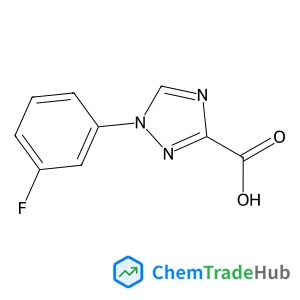
![4-Chloro-2-{[(2-chlorophenoxy)acetyl]amino}benzoic acid structure](https://static.chemtradehub.com/structs/351/351424-20-9-9467.webp "4-Chloro-2-{[(2-chlorophenoxy)acetyl]amino}benzoic acid structure")

![[(5-Methyl-1,3,4-thiadiazol-2-yl)sulfanyl]acetic acid structure](https://static.chemtradehub.com/structs/509/50918-26-8-4ce8.webp "[(5-Methyl-1,3,4-thiadiazol-2-yl)sulfanyl]acetic acid structure")





