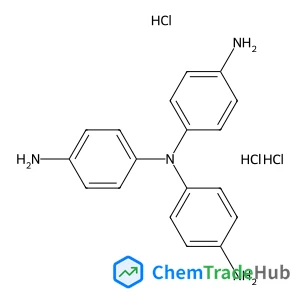
N1,N1-Bis(4-aminophenyl)benzene-1,4-diamine trihydrochloride
CAS Number:
114254-48-7
Molecular Formula:
C18H21Cl3N4
ZiLong Zheng, Manabu Nakazono, Shinkoh Nanbu
Photo-physical properties of bromo-indolylmaleimide (IM-Br), indole-succinimide (IS), and their anions were theoretically investigated compared with the previous theoretical result for indolylmaleimide (IM) [Phys. Chem. Chem. Phys., 2010, 12, 9783]. The energies for the electronic excited states as well as the ground states were computed for these molecules using the multi-reference perturbation calculations based on the second order Rayleigh–Schrödinger perturbation theory (CASPT2) at the cc-pVDZ basis set level. The electron-accepting or electron-donating effect caused by bromine-substitution was discussed in the intra-molecular charge transfer (ICT) mechanism. The order of natural orbitals of the bromine-substituted monovalent anion with a deprotonated indole NH group (I(−)(−)M-Br) was found to be rearranged by the effect of electron-donation, which leads to pseudo-crossing of the potential energy cures of the S1 and S2 states. The large stokes shift observed for I(−)(−)M-Br was due to pseudo-crossing. Meanwhile, IM and IM-Br show abnormal deprotonation, which is explained by the charge distribution on the indole and maleimide moieties. Finally, the monovalent anions I(−)(−)M-Br and I(−)(−)M by a deprotonation of the indole NH end and the neutral IS were proposed to be the most feasible candidates corresponding to the experimental spectra in solution.
Rui-Qin Zhang
DOI: 10.1039/C4CP05973E
Per E. M. Siegbahn
DOI: 10.1039/C5CP00138B
Stijn Schaltin, Gijs Vanhoutte, Minxian Wu, Fanny Bardé, Jan Fransaer
DOI: 10.1039/C5CP00386E
Panpan Jing, Lining Pan, Jinlu Du, Jianbo Wang, Qingfang Liu
DOI: 10.1039/C5CP01228G
Johannes Postler, Athanasios Zavras, Paul Scheier, Stephan Denifl, Richard A. J. O'Hair
DOI: 10.1039/C5CP01014D
Lanqing Xu, Xiaoman Zhang, Yongping Zheng
DOI: 10.1039/C4CP06014H
Jing Zhang, Nan Chen, Zheng Tang, Yang Yu, Qili Hu, Chuanping Feng
DOI: 10.1039/C5CP00817D
Chao-Feng Wu, Tian-Ran Wei, Jing-Feng Li
DOI: 10.1039/C4CP06021K
Adam M. Scheer, Oliver Welz, Subith S. Vasu, David L. Osborn, Craig A. Taatjes
DOI: 10.1039/C4CP06097K
Changzeng Fan, Jian Li
DOI: 10.1039/C5CP00001G
Waste containing N-Methoxy-N-methyl-1,3-thiazole-5-carboxamide (CAS: 898825-89-3...
N-(4-Biphenylyl)dibenzo[b,d]furan-4-amine should be stored in a tightly sealed c...
The market for 3-Acetamido-5-amino-2,4,6-triiodobenzoic acid (CAS: 1713-07-1) is...
Benzyl 2-O-acetyl-3,4,6-tri-O-benzyl-beta-D-galactopyranoside (CAS: 61820-03-9) ...
2-Ethylpiperazine dihydrochloride (CAS: 438050-52-3) is regulated under the Glob...
1,1'-[1,3-Phenylenebis(methylene)]bis(3-methyl-1H-pyrrole-2,5-dione) (CAS: 11946...
Several alternatives can be used in the synthesis of 5-Fluoro-2-(1-pyrrolidinyl)...
Proper personal protective equipment (PPE) must be worn when handling this compo...
When handling 6-Bromoimidazo[1,2-a]pyridin-8-amine, it is important to wear appr...
Alternatives to (2S,4R)-4-(4-Nitrobenzyl)pyrrolidine-2-carboxylic acid hydrochlo...

Physical Chemistry Chemical Physics (PCCP) is an international journal co-owned by 19 physical chemistry and physics societies from around the world. This journal publishes original, cutting-edge research in physical chemistry, chemical physics and biophysical chemistry. To be suitable for publication in PCCP, articles must include significant innovation and/or insight into physical chemistry; this is the most important criterion that reviewers and Editors will judge against when evaluating submissions. The journal has a broad scope and welcomes contributions spanning experiment, theory, computation and data science. Topical coverage includes spectroscopy, dynamics, kinetics, statistical mechanics, thermodynamics, electrochemistry, catalysis, surface science, quantum mechanics, quantum computing and machine learning. Interdisciplinary research areas such as polymers and soft matter, materials, nanoscience, energy, surfaces/interfaces, and biophysical chemistry are welcomed if they demonstrate significant innovation and/or insight into physical chemistry. Joined experimental/theoretical studies are particularly appreciated when complementary and based on up-to-date approaches.