












Functionalized polycarbonates from dihydroxyacetone: insights into the immortal ring-opening polymerization of 2,2-dimethoxytrimethylene carbonate
Literature Information
Publication Date
2011-10-14
DOI
10.1039/C1PY00405K
Impact Factor
5.582
Authors
Marion Helou, Jean-Michel Brusson, Jean-François Carpentier, Sophie M. Guillaume
View Original
Abstract
Functionalized polycarbonates derived from 2,2-dimethoxytrimethylene carbonate (TMC(OMe)2) have been prepared with controlled molecular features by immortal ring-opening polymerization, under mild conditions (bulk, 60–90 °C), using various (metallo)organic/alcohol (diol) binary catalyst systems: the β-diiminate zinc complex [(BDIiPr)Zn(N(SiMe3)2)] (BDI = CH(CMeNC6H3-2,6-iPr2)2), the aluminium triflate, or the organic bases 4-N,N-dimethylaminopyridine (DMAP), 1.5.7-triazabicyclo-[4.4.0]dec-5-ene (TBD) and 2-tert-butylimino-2-diethylamino-1,3-dimethylperhydro-1,3,2-diazaphosphorine (BEMP), as catalyst precursors, combined with benzyl alcohol or 1,3-propanediol acting both as a co-initiator and a chain transfer agent. For the first time, well-defined α-hydroxy-ω-alkoxyester and α,ω-dihydroxy telechelic acetal-functionalized homopolycarbonates were thus prepared with molar mass up to 70 200 g mol−1. These polymers were characterized at the molecular (NMR, SEC), thermal (DSC, TGA) and mechanical levels, and compared to conventional PTMC. P(TMC(OMe)2) is a rigid and brittle polymer material (E = 3190 ± 70 MPa, εr = 9 ± 1%).
Related Literature
iHEART: a miniaturized near-infrared in-line gas sensor using heart-shaped substrate-integrated hollow waveguides
Rafael L. Ribessi, Thiago de A. Neves, Jarbas J. R. Rohwedder, Celio Pasquini, Ivo M. Raimundo, Jr., Andreas Wilk, Vjekoslav Kokoric, Boris Mizaikoff
2016-08-01
Paper
DOI: 10.1039/C6AN01027J
Recent topics on single-molecule fluctuation analysis using blinking in surface-enhanced resonance Raman scattering: clarification by the electromagnetic mechanism
Tamitake Itoh
2016-05-16
Minireview
DOI: 10.1039/C6AN00936K
Surface-enhanced resonance Raman scattering of hemoproteins and those in complicated biological systems
Yasutaka Kitahama, Yukihiro Ozaki
2016-07-06
Critical Review
DOI: 10.1039/C6AN01009A
THE DISCOVERY OF SERS: an idiosyncratic account from a vibrational spectroscopist
2016-07-12
Editorial
DOI: 10.1039/C6AN90055K
Changes in the volume phase transition temperature of hydrogels for detection of the DNA hybridization process
Klaudia Kaniewska, Agata Kowalczyk, Marcin Karbarz, Anna M. Nowicka
2016-07-29
Paper
DOI: 10.1039/C6AN00523C
Nanoscale silicon surface-assisted laser desorption/ionization mass spectrometry: environment stability and activation by simple vacuum oven desiccation
Chia-Wen Tsao, Yuan-Jing Lin, Pi-Yu Chen, Yu-Liang Yang, Say Hwa Tan
2016-06-13
Paper
DOI: 10.1039/C6AN00659K
An optimised assay for quantitative, high-throughput analysis of polysialyltransferase activity
Sara M. Elkashef, Mark Sutherland, Laurence H. Patterson, Paul M. Loadman, Robert A. Falconer
2016-08-08
Paper
DOI: 10.1039/C6AN01073C
You might also like
Compound Q&A
What precautions should be taken when handling 2-Chloro-1,2-bis(4-methylphenyl)ethanone (CAS: 71193-32-3)?
When handling 2-Chloro-1,2-bis(4-methylphenyl)ethanone (CAS: 71193-32-3), it is ...
71193-32-32-Chloro-1,2-bis(4-m...
Compound Q&A
What industries use 4-Ethoxy-3-(5-methyl-4-oxo-7-propyl-1,4-dihydroimidazo[5,1-f][1,2,4]triazin-2-yl)benzenesulfonyl chloride (CAS: 224789-26-8)?
4-Ethoxy-3-(5-methyl-4-oxo-7-propyl-1,4-dihydroimidazo[5,1-f][1,2,4]triazin-2-yl...
224789-26-84-Ethoxy-3-(5-methyl...
Compound Q&A
How should Methyl 3-Oxo-4-Androsten-17-Carboxylate (CAS: 2681-55-2) be stored?
Methyl 3-Oxo-4-Androsten-17-Carboxylate (CAS: 2681-55-2) should be stored in a c...
2681-55-2Methyl 3-Oxo-4-Andro...
Compound Q&A
What are the main uses of (R)-3-Amino-4-(3-hexylphenylamino)-4-oxobutylphosphonic acid (CAS: 909725-61-7)?
(R)-3-Amino-4-(3-hexylphenylamino)-4-oxobutylphosphonic acid is primarily used i...
909725-61-7(R)-3-Amino-4-(3-hex...
Compound Q&A
What regulatory guidelines apply to 2-Methyl-2-propanyl 3-amino-3-carbamoyl-1-azetidinecarboxylate (CAS: 1254120-14-3)?
2-Methyl-2-propanyl 3-amino-3-carbamoyl-1-azetidinecarboxylate (CAS: 1254120-14-...
1254120-14-32-Methyl-2-propanyl ...
Compound Q&A
Are there alternatives to (E)-4-(tert-Butoxy)-4-oxobut-2-enoic acid (CAS: 135355-96-3) in synthesis?
There are alternative reagents that can be used in synthesis instead of (E)-4-(t...
135355-96-3(E)-4-(tert-Butoxy)-...
Compound Q&A
What are the physical and chemical properties of [2-(3-Chlorophenyl)-1,3-thiazol-4-yl]methanol (CAS: 121202-20-8)?
[2-(3-Chlorophenyl)-1,3-thiazol-4-yl]methanol (CAS: 121202-20-8) is a crystallin...
121202-20-8[2-(3-Chlorophenyl)-...
Compound Q&A
What is the market or research trend for Methyl (2S)-[(4S)-2,2-dimethyl-1,3-dioxolan-4-yl]{[(4-methylphenyl)sulfonyl]oxy}acetate (CAS: 166249-17-8)?
The market and research trends for Methyl (2S)-[(4S)-2,2-dimethyl-1,3-dioxolan-4...
166249-17-8Methyl (2S)-[(4S)-2,...
Compound Q&A
What is the market or research trend for 1-Bromo-2-isocyanatoethane (CAS: 42865-19-0)?
The market for 1-Bromo-2-isocyanatoethane (CAS: 42865-19-0) is driven by its use...
42865-19-01-Bromo-2-isocyanato...
Compound Q&A
What are the main uses of 4-Nitro-D-phenylalanine hydrochloride (CAS: 147065-06-3)?
4-Nitro-D-phenylalanine hydrochloride (CAS: 147065-06-3) is primarily used in re...
147065-06-34-Nitro-D-phenylalan...
Source Journal
Polymer Chemistry

CiteScore:
8.6
Self-citation Rate:
7.3%
Articles per Year:
457
Polymer Chemistry welcomes submissions in all areas of polymer science that have a strong focus on macromolecular chemistry. Manuscripts may cover a broad range of fields, yet no direct application focus is required.
Recommended Compounds
![4-[(2-Oxo-1,2,3,4-tetrahydroquinolin-7-yl)oxy]butanoic acid structure](https://static.chemtradehub.com/structs/588/58899-27-7-1f86.webp "4-[(2-Oxo-1,2,3,4-tetrahydroquinolin-7-yl)oxy]butanoic acid structure")
4-[(2-Oxo-1,2,3,4-tetrahydroquinolin-7-yl)oxy]butanoic acid
CAS Number:
58899-27-7
Molecular Formula:
C18H24N2O7
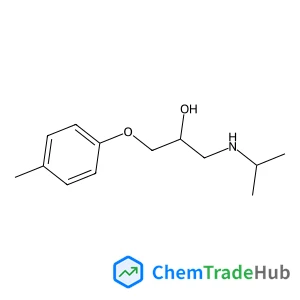
1-(4-Methylphenoxy)-3-(propan-2-ylamino)propan-2-ol
CAS Number:
5790-46-5
Molecular Formula:
C13H21NO2
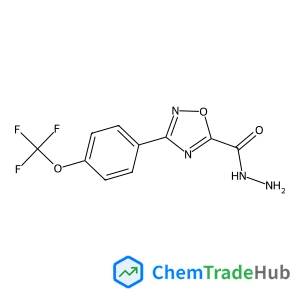
3-(4-(Trifluoromethoxy)phenyl)-1,2,4-oxadiazole-5-carbohydrazide
CAS Number:
883028-82-8
Molecular Formula:
C10H7F3N4O3
Recommended Suppliers






Disclaimer
This page provides academic journal information for reference and research purposes only. We are not affiliated with any journal publishers and do not handle publication submissions. For publication-related inquiries, please contact the respective journal publishers directly.
If you notice any inaccuracies in the information displayed, please contact us at support@chemtradehub.com. We will promptly review and address your concerns.