












Scaffolding of an antimicrobial peptide (KSL) by a scale-down coarse-grained approach
Literature Information
Publication Date
2011-10-26
DOI
10.1039/C1CP22361E
Impact Factor
3.676
Authors
R. S. Hissam, B. L. Farmer, R. B. Pandey
View Original
Abstract
A coarse-grained approach with enhanced representation of amino acid (involving four components, i.e. a central alpha carbon and its side group along with C and N terminals) is used to study the multi-scale assembly of an antimicrobial peptide (KSL) in an explicit solvent (in a scale-down hierarchy of Eby et al. [Phys. Chem. Chem. Phys., 2011, 13, 1123–1130]). Both local (mobility, solvent-surrounding, energy profiles) and global (variation of the root mean square displacement of peptides and its gyration radius with time steps, radial distribution function, and structure factors) physical quantities are analyzed as a function of the solvent quality (i.e. the solvent–residue interaction strength). We find that the mobility of the interacting side group (lysine) decays as the number of its surrounding solvent constituents grows systematically on increasing the interaction strength. Pinning of lysine directs the underlying segmental conformation that propagates to larger scale scaffolding. The radial distribution function (a measure of the correlated peptide assembly) decays with the distance (faster with stronger solvent interaction). Scaling of the structure factor (S(q)) of peptide assembly with the wave vector q = 2π/λ (λ is the wavelength), S(q) ∝ q−1/ν provides an insight into its multi-scale mass (N) distribution. The effective dimension De = 1/ν of the peptide assembly over the spatial distribution (R) can be estimated using N ∝ RDe. On scales larger than the size (i.e. the radius of gyration Rg) of the peptide, De ≈ 1.303 ± 0.070 to De ≈ 1.430 ± 0.096, a rather fibrous morphology appears perhaps due to directed pinning while the morphology appears like an ideal chain, De ≈ 1.809 ± 0.017 to De ≈ 1.978 ± 0.017, at a smaller scale R ≤ Rg.
Related Literature
Adsorption efficiency of crystal violet from the aqueous phase onto a carbonaceous material prepared from waste cotton and polyester
Fumihiko Ogata, Kazuki Sugimura, Noriaki Nagai, Keiji Nishiwaki
2023-12-04
Paper
DOI: 10.1039/D3SU00342F
Engineering Pt nanoclusters on CeO2 surface with abundant point defects by in situ confined-domain encapsulation strategy for the catalytic elimination of VOCs
Weiliang Han, Weigao Han, Zhicheng Tang
2023-10-09
Paper
DOI: 10.1039/D3LF00147D
Development of sodium alginate–aloe vera hydrogel films enriched with organic fibers: study of the physical, mechanical, and barrier properties for food-packaging applications
Alina Hadi, Anjum Nawab, Feroz Alam, Sara Naqvi
2023-10-30
Paper
DOI: 10.1039/D3FB00122A
Sustainable production of prodigiosin from rice straw derived xylose by using isolated Serratia marcescens (CMS 2): statistical optimization, characterization, encapsulation & cost analysis
Kanika Miglani, Saumya Singh, Devendra Pratap Singh, Meena Krishania
2023-10-02
Communication
DOI: 10.1039/D3FB00100H
A comprehensive review of food waste valorization for the sustainable management of global food waste
Aniruddha Sarker, Raju Ahmmed, S. M. Ahsan, Juwel Rana, Mithun Kumar Ghosh, Rakhi Nandi
2023-12-04
Review Article
DOI: 10.1039/D3FB00156C
You might also like
Compound Q&A
What industries use (1R,3S)-1,3-Cyclopentanediol (CAS: 16326-97-9)?
(1R,3S)-1,3-Cyclopentanediol finds applications in various industries. In the ph...
16326-97-9(1R,3S)-1,3-Cyclopen...
Compound Q&A
What precautions should be taken when handling N'-[4-(Dimethylamino)phenyl]-N,N-dimethyl-1,4-benzenediamine (CAS: 637-31-0)?
When handling N'-[4-(Dimethylamino)phenyl]-N,N-dimethyl-1,4-benzenediamine, it i...
637-31-0N'-[4-(Dimethylamino...
Compound Q&A
Are there alternatives to 5-(2,4-Difluorophenyl)-2-methoxypyrimidine (CAS: 1352318-16-1) in synthesis?
There are several alternatives to 5-(2,4-Difluorophenyl)-2-methoxypyrimidine in ...
1352318-16-15-(2,4-Difluoropheny...
Compound Q&A
What regulatory guidelines apply to 1-(3-Methoxyphenoxy)propan-2-ol (CAS: 382141-68-6)?
1-(3-Methoxyphenoxy)propan-2-ol (CAS: 382141-68-6) must comply with the Globally...
382141-68-61-(3-Methoxyphenoxy)...
Compound Q&A
Is Tetrodotoxin Citrate (CAS: 18660-81-6) safe?
Tetrodotoxin Citrate is extremely dangerous and should be handled with extreme c...
18660-81-6Tetrodotoxin Citrate
Compound Q&A
What are the main uses of 2-Methyl-2-propanyl [(1R,3S)-3-hydroxycyclopentyl]carbamate (CAS: 225641-84-9)?
2-Methyl-2-propanyl [(1R,3S)-3-hydroxycyclopentyl]carbamate (CAS: 225641-84-9) i...
225641-84-92-Methyl-2-propanyl ...
Compound Q&A
How should waste containing 4-(2-Hydroxyhexafluoroisopropyl)Benzoic Acid (CAS: 16261-80-6) be handled?
Waste containing 4-(2-Hydroxyhexafluoroisopropyl)Benzoic Acid (CAS: 16261-80-6) ...
16261-80-64-(2-Hydroxyhexafluo...
Compound Q&A
How is 2-Methyl-2-proanyl {(2S)-1-[(benzyloxy)amino]-3-hydroxy-3-methyl-1-oxo-2-butanyl}carbamate (CAS: 102507-19-7) typically synthesized?
2-Methyl-2-proanyl {(2S)-1-[(benzyloxy)amino]-3-hydroxy-3-methyl-1-oxo-2-butanyl...
102507-19-72-Methyl-2-propanyl ...
Compound Q&A
What is Benzeneethanamine, α-ethyl-, hydrochloride (1:1) (CAS: 20735-15-3)?
Benzeneethanamine, α-ethyl-, hydrochloride (1:1) is an organic compound with the...
20735-15-3Benzeneethanamine, α...
Compound Q&A
Are there alternatives to 3-{(E)-[4-(Dimethylamino)phenyl]diazenyl}benzoic acid (CAS: 20691-84-3) in synthesis?
In the synthesis of compounds similar to 3-{(E)-[4-(Dimethylamino)phenyl]diazeny...
20691-84-33-{(E)-[4-(Dimethyla...
Source Journal
Physical Chemistry Chemical Physics

CiteScore:
5.5
Self-citation Rate:
10.3%
Articles per Year:
3036
Physical Chemistry Chemical Physics (PCCP) is an international journal co-owned by 19 physical chemistry and physics societies from around the world. This journal publishes original, cutting-edge research in physical chemistry, chemical physics and biophysical chemistry. To be suitable for publication in PCCP, articles must include significant innovation and/or insight into physical chemistry; this is the most important criterion that reviewers and Editors will judge against when evaluating submissions. The journal has a broad scope and welcomes contributions spanning experiment, theory, computation and data science. Topical coverage includes spectroscopy, dynamics, kinetics, statistical mechanics, thermodynamics, electrochemistry, catalysis, surface science, quantum mechanics, quantum computing and machine learning. Interdisciplinary research areas such as polymers and soft matter, materials, nanoscience, energy, surfaces/interfaces, and biophysical chemistry are welcomed if they demonstrate significant innovation and/or insight into physical chemistry. Joined experimental/theoretical studies are particularly appreciated when complementary and based on up-to-date approaches.
Recommended Compounds
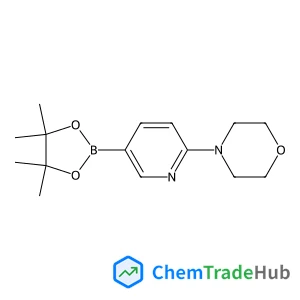
4-(5-(4,4,5,5-tetramethyl-1,3,2-dioxaborolan-2-yl)pyridin-2-yl)morpholine
CAS Number:
485799-04-0
Molecular Formula:
C15H23BN2O3
![Ethyl 3-((6-(4,5-dihydro-1H-benzo[d]azepin-3(2H)-yl)-2-(pyridin-2-yl)pyrimidin-4-yl)amino)propanoate structure](https://static.chemtradehub.com/structs/137/1373423-53-0-496a.webp "Ethyl 3-((6-(4,5-dihydro-1H-benzo[d]azepin-3(2H)-yl)-2-(pyridin-2-yl)pyrimidin-4-yl)amino)propanoate structure")
Ethyl 3-((6-(4,5-dihydro-1H-benzo[d]azepin-3(2H)-yl)-2-(pyridin-2-yl)pyrimidin-4-yl)amino)propanoate
CAS Number:
1373423-53-0
Molecular Formula:
C24H27N5O2
Recommended Suppliers






Disclaimer
This page provides academic journal information for reference and research purposes only. We are not affiliated with any journal publishers and do not handle publication submissions. For publication-related inquiries, please contact the respective journal publishers directly.
If you notice any inaccuracies in the information displayed, please contact us at support@chemtradehub.com. We will promptly review and address your concerns.