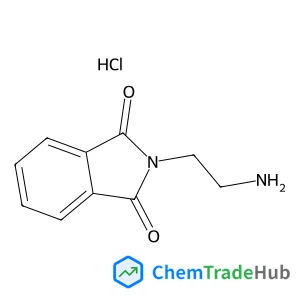
2-(2-Aminoethyl)-1H-isoindole-1,3(2H)-dione hydrochloride (1:1)
CAS Number:
30250-67-0
Molecular Formula:
C10H11ClN2O2
Juho Roukala, Alejandro F. Maldonado, Juha Vaara, Gustavo A. Aucar, Perttu Lantto
The leading-order perturbation theory approach to relativistic effects on the nuclear magnetic shielding provides an economic method for obtaining the chemical shifts in heavy-element containing systems. The method features detailed analysis potential in terms of the different physical mechanisms affecting the shielding tensors of heavy nuclei. The perturbative nature, however, results in an increasing error with increasingly heavy elements in the system. In this work, we investigate the performance of the Breit–Pauli perturbation theory (BPPT) against fully relativistic four-component theory in computing the nuclear shielding constants as well as the chemical shifts with respect to corresponding atomic ions of group-12 metals, M = Zn, Cd, and Hg, in dimethyl M(CH3)2 and aqueous M(H2O)62+ complexes. It is shown that five out of the total of sixteen BPPT correction terms are responsible for most of the relativistic corrections for the chemical shift of studied metals. The relativity is important already for Cd and BPPT is proven to work well up to Hg for the chemical shift, as calibrated with the fully relativistic method.

Acta Metallurgica Sinica-English Letters

Main Group Chemistry

Bioorganic & Medicinal Chemistry

Journal of Asian Natural Products Research

Medicinal Chemistry Research

Critical Reviews in Solid State and Materials Sciences

Cellulose

Chinese Journal of Chemistry

Herald of the Russian Academy of Sciences

Polycyclic Aromatic Compounds
Vladimir V. Voronin, Maria S. Ledovskaya
DOI: 10.1039/D0QO00202J
Fei Meng, Qin Fang, Weidong Yuan, Ning Xu, Shujun Cao, Jianlin Chun, Jie Li, Honglin Zhang, Yingguang Zhu
DOI: 10.1039/D0QO00282H
Samer Gnaim, Doron Shabat
DOI: 10.1039/C8OB03042A
Shuang Sun, Padma Akkapeddi, Nuria Martínez-Sáez, Vukosava M. Torres, Carlos Cordeiro, Omar Boutureira
DOI: 10.1039/C8OB02877J
Jialu Li, Chuan Liu, Jingjing He, Sixue Xu, Xianghu Zhao, Yue Zhu, Song Cao
DOI: 10.1039/D0QO00445F
Venkatesan Santhanam, Pradeep Pant, B. Jayaram, Namakkal G. Ramesh
DOI: 10.1039/C8OB03084G
Taiga Yurino, Yuji Tange, Ryutaro Tani, Takeshi Ohkuma
DOI: 10.1039/D0QO00336K
(1R,3S)-1,3-Cyclopentanediol finds applications in various industries. In the ph...
When handling N'-[4-(Dimethylamino)phenyl]-N,N-dimethyl-1,4-benzenediamine, it i...
There are several alternatives to 5-(2,4-Difluorophenyl)-2-methoxypyrimidine in ...
1-(3-Methoxyphenoxy)propan-2-ol (CAS: 382141-68-6) must comply with the Globally...
Tetrodotoxin Citrate is extremely dangerous and should be handled with extreme c...
2-Methyl-2-propanyl [(1R,3S)-3-hydroxycyclopentyl]carbamate (CAS: 225641-84-9) i...
Waste containing 4-(2-Hydroxyhexafluoroisopropyl)Benzoic Acid (CAS: 16261-80-6) ...
2-Methyl-2-proanyl {(2S)-1-[(benzyloxy)amino]-3-hydroxy-3-methyl-1-oxo-2-butanyl...
Benzeneethanamine, α-ethyl-, hydrochloride (1:1) is an organic compound with the...
In the synthesis of compounds similar to 3-{(E)-[4-(Dimethylamino)phenyl]diazeny...

Physical Chemistry Chemical Physics (PCCP) is an international journal co-owned by 19 physical chemistry and physics societies from around the world. This journal publishes original, cutting-edge research in physical chemistry, chemical physics and biophysical chemistry. To be suitable for publication in PCCP, articles must include significant innovation and/or insight into physical chemistry; this is the most important criterion that reviewers and Editors will judge against when evaluating submissions. The journal has a broad scope and welcomes contributions spanning experiment, theory, computation and data science. Topical coverage includes spectroscopy, dynamics, kinetics, statistical mechanics, thermodynamics, electrochemistry, catalysis, surface science, quantum mechanics, quantum computing and machine learning. Interdisciplinary research areas such as polymers and soft matter, materials, nanoscience, energy, surfaces/interfaces, and biophysical chemistry are welcomed if they demonstrate significant innovation and/or insight into physical chemistry. Joined experimental/theoretical studies are particularly appreciated when complementary and based on up-to-date approaches.