













Role of aromaticity and charge of a system in its hydrogen trapping potential and vice versa
Literature Information
Publication Date
2011-09-08
DOI
10.1039/C1CP21752F
Impact Factor
3.676
Authors
Santanab Giri, Sateesh Bandaru, Arindam Chakraborty, Pratim K. Chattaraj
View Original
Abstract
Hydrogen storage capacity of some Li+/F− doped neutral and charged aromatic/antiaromatic systems is studied at the B3LYP, M05-2X, MPW1K and MP2 levels of theory. Various conceptual density functional theory based global and local reactivity descriptors, nucleus independent chemical shift (NICS), NICS-rate, interaction energy per H2 molecule, reaction enthalpy and reaction electrophilicity are used for this purpose. It is observed that there is a direct bearing of the hydrogen adsorption capability on the aromaticity and/or the charge of the system (or the charge on a specific center). The latter quantities do also change on gradual hydrogen loading.
Related Literature
Reflecting on the successes of the first full year of RSC Sustainability
2023-12-12
Editorial
DOI: 10.1039/D3SU90059B
Pulsed electric field assisted extraction of soluble proteins from nettle leaves (Urtica dioica L.): kinetics and optimization using temperature and specific energy
Ivan Shorstkii, Suse Botelho da Silva, Stefan Toepfl, Alica Lammerskitten, Claudia Siemer
2023-09-19
Paper
DOI: 10.1039/D3FB00053B
Sustainable production of prodigiosin from rice straw derived xylose by using isolated Serratia marcescens (CMS 2): statistical optimization, characterization, encapsulation & cost analysis
Kanika Miglani, Saumya Singh, Devendra Pratap Singh, Meena Krishania
2023-10-02
Communication
DOI: 10.1039/D3FB00100H
Direct re-lithiation strategy for spent lithium iron phosphate battery in Li-based eutectic using organic reducing agents
Tanongsak Yingnakorn, Jennifer Hartley, Jason S. Terreblanche, Chunhong Lei, Andrew P. Abbott
2023-11-02
Paper
DOI: 10.1039/D3SU00237C
Recent advancements towards the green synthesis of carbon quantum dots as an innovative and eco-friendly solution for metal ion sensing and monitoring
Jyoti Dhariwal, Gyandshwar K. Rao, Dipti Vaya
2023-12-14
Critical Review
DOI: 10.1039/D3SU00375B
Evaluation of the bioprotective potential of gastrointestinal digest fractions of Arthrospira sp. and Nannochloropsis sp. suspensions treated with high pressure homogenisation
Biniam Kebede
2024-01-03
Paper
DOI: 10.1039/D3FB00193H
Acid-derived bacterial cellulose nanocrystals as organic filler for the generation of high-oxygen barrier bio-nanocomposite coatings
Daniele Carullo, Cesare Rovera, Tommaso Bellesia, Nadia Santo, Diego Romano, Stefano Farris
2023-10-24
Paper
DOI: 10.1039/D3FB00147D
Cholinium-based ionic liquid catalysts for polyethylene terephthalate glycolysis: understanding the role of solvent and a reappraisal of the cation contribution
Diana Bura, Lorenzo Pedrini, Stephen J. Connon
2023-10-19
Communication
DOI: 10.1039/D3SU00336A
New sources of genipin-rich substances for crosslinking future manufactured bio-based materials
Maryam Nejati, Yuan Fang, Boyang Guo, Amparo Jiménez-Quero, Antonio J. Capezza, Marcos A. Sabino
2023-11-09
Paper
DOI: 10.1039/D3SU00303E
Fortification of vegetable fat with natural antioxidants recovered by bergamot pomace for use as an ingredient for the production of biscuits
Amalia Piscopo, Simone Santacaterina, Elisa Imeneo, Alessandra De Bruno, Marco Poiana
2023-10-13
Paper
DOI: 10.1039/D3FB00125C
You might also like
Compound Q&A
What industries use (1R,3S)-1,3-Cyclopentanediol (CAS: 16326-97-9)?
(1R,3S)-1,3-Cyclopentanediol finds applications in various industries. In the ph...
16326-97-9(1R,3S)-1,3-Cyclopen...
Compound Q&A
What precautions should be taken when handling N'-[4-(Dimethylamino)phenyl]-N,N-dimethyl-1,4-benzenediamine (CAS: 637-31-0)?
When handling N'-[4-(Dimethylamino)phenyl]-N,N-dimethyl-1,4-benzenediamine, it i...
637-31-0N'-[4-(Dimethylamino...
Compound Q&A
Are there alternatives to 5-(2,4-Difluorophenyl)-2-methoxypyrimidine (CAS: 1352318-16-1) in synthesis?
There are several alternatives to 5-(2,4-Difluorophenyl)-2-methoxypyrimidine in ...
1352318-16-15-(2,4-Difluoropheny...
Compound Q&A
What regulatory guidelines apply to 1-(3-Methoxyphenoxy)propan-2-ol (CAS: 382141-68-6)?
1-(3-Methoxyphenoxy)propan-2-ol (CAS: 382141-68-6) must comply with the Globally...
382141-68-61-(3-Methoxyphenoxy)...
Compound Q&A
Is Tetrodotoxin Citrate (CAS: 18660-81-6) safe?
Tetrodotoxin Citrate is extremely dangerous and should be handled with extreme c...
18660-81-6Tetrodotoxin Citrate
Compound Q&A
What are the main uses of 2-Methyl-2-propanyl [(1R,3S)-3-hydroxycyclopentyl]carbamate (CAS: 225641-84-9)?
2-Methyl-2-propanyl [(1R,3S)-3-hydroxycyclopentyl]carbamate (CAS: 225641-84-9) i...
225641-84-92-Methyl-2-propanyl ...
Compound Q&A
How should waste containing 4-(2-Hydroxyhexafluoroisopropyl)Benzoic Acid (CAS: 16261-80-6) be handled?
Waste containing 4-(2-Hydroxyhexafluoroisopropyl)Benzoic Acid (CAS: 16261-80-6) ...
16261-80-64-(2-Hydroxyhexafluo...
Compound Q&A
How is 2-Methyl-2-proanyl {(2S)-1-[(benzyloxy)amino]-3-hydroxy-3-methyl-1-oxo-2-butanyl}carbamate (CAS: 102507-19-7) typically synthesized?
2-Methyl-2-proanyl {(2S)-1-[(benzyloxy)amino]-3-hydroxy-3-methyl-1-oxo-2-butanyl...
102507-19-72-Methyl-2-propanyl ...
Compound Q&A
What is Benzeneethanamine, α-ethyl-, hydrochloride (1:1) (CAS: 20735-15-3)?
Benzeneethanamine, α-ethyl-, hydrochloride (1:1) is an organic compound with the...
20735-15-3Benzeneethanamine, α...
Compound Q&A
Are there alternatives to 3-{(E)-[4-(Dimethylamino)phenyl]diazenyl}benzoic acid (CAS: 20691-84-3) in synthesis?
In the synthesis of compounds similar to 3-{(E)-[4-(Dimethylamino)phenyl]diazeny...
20691-84-33-{(E)-[4-(Dimethyla...
Source Journal
Physical Chemistry Chemical Physics

CiteScore:
5.5
Self-citation Rate:
10.3%
Articles per Year:
3036
Physical Chemistry Chemical Physics (PCCP) is an international journal co-owned by 19 physical chemistry and physics societies from around the world. This journal publishes original, cutting-edge research in physical chemistry, chemical physics and biophysical chemistry. To be suitable for publication in PCCP, articles must include significant innovation and/or insight into physical chemistry; this is the most important criterion that reviewers and Editors will judge against when evaluating submissions. The journal has a broad scope and welcomes contributions spanning experiment, theory, computation and data science. Topical coverage includes spectroscopy, dynamics, kinetics, statistical mechanics, thermodynamics, electrochemistry, catalysis, surface science, quantum mechanics, quantum computing and machine learning. Interdisciplinary research areas such as polymers and soft matter, materials, nanoscience, energy, surfaces/interfaces, and biophysical chemistry are welcomed if they demonstrate significant innovation and/or insight into physical chemistry. Joined experimental/theoretical studies are particularly appreciated when complementary and based on up-to-date approaches.
Recommended Compounds
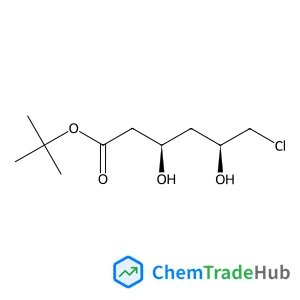
2-Methyl-2-propanyl (3R,5S)-6-chloro-3,5-dihydroxyhexanoate
CAS Number:
154026-93-4
Molecular Formula:
C10H19ClO4

4-(5-(4,4,5,5-tetramethyl-1,3,2-dioxaborolan-2-yl)pyridin-2-yl)morpholine
CAS Number:
485799-04-0
Molecular Formula:
C15H23BN2O3

Recommended Suppliers




Disclaimer
This page provides academic journal information for reference and research purposes only. We are not affiliated with any journal publishers and do not handle publication submissions. For publication-related inquiries, please contact the respective journal publishers directly.
If you notice any inaccuracies in the information displayed, please contact us at support@chemtradehub.com. We will promptly review and address your concerns.