












Water-catalyzed gas-phase hydrogen abstraction reactions of CH3O2 and HO2 with HO2: a computational investigation
Literature Information
Publication Date
2011-10-17
DOI
10.1039/C1CP21563A
Impact Factor
3.676
Authors
Tianlei Zhang, Wenliang Wang, Pei Zhang, Jian Lü, Yue Zhang
View Original
Abstract
The gas-phase hydrogen abstraction reactions of CH3O2 and HO2 with HO2 in the presence and absence of a single water molecule have been studied at the CCSD(T)/6-311++G(3d,2p)//B3LYP/6-311G(2d,2p) level of theory. The calculated results show that the process for O3 formation is much faster than that for 1O2 and 3O2 formation in the water-catalyzed CH3O2 + HO2 reaction. This is different from the results for the non-catalytic reaction of CH3O2 + HO2, in which almost only the process for 3O2 formation takes place. Unlike CH3O2 + HO2 reaction in which the preferred process is different in the catalytic and non-catalytic conditions, the channel for 3O2 formation is the dominant in both catalytic and non-catalytic HO2 + HO2 reactions. Furthermore, the calculated total CVT/SCT rate constants for water-catalyzed and non-catalytic title reactions show that the water molecule doesn't contribute to the rate of CH3O2 + HO2 reaction though the channel for O3 formation in this water-catalyzed reaction is more kinetically favorable than its non-catalytic process. Meanwhile, the water molecule plays an important positive role in increasing the rate of HO2 + HO2 reaction. These results are in good agreement with available experiments.
Related Literature
In situ crosslinked Schiff base biohydrogels containing Carica papaya peel extract: application in the packaging of fresh berries
Ganeswar Dalei, Swagat Kumar Das, Susri Sangita Mohapatra
2023-09-13
Paper
DOI: 10.1039/D3FB00096F
Digitalization of the agro-food sector for achieving sustainable development goals: a review
Adithya Sridhar, Muthamilselvi Ponnuchamy, P. Senthil Kumar, Ashish Kapoor, Dai-Viet Nguyen Vo
2023-10-27
Review Article
DOI: 10.1039/D3FB00124E
Comparative study of different particle sizes of added olive leaves for the content of target polyphenols in virgin olive oil
2023-09-25
Paper
DOI: 10.1039/D3FB00108C
Correction: Synthesis of green fluorescent carbon dots from Moringa oleifera for sensing of deltamethrin and fenvalerate in vegetables and rice
Foziya Yusuf Vadia, Jinet Susan Johny, Naved I. Malek, Suresh Kumar Kailasa
2023-10-19
Correction
DOI: 10.1039/D3FB90017G
Development of sodium alginate–aloe vera hydrogel films enriched with organic fibers: study of the physical, mechanical, and barrier properties for food-packaging applications
Alina Hadi, Anjum Nawab, Feroz Alam, Sara Naqvi
2023-10-30
Paper
DOI: 10.1039/D3FB00122A
The role of ceria/precious metal interfaces in catalysis
Michele Melchionna
2023-11-29
Perspective
DOI: 10.1039/D3LF00202K
Reflecting on the successes of the first full year of RSC Sustainability
2023-12-12
Editorial
DOI: 10.1039/D3SU90059B
Recent advances in semiconductor heterojunctions: a detailed review of the fundamentals of photocatalysis, charge transfer mechanism and materials
Aniket Balapure, Jayati Ray Dutta, Ramakrishnan Ganesan
2023-09-27
Review Article
DOI: 10.1039/D3LF00126A
You might also like
Compound Q&A
What industries use (1R,3S)-1,3-Cyclopentanediol (CAS: 16326-97-9)?
(1R,3S)-1,3-Cyclopentanediol finds applications in various industries. In the ph...
16326-97-9(1R,3S)-1,3-Cyclopen...
Compound Q&A
What precautions should be taken when handling N'-[4-(Dimethylamino)phenyl]-N,N-dimethyl-1,4-benzenediamine (CAS: 637-31-0)?
When handling N'-[4-(Dimethylamino)phenyl]-N,N-dimethyl-1,4-benzenediamine, it i...
637-31-0N'-[4-(Dimethylamino...
Compound Q&A
Are there alternatives to 5-(2,4-Difluorophenyl)-2-methoxypyrimidine (CAS: 1352318-16-1) in synthesis?
There are several alternatives to 5-(2,4-Difluorophenyl)-2-methoxypyrimidine in ...
1352318-16-15-(2,4-Difluoropheny...
Compound Q&A
What regulatory guidelines apply to 1-(3-Methoxyphenoxy)propan-2-ol (CAS: 382141-68-6)?
1-(3-Methoxyphenoxy)propan-2-ol (CAS: 382141-68-6) must comply with the Globally...
382141-68-61-(3-Methoxyphenoxy)...
Compound Q&A
Is Tetrodotoxin Citrate (CAS: 18660-81-6) safe?
Tetrodotoxin Citrate is extremely dangerous and should be handled with extreme c...
18660-81-6Tetrodotoxin Citrate
Compound Q&A
What are the main uses of 2-Methyl-2-propanyl [(1R,3S)-3-hydroxycyclopentyl]carbamate (CAS: 225641-84-9)?
2-Methyl-2-propanyl [(1R,3S)-3-hydroxycyclopentyl]carbamate (CAS: 225641-84-9) i...
225641-84-92-Methyl-2-propanyl ...
Compound Q&A
How should waste containing 4-(2-Hydroxyhexafluoroisopropyl)Benzoic Acid (CAS: 16261-80-6) be handled?
Waste containing 4-(2-Hydroxyhexafluoroisopropyl)Benzoic Acid (CAS: 16261-80-6) ...
16261-80-64-(2-Hydroxyhexafluo...
Compound Q&A
How is 2-Methyl-2-proanyl {(2S)-1-[(benzyloxy)amino]-3-hydroxy-3-methyl-1-oxo-2-butanyl}carbamate (CAS: 102507-19-7) typically synthesized?
2-Methyl-2-proanyl {(2S)-1-[(benzyloxy)amino]-3-hydroxy-3-methyl-1-oxo-2-butanyl...
102507-19-72-Methyl-2-propanyl ...
Compound Q&A
What is Benzeneethanamine, α-ethyl-, hydrochloride (1:1) (CAS: 20735-15-3)?
Benzeneethanamine, α-ethyl-, hydrochloride (1:1) is an organic compound with the...
20735-15-3Benzeneethanamine, α...
Compound Q&A
Are there alternatives to 3-{(E)-[4-(Dimethylamino)phenyl]diazenyl}benzoic acid (CAS: 20691-84-3) in synthesis?
In the synthesis of compounds similar to 3-{(E)-[4-(Dimethylamino)phenyl]diazeny...
20691-84-33-{(E)-[4-(Dimethyla...
Source Journal
Physical Chemistry Chemical Physics

CiteScore:
5.5
Self-citation Rate:
10.3%
Articles per Year:
3036
Physical Chemistry Chemical Physics (PCCP) is an international journal co-owned by 19 physical chemistry and physics societies from around the world. This journal publishes original, cutting-edge research in physical chemistry, chemical physics and biophysical chemistry. To be suitable for publication in PCCP, articles must include significant innovation and/or insight into physical chemistry; this is the most important criterion that reviewers and Editors will judge against when evaluating submissions. The journal has a broad scope and welcomes contributions spanning experiment, theory, computation and data science. Topical coverage includes spectroscopy, dynamics, kinetics, statistical mechanics, thermodynamics, electrochemistry, catalysis, surface science, quantum mechanics, quantum computing and machine learning. Interdisciplinary research areas such as polymers and soft matter, materials, nanoscience, energy, surfaces/interfaces, and biophysical chemistry are welcomed if they demonstrate significant innovation and/or insight into physical chemistry. Joined experimental/theoretical studies are particularly appreciated when complementary and based on up-to-date approaches.
Recommended Compounds


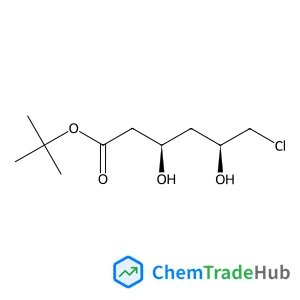
2-Methyl-2-propanyl (3R,5S)-6-chloro-3,5-dihydroxyhexanoate
CAS Number:
154026-93-4
Molecular Formula:
C10H19ClO4
Recommended Suppliers






Disclaimer
This page provides academic journal information for reference and research purposes only. We are not affiliated with any journal publishers and do not handle publication submissions. For publication-related inquiries, please contact the respective journal publishers directly.
If you notice any inaccuracies in the information displayed, please contact us at support@chemtradehub.com. We will promptly review and address your concerns.