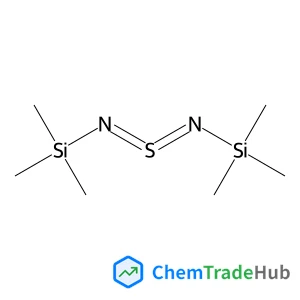
1,3-Bis(trimethylsilyl)-2lambda~4~-diazathia-1,2-diene
CAS Number:
18156-25-7
Molecular Formula:
C6H18N2SSi2
Akihiro Yabushita, Masaaki Yokoyama, Tetsuya Hama, Masahiro Kawasaki, Colin M. Western, Michael N. R. Ashfold
The photodesorption of H2O in its vibrational ground state, and of OH radicals in their ground and first excited vibrational states, following 157 nm photoexcitation of amorphous solid water has been studied using molecular dynamics simulations and detected experimentally by resonance-enhanced multiphoton ionization techniques. There is good agreement between the simulated and measured energy distributions. In addition, signals of H+ and OH+ were detected in the experiments. These are inferred to originate from vibrationally excited H2O molecules that are ejected from the surface by two distinct mechanisms: a direct desorption mechanism and desorption induced by secondary recombination of photoproducts at the ice surface. This is the first reported experimental evidence of photodesorption of vibrationally excited H2O molecules from water ice.

Drug Discovery Today

Chemical Communications

Acta Materialia

Organic Process Research & Development

Russian Journal of Bioorganic Chemistry

Chemistry Education Research and Practice

Russian Journal of Coordination Chemistry

Russian Journal of General Chemistry

Russian Journal of Organic Chemistry

Russian Journal of Applied Chemistry
Gonzalo Angulo, Marta Brucka, Mario Gerecke, Günter Grampp, Damien Jeannerat, Jadwiga Milkiewicz, Yavor Mitrev, Arnulf Rosspeintner, Eric Vauthey
DOI: 10.1039/C6CP02997C
Kishore K. Madapu, S. R. Polaki, Sandip Dhara
DOI: 10.1039/C6CP02405J
A. Piovano, A. Perrichon, M. Boehm, M. R. Johnson, W. Paulus
DOI: 10.1039/C5CP06464C
Mantas Šimėnas, Sergejus Balčiūnas, Mirosław Maçzka, Jūras Banys, Evaldas E. Tornau
DOI: 10.1039/C6CP03414D
Liangliang Wu, Weihai Fang, Xuebo Chen
DOI: 10.1039/C6CP02770A
A. Borgschulte, R. Delmelle, R. B. Duarte, A. Heel, P. Boillat, E. Lehmann
DOI: 10.1039/C5CP07686B
Benjamin Bardet, Domingos De Sousa Meneses, Thomas Defforge, Jérôme Billoué, Gaël Gautier
DOI: 10.1039/C6CP02086K
Qiang Li, Qingzhong Xue, Chunyong Liang, Mingdong Dong
DOI: 10.1039/C6CP02580C
Lei Huang, Zhaochi Feng, Xiuli Wang, Can Li
DOI: 10.1039/C6CP02808J
Victoria García Sakai, Ian P. Silverwood, Nikolaos Dimitratos
DOI: 10.1039/C6CP01151A
4-Benzyl-2,2-dimethylmorpholine is generally considered safe when handled under ...
(5,6-Dimethoxy-3-pyridinyl)boronic acid is a chemical compound with the molecula...
1,1,3,3-Tetramethyl-1,3-bis(2-methyl-2-propanyl)disiloxane is synthesized throug...
(2R,4S)-1-Boc-4-methylpyrrolidine-2-carboxylic acid is primarily used as a build...
When handling 2,3-Dichloroacrylonitrile, it is crucial to wear appropriate perso...
(S)-1-(o-Tolyl)ethanamine hydrochloride should be stored in a cool, dry place to...
Benzyl [1-(hydroxyamino)-1-imino-2-methyl-2-propanyl]carbamate (CAS: 518047-98-8...
2-Methyloxazole-5-carbaldehyde is used in the pharmaceutical industry for the sy...
The market for 2-Methyl-2-propanyl 4-[(1S)-1-hydroxyethyl]-1-piperidinecarboxyla...
1-Butyl-3-methylpyridinium bromide is generally considered safe for laboratory u...

Physical Chemistry Chemical Physics (PCCP) is an international journal co-owned by 19 physical chemistry and physics societies from around the world. This journal publishes original, cutting-edge research in physical chemistry, chemical physics and biophysical chemistry. To be suitable for publication in PCCP, articles must include significant innovation and/or insight into physical chemistry; this is the most important criterion that reviewers and Editors will judge against when evaluating submissions. The journal has a broad scope and welcomes contributions spanning experiment, theory, computation and data science. Topical coverage includes spectroscopy, dynamics, kinetics, statistical mechanics, thermodynamics, electrochemistry, catalysis, surface science, quantum mechanics, quantum computing and machine learning. Interdisciplinary research areas such as polymers and soft matter, materials, nanoscience, energy, surfaces/interfaces, and biophysical chemistry are welcomed if they demonstrate significant innovation and/or insight into physical chemistry. Joined experimental/theoretical studies are particularly appreciated when complementary and based on up-to-date approaches.