


From VO2 (B) to VO2 (A) nanobelts: first hydrothermal transformation, spectroscopic study and first principles calculation
Literature Information
Publication Date
2011-08-08
DOI
10.1039/C1CP20838A
Impact Factor
3.676
Authors
Shudong Zhang, Bo Shang, Jinlong Yang, Wensheng Yan, Shiqiang Wei, Yi Xie
View Original
Abstract
The phase transition process from VO2 (B) to VO2 (A) was first observed through a mild hydrothermal approach, using hybrid density functional theory (DFT) calculations and crystallographic VO2 topology analysis. All theoretical analyses reveal that VO2 (A) is a thermodynamically stable phase and has a lower formation energy compared with the metastable VO2 (B). For the first time, X-ray absorption spectroscopy (XAS) of the V L-edge and O K-edge was performed on different VO2 phases, and the differences in the electronic structure of the two polymorphic forms provide further experimental evidence of the more stable VO2 (A). Consequently, transformation from VO2 (B) to VO2 (A) is much easier to be realized from a dynamical point of view. Notably, the transformation of VO2 (B) into VO2 (A) show the sequence VO2 (B)-high-temperature VO2 (AH) phase-low-temperature VO2 (A) phase, which was achieved by hydrothermal treatment, respectively. Also, an alternative synthesis route was proposed based on the above hydrothermal transformation, and VO2 (A) was successfully prepared via the simple one-step hydrothermal method by hydrolysis of VO(acac)2 (acac = acetylacetonate). Therefore, VO2 nanostructures with controlled phase compositions can be obtained in high yields. Through elucidating the structural evolution in the crystallographic shear mechanism, we can easily guide the design of other metal oxide nanostructures with controllable phases.
Recommended Journals

Angewandte Chemie International Edition

Molecular Diversity

Faraday Discussions

Journal of Medical Biochemistry

Coloration Technology

Foundations of Chemistry

Mini-Reviews in Medicinal Chemistry

Contact Lens & Anterior Eye

European Journal of Organic Chemistry

Journal of Enzyme inhibition and Medicinal Chemistry
Related Literature
Concepts in bio-molecular spectroscopy: vibrational case studies on metalloenzymes
M. Horch, P. Hildebrandt, I. Zebger
2015-06-17
Perspective
DOI: 10.1039/C5CP02447A
In situ investigation of mesoporous silicon oxidation kinetics using infrared emittance spectroscopy
Benjamin Bardet, Domingos De Sousa Meneses, Thomas Defforge, Jérôme Billoué, Gaël Gautier
2016-06-17
Paper
DOI: 10.1039/C6CP02086K
Ab initio calculation of pentacene–PbSe hybrid interface for photovoltaic applications
P. Roy, Thao P. Nguyen
2016-06-10
Paper
DOI: 10.1039/C6CP01563H
An NMR study on the mechanisms of freezing and melting of water confined in spherically mesoporous silicas SBA-16
Tatsuya Miyatou, Ryutaro Ohashi, Tomonori Ida, Shigeharu Kittaka, Motohiro Mizuno
2016-06-15
Paper
DOI: 10.1039/C6CP03111K
Mechanism and microstructures in Ga2O3 pseudomartensitic solid phase transition
Sheng-Cai Zhu, Shu-Hui Guan, Zhi-Pan Liu
2016-06-20
Paper
DOI: 10.1039/C6CP03673B
Nature of intramolecular interactions of vitamin C in view of interacting quantum atoms: the role of hydrogen bond cooperativity on geometry
Saeid Ebrahimi, Hossein A. Dabbagh, Kiamars Eskandari
2016-06-06
Paper
DOI: 10.1039/C6CP01678B
Energetics and kinetics of Cu atoms and clusters on the Si(111)-7 × 7 surface: first-principles calculations
Wei-Guang Chen, Ming-Sheng Tang
2016-06-13
Paper
DOI: 10.1039/C6CP01919F
Direct 17O NMR experimental evidence for Al–NBO bonds in Si-rich and highly polymerized aluminosilicate glasses
Aleksander Jaworski, Baltzar Stevensson, Mattias Edén
2015-06-23
Communication
DOI: 10.1039/C5CP02985F
Molecular dynamics investigations of regioselectivity of anionic/aromatic substrates by a family of enzymes: a case study of diclofenac binding in CYP2C isoforms
Ying-Lu Cui, Fang Xu
2016-05-30
Paper
DOI: 10.1039/C6CP01128D
The application of inelastic neutron scattering to investigate the interaction of methyl propanoate with silica
Andrew R. McFarlane, Hannah Geller, Ian P. Silverwood, Richard I. Cooper, David J. Watkin, Stewart F. Parker, John M. Winfield, David Lennon
2016-05-09
Paper
DOI: 10.1039/C6CP01276K
You might also like
Compound Q&A
What regulatory guidelines apply to 4-Amino-3-bromophenol (CAS: 74440-80-5)?
4-Amino-3-bromophenol (CAS: 74440-80-5) falls under the classification of a haza...
74440-80-54-Amino-3-bromopheno...
Compound Q&A
How should (17beta)-3-Oxoestr-4-en-17-yl acetate (CAS: 1425-10-1) be stored?
(17beta)-3-Oxoestr-4-en-17-yl acetate should be stored in a cool, dry place away...
1425-10-1(17beta)-3-Oxoestr-4...
Compound Q&A
What are the physical and chemical properties of 2-[(2,2-Diethoxyethyl)disulfanyl]-1,1-diethoxyethane (CAS: 76505-71-0)?
2-[(2,2-Diethoxyethyl)disulfanyl]-1,1-diethoxyethane (CAS: 76505-71-0) is a colo...
76505-71-02-[(2,2-Diethoxyethy...
Compound Q&A
What is the market or research trend for 1-(β-D-ribofuranosyl)-1H-imidazo[4,5-c]pyridin-4-amine?
The market and research for 1-(β-D-ribofuranosyl)-1H-imidazo[4,5-c]pyridin-4-ami...
6736-58-91-(beta-D-Ribofurano...
Compound Q&A
How should waste containing Conjugated Estrogen (CAS: 12126-59-9) be handled?
Waste containing Conjugated Estrogen (CAS: 12126-59-9) should be collected and d...
12126-59-9Conjugated Estrogen
Compound Q&A
What is the market or research trend for Bis(2,2,2-trifluoroethyl) (methoxycarbonylmethyl)phosphonate?
The market for Bis(2,2,2-trifluoroethyl) (methoxycarbonylmethyl)phosphonate (CAS...
88738-78-7Bis(2,2,2-trifluoroe...
Compound Q&A
Are there alternatives to 3,4'-Di-O-methylellagic acid (CAS: 57499-59-9) in synthesis?
There are several alternatives to 3,4'-Di-O-methylellagic acid (CAS: 57499-59-9)...
57499-59-93,4'-Di-O-methylella...
Compound Q&A
What regulatory guidelines apply to 2-Chloro-N,N-dimethylpyridin-4-amine (CAS: 59047-70-0)?
2-Chloro-N,N-dimethylpyridin-4-amine (CAS: 59047-70-0) is regulated under the Gl...
59047-70-02-Chloro-N,N-dimethy...
Compound Q&A
What is cerium(3+);oxygen(2-);vanadium(5+) (CAS: 13597-19-8)?
Cerium(3+);oxygen(2-);vanadium(5+) (CAS: 13597-19-8) is a complex inorganic comp...
13597-19-8cerium(3+);oxygen(2-...
Compound Q&A
Is 7-Chloro-1-iodoisoquinoline (CAS: 1203579-27-4) safe?
7-Chloro-1-iodoisoquinoline (CAS: 1203579-27-4) is generally considered safe whe...
1203579-27-47-Chloro-1-iodoisoqu...
Source Journal
Physical Chemistry Chemical Physics

CiteScore:
5.5
Self-citation Rate:
10.3%
Articles per Year:
3036
Physical Chemistry Chemical Physics (PCCP) is an international journal co-owned by 19 physical chemistry and physics societies from around the world. This journal publishes original, cutting-edge research in physical chemistry, chemical physics and biophysical chemistry. To be suitable for publication in PCCP, articles must include significant innovation and/or insight into physical chemistry; this is the most important criterion that reviewers and Editors will judge against when evaluating submissions. The journal has a broad scope and welcomes contributions spanning experiment, theory, computation and data science. Topical coverage includes spectroscopy, dynamics, kinetics, statistical mechanics, thermodynamics, electrochemistry, catalysis, surface science, quantum mechanics, quantum computing and machine learning. Interdisciplinary research areas such as polymers and soft matter, materials, nanoscience, energy, surfaces/interfaces, and biophysical chemistry are welcomed if they demonstrate significant innovation and/or insight into physical chemistry. Joined experimental/theoretical studies are particularly appreciated when complementary and based on up-to-date approaches.
Recommended Compounds

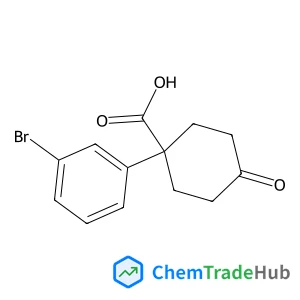
1-(3-Bromophenyl)-4-oxocyclohexanecarboxylic acid
CAS Number:
1385694-53-0
Molecular Formula:
C13H13BrO3
![N-[(1R,2R)-2-Amino-1,2-diphenylethyl]-1,1,1-trifluoromethanesulfonamide structure](https://static.chemtradehub.com/structs/852/852212-89-6-5ef9.webp "N-[(1R,2R)-2-Amino-1,2-diphenylethyl]-1,1,1-trifluoromethanesulfonamide structure")
N-[(1R,2R)-2-Amino-1,2-diphenylethyl]-1,1,1-trifluoromethanesulfonamide
CAS Number:
852212-89-6
Molecular Formula:
C15H15F3N2O2S
Recommended Suppliers





Disclaimer
This page provides academic journal information for reference and research purposes only. We are not affiliated with any journal publishers and do not handle publication submissions. For publication-related inquiries, please contact the respective journal publishers directly.
If you notice any inaccuracies in the information displayed, please contact us at support@chemtradehub.com. We will promptly review and address your concerns.