












Shared solvation of sodium ions in alcohol–water solutions explains the non-ideality of free energy of solvation
Literature Information
Publication Date
2011-07-20
DOI
10.1039/C1CP20527G
Impact Factor
3.676
Authors
Kathrin M. Lange, Ulf Bergmann, Kai F. Hodeck, René Könnecke, Ulrich Schade
View Original
Abstract
In order to explain the discrepancies between theories and experiments regarding the non-ideality in the free energy of solvation, here we present a microscopic picture of sodium ions dissolved in water–alcohol mixed solvents. We used X-ray absorption spectroscopy to probe the K-edge of sodium ions in mixed solvents of water and alcohols (methanol, ethanol) and in the respective pure solvents. In the mixed solvents a shared solvation of the sodium ions is observed. We find that specifically the water component plays a key role in stabilizing the solvation shell in mixed solvents, which was revealed by a selective photochemical process occurring only in the pure alcohol solvents.
Recommended Journals
Related Literature
Mechanism and microstructures in Ga2O3 pseudomartensitic solid phase transition
Sheng-Cai Zhu, Shu-Hui Guan, Zhi-Pan Liu
2016-06-20
Paper
DOI: 10.1039/C6CP03673B
Fabrication of bilayer tetrathiafulvalene integrated surface covalent organic frameworks
Cheng Wang, Dong Wang, Li-Jun Wan
2016-06-06
Communication
DOI: 10.1039/C6CP01804A
Extending the essential dynamics analysis to investigate molecular properties: application to the redox potential of proteins
Stefano Corni, Isabella Daidone, Andrea Amadei
2016-06-07
Paper
DOI: 10.1039/C6CP03394F
An INS study of entrapped organic cations within the micropores of zeolite RTH
Tetiana Lemishko, Jorge Simancas, Manuel Hernández-Rodríguez, Mónica Jiménez-Ruiz, German Sastre, Fernando Rey
2016-04-11
Paper
DOI: 10.1039/C6CP00971A
Excitation dependent Raman studies of self-seeded grown InN nanoparticles with different carrier concentration
Kishore K. Madapu, S. R. Polaki, Sandip Dhara
2016-06-15
Paper
DOI: 10.1039/C6CP02405J
Spectacular enhancement of thermoelectric phenomena in chemically synthesized graphene nanoribbons with substitution atoms
K. Zberecki, R. Swirkowicz, M. Wierzbicki
2016-06-07
Paper
DOI: 10.1039/C6CP02877B
Understanding the light soaking effect of ZnMgO buffer in CIGS solar cells
Suncheul Kim, Chang-Soo Lee, Seungtae Kim, R. B. V. Chalapathy, Essam A. Al-Ammar, Byung Tae Ahn
2015-06-25
Paper
DOI: 10.1039/C5CP01758K
Highly efficient perturbative + variational strategy based on orthogonal valence bond theory for the evaluation of magnetic coupling constants. Application to the trinuclear Cu(ii) site of multicopper oxidases
Lorenzo Tenti, Daniel Maynau, Celestino Angeli, Carmen J. Calzado
2016-06-09
Paper
DOI: 10.1039/C6CP03234F
Electronic structure engineering of various structural phases of phosphorene
Sumandeep Kaur, Ashok Kumar, Sunita Srivastava, K. Tankeshwar
2016-06-09
Paper
DOI: 10.1039/C6CP01252C
You might also like
Compound Q&A
Is 4-Benzyl-2,2-dimethylmorpholine (CAS: 84761-04-6) safe?
4-Benzyl-2,2-dimethylmorpholine is generally considered safe when handled under ...
84761-04-64-Benzyl-2,2-dimethy...
Compound Q&A
What is (5,6-Dimethoxy-3-pyridinyl)boronic acid (CAS: 1346526-61-1)?
(5,6-Dimethoxy-3-pyridinyl)boronic acid is a chemical compound with the molecula...
1346526-61-1(5,6-Dimethoxy-3-pyr...
Compound Q&A
How is 1,1,3,3-Tetramethyl-1,3-bis(2-methyl-2-propanyl)disiloxane (CAS: 67875-55-2) typically synthesized?
1,1,3,3-Tetramethyl-1,3-bis(2-methyl-2-propanyl)disiloxane is synthesized throug...
67875-55-21,1,3,3-Tetramethyl-...
Compound Q&A
What are the main uses of (2R,4S)-1-Boc-4-methylpyrrolidine-2-carboxylic acid (CAS: 1018818-04-6)?
(2R,4S)-1-Boc-4-methylpyrrolidine-2-carboxylic acid is primarily used as a build...
1018818-04-6(2R,4S)-1-Boc-4-meth...
Compound Q&A
What precautions should be taken when handling 2,3-Dichloroacrylonitrile (CAS: 22410-58-8)?
When handling 2,3-Dichloroacrylonitrile, it is crucial to wear appropriate perso...
22410-58-82,3-Dichloroacryloni...
Compound Q&A
How should (S)-1-(o-Tolyl)ethanamine hydrochloride (CAS: 1332832-16-2) be stored?
(S)-1-(o-Tolyl)ethanamine hydrochloride should be stored in a cool, dry place to...
1332832-16-2(S)-1-(o-Tolyl)ethan...
Compound Q&A
What are the physical and chemical properties of Benzyl [1-(hydroxyamino)-1-imino-2-methyl-2-propanyl]carbamate (CAS: 518047-98-8)?
Benzyl [1-(hydroxyamino)-1-imino-2-methyl-2-propanyl]carbamate (CAS: 518047-98-8...
518047-98-8Benzyl [1-(hydroxyam...
Compound Q&A
What industries use 2-Methyloxazole-5-carbaldehyde (CAS: 885273-42-7)?
2-Methyloxazole-5-carbaldehyde is used in the pharmaceutical industry for the sy...
885273-42-72-Methyloxazole-5-ca...
Compound Q&A
What is the market or research trend for 2-Methyl-2-propanyl 4-[(1S)-1-hydroxyethyl]-1-piperidinecarboxylate (CAS: 389889-82-1)?
The market for 2-Methyl-2-propanyl 4-[(1S)-1-hydroxyethyl]-1-piperidinecarboxyla...
389889-82-12-Methyl-2-propanyl ...
Compound Q&A
Is 1-Butyl-3-methylpyridinium bromide (CAS: 26576-85-2) safe?
1-Butyl-3-methylpyridinium bromide is generally considered safe for laboratory u...
26576-85-21-Butyl-3-methylpyri...
Source Journal
Physical Chemistry Chemical Physics

CiteScore:
5.5
Self-citation Rate:
10.3%
Articles per Year:
3036
Physical Chemistry Chemical Physics (PCCP) is an international journal co-owned by 19 physical chemistry and physics societies from around the world. This journal publishes original, cutting-edge research in physical chemistry, chemical physics and biophysical chemistry. To be suitable for publication in PCCP, articles must include significant innovation and/or insight into physical chemistry; this is the most important criterion that reviewers and Editors will judge against when evaluating submissions. The journal has a broad scope and welcomes contributions spanning experiment, theory, computation and data science. Topical coverage includes spectroscopy, dynamics, kinetics, statistical mechanics, thermodynamics, electrochemistry, catalysis, surface science, quantum mechanics, quantum computing and machine learning. Interdisciplinary research areas such as polymers and soft matter, materials, nanoscience, energy, surfaces/interfaces, and biophysical chemistry are welcomed if they demonstrate significant innovation and/or insight into physical chemistry. Joined experimental/theoretical studies are particularly appreciated when complementary and based on up-to-date approaches.
Recommended Compounds
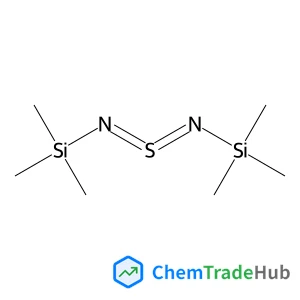
1,3-Bis(trimethylsilyl)-2lambda~4~-diazathia-1,2-diene
CAS Number:
18156-25-7
Molecular Formula:
C6H18N2SSi2
Recommended Suppliers






Disclaimer
This page provides academic journal information for reference and research purposes only. We are not affiliated with any journal publishers and do not handle publication submissions. For publication-related inquiries, please contact the respective journal publishers directly.
If you notice any inaccuracies in the information displayed, please contact us at support@chemtradehub.com. We will promptly review and address your concerns.