












Chiral recognition between 1-(4-fluorophenyl)ethanol and 2-butanol: higher binding energy of homochiral complexes in the gas phase
Literature Information
Publication Date
2010-12-06
DOI
10.1039/C0CP01401J
Impact Factor
3.676
Authors
Alessandra Paladini, Alessandra Ciavardini, Annarita Casavola, Daniele Catone, Mauro Satta, Hans Dieter Barth, Anna Giardini, Maurizio Speranza, Susanna Piccirillo
View Original
Abstract
Diastereomeric adducts between (S)-1-(4-fluorophenyl)-ethanol and R and S 2-butanol, formed by supersonic expansion, have been investigated by means of a combination of mass selected resonant two-photon ionization-spectroscopy and infrared depletion spectroscopy. Chiral recognition is evidenced by the specific spectroscopic signatures of the S1 ← S0 electronic transition as well as different frequencies and intensities of the OH stretch vibrational mode in the ground state. D-DFT calculations have been performed to assist in the analysis of the spectra and the determination of the structures. The homochiral and heterochiral complexes show slight structural differences, in particular in the interaction of the alkyl groups of 2-butanol with the aromatic ring. The experimental results show that the homochiral [FES·BS] complex is more stable than the heterochiral [FES·BR] diastereomer in both the ground and excited states. The binding energy difference has been evaluated to be greater than 0.60 kcal mol−1.
Related Literature
Figure-eight aromatic core-modified octaphyrins with six meso links: syntheses and structural characterization
Harapriya Rath, Jeyaraman Sankar, Viswanathan PrabhuRaja, Tavarekere K. Chandrashekar, Bhawani S. Joshi, Raja Roy
2005-05-27
Communication
DOI: 10.1039/B502327K
A metal nanoparticle-based supramolecular approach for aqueous biphasic reactions
Shilpa C. Mhadgut, Kumaranand Palaniappan, Muralidhara Thimmaiah, Stephen A. Hackney, Béla Török, Jian Liu
2005-05-24
Communication
DOI: 10.1039/B502181B
Enantioselective segregation in achiral nematic liquid crystals
2005-05-13
Communication
DOI: 10.1039/B503846D
Programmable DNA translation system using cross-linked DNA mediators
Masayuki Endo, Shinsuke Uegaki, Tetsuro Majima
2005-05-24
Communication
DOI: 10.1039/B503247D
A novel heterogeneous acid-activated clay supported copper catalyst for the photobleaching and degradation of textile organic pollutant using photo-Fenton-like reaction
Alex Chi-Kin Yip, Frank Leung-Yuk Lam, Xijun Hu
2005-05-18
Communication
DOI: 10.1039/B501531F
Efficient optical resolution of secondary alkyl alcohols by chiral supramolecular hosts
Yoshitane Imai, Tomohiro Sato
2005-05-24
Communication
DOI: 10.1039/B504164C
Spectroscopic and crystallographic evidence for the N-protonated FeIFeI azadithiolate complex related to the active site of Fe-only hydrogenases
Fujun Wang, Mei Wang, Kun Jin, Weibing Dong, Guanghua Li, Björn Åkermark
2005-05-18
Communication
DOI: 10.1039/B503371C
A single-site hydroxyapatite-bound zinc catalyst for highly efficient chemical fixation of carbon dioxide with epoxides
Kohsuke Mori, Yohei Mitani, Takayoshi Hara, Tomoo Mizugaki, Kohki Ebitani, Kiyotomi Kaneda
2005-05-27
Communication
DOI: 10.1039/B502636A
Fine tuning the structure of the Cu2+ complex with the prion protein chicken repeat by proline isomerization
Paweł Stańczak, Daniela Valensin, Paulina Juszczyk, Zbigniew Grzonka, Gianni Valensin, Francesca Bernardi, Elena Molteni, Elena Gaggelli, Henryk Kozłowski
2005-06-01
Communication
DOI: 10.1039/B504986E
You might also like
Compound Q&A
How should 2-Methylbenzene-1,4-diamine dihydrochloride (CAS: 615-45-2) be stored?
2-Methylbenzene-1,4-diamine dihydrochloride (CAS: 615-45-2) should be stored in ...
615-45-22-Methylbenzene-1,4-...
Compound Q&A
Is (1S,4S)-2,5-Diazabicyclo[2.2.1]heptane dihydrobromide (CAS: 132747-20-7) safe?
(1S,4S)-2,5-Diazabicyclo[2.2.1]heptane dihydrobromide is generally considered sa...
132747-20-7(1S,4S)-2,5-Diazabic...
Compound Q&A
What industries use (6-Chloropyridazin-3-YL)methanamine (CAS: 871826-15-2)?
(6-Chloropyridazin-3-YL)methanamine finds applications in the pharmaceutical ind...
871826-15-2(6-Chloropyridazin-3...
Compound Q&A
What are the main uses of 2-Fluoro-3-methylphenol (CAS: 77772-72-6)?
2-Fluoro-3-methylphenol is primarily used in the synthesis of pharmaceuticals, p...
77772-72-62-Fluoro-3-methylphe...
Compound Q&A
What precautions should be taken when handling 3-Methoxy-4-nitrobenzonitrile (CAS: 177476-75-4)?
When handling 3-Methoxy-4-nitrobenzonitrile, it is important to wear appropriate...
177476-75-43-Methoxy-4-nitroben...
Compound Q&A
What precautions should be taken when handling 1,3-Oxazolo[4,5-b]pyridine-2(3H)-thione (CAS: 211949-57-4)?
When handling 1,3-Oxazolo[4,5-b]pyridine-2(3H)-thione (CAS: 211949-57-4), it is ...
211949-57-4[1,3]Oxazolo[4,5-b]p...
Compound Q&A
What regulatory guidelines apply to 4-Ethynylbenzamide (CAS: 90347-86-7)?
4-Ethynylbenzamide (CAS: 90347-86-7) falls under various regulatory guidelines i...
90347-86-74-Ethynylbenzamide
Compound Q&A
What are the main uses of 3-(2-Ethylphenyl)-2-thioxo-4-imidazolidinone (CAS: 186822-57-1)?
3-(2-Ethylphenyl)-2-thioxo-4-imidazolidinone is primarily used as an intermediat...
186822-57-13-(2-Ethylphenyl)-2-...
Compound Q&A
What is (2-Fluoro-6-methoxyphenyl)acetic acid (CAS: 500912-19-6)?
(2-Fluoro-6-methoxyphenyl)acetic acid, also known as 4-fluoro-3-methoxybenzoic a...
500912-19-6(2-Fluoro-6-methoxyp...
Compound Q&A
What is the market or research trend for 2-[4-(Hydroxymethyl)phenoxy]ethanol (CAS: 102196-18-9)?
Market trends for 2-[4-(Hydroxymethyl)phenoxy]ethanol (CAS: 102196-18-9) indicat...
102196-18-92-[4-(Hydroxymethyl)...
Source Journal
Physical Chemistry Chemical Physics

CiteScore:
5.5
Self-citation Rate:
10.3%
Articles per Year:
3036
Physical Chemistry Chemical Physics (PCCP) is an international journal co-owned by 19 physical chemistry and physics societies from around the world. This journal publishes original, cutting-edge research in physical chemistry, chemical physics and biophysical chemistry. To be suitable for publication in PCCP, articles must include significant innovation and/or insight into physical chemistry; this is the most important criterion that reviewers and Editors will judge against when evaluating submissions. The journal has a broad scope and welcomes contributions spanning experiment, theory, computation and data science. Topical coverage includes spectroscopy, dynamics, kinetics, statistical mechanics, thermodynamics, electrochemistry, catalysis, surface science, quantum mechanics, quantum computing and machine learning. Interdisciplinary research areas such as polymers and soft matter, materials, nanoscience, energy, surfaces/interfaces, and biophysical chemistry are welcomed if they demonstrate significant innovation and/or insight into physical chemistry. Joined experimental/theoretical studies are particularly appreciated when complementary and based on up-to-date approaches.
Recommended Compounds
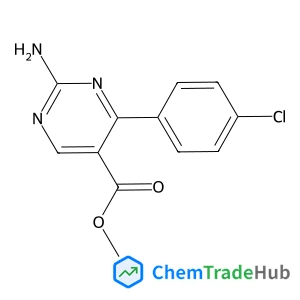
Methyl 2-amino-4-(4-chlorophenyl)-5-pyrimidinecarboxylate
CAS Number:
1133115-56-6
Molecular Formula:
C12H10ClN3O2

2,3,6-Tri-O-acetyl-4-O-(2,3,4,6-tetra-O-acetyl-beta-D-galactopyranosyl)-alpha-D-glucopyranosyl bromide
CAS Number:
4753-07-5
Molecular Formula:
C26H35BrO17
Recommended Suppliers






Disclaimer
This page provides academic journal information for reference and research purposes only. We are not affiliated with any journal publishers and do not handle publication submissions. For publication-related inquiries, please contact the respective journal publishers directly.
If you notice any inaccuracies in the information displayed, please contact us at support@chemtradehub.com. We will promptly review and address your concerns.