












Hydrogen exchange in formic acid dimer: tunnelling above the barrier
Literature Information
Publication Date
2010-05-13
DOI
10.1039/C001253J
Impact Factor
3.676
Authors
View Original
Abstract
The Raman spectrum of formic acid dimer in the OH stretch fundamental range is analysed in terms of a fully coupled vibrational Hamiltonian for the seven most important in-plane degrees of freedom involved in the hydrogen exchange process. The Raman spectrum calculated with potential and polarizability functions obtained from density functional theory reproduces the observed band structure. Wavepacket calculations reveal a remarkably slow hydrogen exchange on the timescale of several ps even at excess energies in the range of 10–15 kJ mol−1. The highly non-statistical process is shown to proceed via adiabatic tunnelling even if excess energy is deposited directly into the reaction coordinate.
Related Literature
The first ternary tin(ii) nitride: NaSnN
Nicholas S. P. Watney, Zoltán A. Gál, Matthew D. S. Webster, Simon J. Clarke
2005-07-20
Communication
DOI: 10.1039/B505208D
Entropy-controlled supramolecular photochirogenesis: enantiodifferentiating Z–E photoisomerization of cyclooctene included and sensitized by permethylated 6-O-benzoyl-β-cyclodextrin
Gaku Fukuhara, Tadashi Mori
2005-07-21
Communication
DOI: 10.1039/B504948B
Microporous organic crystals: an unusual case for l-leucyl–l-serine
Carl Henrik Görbitz, Mette Nilsen, Kai Szeto, Linda Wibecke Tangen
2005-07-28
Communication
DOI: 10.1039/B504976H
In situ formation of ligandandcatalyst—application in ruthenium-catalyzed enantioselective reduction of ketones
Patrik Västilä, Jenny Wettergren, Hans Adolfsson
2005-07-12
Communication
DOI: 10.1039/B505516D
Mechanistic subtleties in the cyclopentannelation of allenolate allyl carbamates: the origin of the center-to-center chirality transfer
Olalla Nieto Faza, Carlos Silva López, Rosana Álvarez, Ángel R. de Lera
2005-07-27
Communication
DOI: 10.1039/B506601H
Networked calix[4]arenepolymers with unusual mechanical properties
Joseph N. Grima, Kenneth E. Evans
2005-07-14
Communication
DOI: 10.1039/B505839B
Comb-shaped poly(ethylene glycol)-modified subtilisin Carlsberg is soluble and highly active in ionic liquids
Kazunori Nakashima, Tatsuo Maruyama, Noriho Kamiya, Masahiro Goto
2005-08-02
Communication
DOI: 10.1039/B505479F
A two-dimensional clathrate hydrate sandwiched by planar arrays of a copper complex
Riichi Miyamoto, Rika Tanaka Hamazawa, Masakazu Hirotsu, Takanori Nishioka, Isamu Kinoshita, L. James Wright
2005-06-15
Communication
DOI: 10.1039/B505681K
Allosteric pitch length tuning of a dinuclear double helicate
Christian J. Baylies, John C. Jeffery, Tom A. Miller, Ryan Moon, Craig R. Rice, T. Riis-Johannessen
2005-07-21
Communication
DOI: 10.1039/B506199G
Gold nanoparticle-based competitive colorimetric assay for detection of protein–protein interactions
Charng-Sheng Tsai, Ting-Bin Yu, Chao-Tsen Chen
2005-07-28
Communication
DOI: 10.1039/B507237A
You might also like
Compound Q&A
How should waste containing N-Methoxy-N-methyl-1,3-thiazole-5-carboxamide (CAS: 898825-89-3) be handled?
Waste containing N-Methoxy-N-methyl-1,3-thiazole-5-carboxamide (CAS: 898825-89-3...
898825-89-3N-Methoxy-N-methyl-1...
Compound Q&A
How should N-(4-Biphenylyl)dibenzo[b,d]furan-4-amine (CAS: 1318338-47-4) be stored?
N-(4-Biphenylyl)dibenzo[b,d]furan-4-amine should be stored in a tightly sealed c...
1318338-47-4N-(4-Biphenylyl)dibe...
Compound Q&A
What is the market or research trend for 3-Acetamido-5-amino-2,4,6-triiodobenzoic acid (CAS: 1713-07-1)?
The market for 3-Acetamido-5-amino-2,4,6-triiodobenzoic acid (CAS: 1713-07-1) is...
1713-07-13-Acetamido-5-amino-...
Compound Q&A
How should Benzyl 2-O-acetyl-3,4,6-tri-O-benzyl-beta-D-galactopyranoside (CAS: 61820-03-9) be stored?
Benzyl 2-O-acetyl-3,4,6-tri-O-benzyl-beta-D-galactopyranoside (CAS: 61820-03-9) ...
61820-03-9Benzyl 2-O-acetyl-3,...
Compound Q&A
What regulatory guidelines apply to 2-Ethylpiperazine dihydrochloride (CAS: 438050-52-3)?
2-Ethylpiperazine dihydrochloride (CAS: 438050-52-3) is regulated under the Glob...
438050-52-32-Ethylpiperazine di...
Compound Q&A
What regulatory guidelines apply to 1,1'-[1,3-Phenylenebis(methylene)]bis(3-methyl-1H-pyrrole-2,5-dione) (CAS: 119462-56-5)?
1,1'-[1,3-Phenylenebis(methylene)]bis(3-methyl-1H-pyrrole-2,5-dione) (CAS: 11946...
119462-56-51,1'-[1,3-Phenyleneb...
Compound Q&A
Are there alternatives to 5-Fluoro-2-(1-pyrrolidinyl)pyridine (CAS: 1287217-79-1) in synthesis?
Several alternatives can be used in the synthesis of 5-Fluoro-2-(1-pyrrolidinyl)...
1287217-79-15-Fluoro-2-(1-pyrrol...
Compound Q&A
What precautions should be taken when handling 1-((2R,3R,4R,5R)-5-((bis(4-methoxyphenyl)(phenyl)methoxy)methyl)-4-hydroxy-3-methoxytetrahydrofuran-2-yl)-5-methylpyrimidine-2,4(1H,3H)-dione (CAS: 153631-19-7)?
Proper personal protective equipment (PPE) must be worn when handling this compo...
153631-19-71-((2R,3R,4R,5R)-5-(...
Compound Q&A
What precautions should be taken when handling 6-Bromoimidazo[1,2-a]pyridin-8-amine (CAS: 676371-00-9)?
When handling 6-Bromoimidazo[1,2-a]pyridin-8-amine, it is important to wear appr...
676371-00-96-Bromoimidazo[1,2-a...
Compound Q&A
Are there alternatives to (2S,4R)-4-(4-Nitrobenzyl)pyrrolidine-2-carboxylic acid hydrochloride (CAS: 1049740-22-8) in synthesis?
Alternatives to (2S,4R)-4-(4-Nitrobenzyl)pyrrolidine-2-carboxylic acid hydrochlo...
1049740-22-8(2S,4R)-4-(4-Nitrobe...
Source Journal
Physical Chemistry Chemical Physics

CiteScore:
5.5
Self-citation Rate:
10.3%
Articles per Year:
3036
Physical Chemistry Chemical Physics (PCCP) is an international journal co-owned by 19 physical chemistry and physics societies from around the world. This journal publishes original, cutting-edge research in physical chemistry, chemical physics and biophysical chemistry. To be suitable for publication in PCCP, articles must include significant innovation and/or insight into physical chemistry; this is the most important criterion that reviewers and Editors will judge against when evaluating submissions. The journal has a broad scope and welcomes contributions spanning experiment, theory, computation and data science. Topical coverage includes spectroscopy, dynamics, kinetics, statistical mechanics, thermodynamics, electrochemistry, catalysis, surface science, quantum mechanics, quantum computing and machine learning. Interdisciplinary research areas such as polymers and soft matter, materials, nanoscience, energy, surfaces/interfaces, and biophysical chemistry are welcomed if they demonstrate significant innovation and/or insight into physical chemistry. Joined experimental/theoretical studies are particularly appreciated when complementary and based on up-to-date approaches.
Recommended Compounds
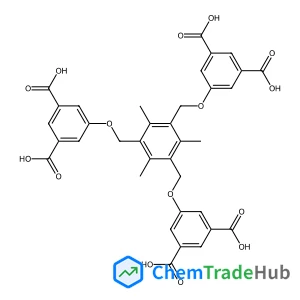
5,5',5''-(((2,4,6-Trimethylbenzene-1,3,5-triyl)tris(methylene))tris(oxy))triisophthalic acid
CAS Number:
1159974-70-5
Molecular Formula:
C36H30O15
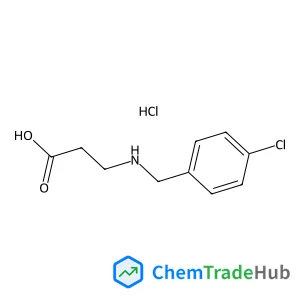
N-(4-Chlorobenzyl)-beta-alanine hydrochloride (1:1)
CAS Number:
1172479-10-5
Molecular Formula:
C10H13Cl2NO2
Recommended Suppliers





Disclaimer
This page provides academic journal information for reference and research purposes only. We are not affiliated with any journal publishers and do not handle publication submissions. For publication-related inquiries, please contact the respective journal publishers directly.
If you notice any inaccuracies in the information displayed, please contact us at support@chemtradehub.com. We will promptly review and address your concerns.