![[5-fluoro-2-(morpholine-4-carbonyl)phenyl]boronic acid structure](https://static.chemtradehub.com/structs/121/1217501-26-2-505c.webp "[5-fluoro-2-(morpholine-4-carbonyl)phenyl]boronic acid structure")
[5-fluoro-2-(morpholine-4-carbonyl)phenyl]boronic acid
CAS Number:
1217501-26-2
Molecular Formula:
C11H13BFNO4
Bonghwan Chon, Sung Jun Lim, Wonjung Kim, Jongcheol Seo, Hyeonggon Kang, Taiha Joo, Jeeseong Hwang, Seung Koo Shin
Blinking of zinc blende CdSe-based core/shell nanocrystals is studied as a function of shell materials and surface ligands. CdSe/ZnS, CdSe/ZnSe/ZnS and CdSe/CdS/ZnS core/shell nanocrystals are prepared by colloidal synthesis and six monolayers of larger bandgap shell materials are grown over the CdSe core. Organic-soluble nanocrystals covered with stearate are made water-soluble by ligand exchange with 3-mercaptopropionic acid. The light-emitting states of nanocrystals are characterized by absorption and emission spectroscopy as well as photoluminescence lifetime measurements in solution. The blinking time trace is recorded for single nanocrystals on a glass coverslip. Both on- and off-time distributions are fitted to the power law. The power-law exponents vary, depending on shell materials and surface ligands. The off-time exponents for organic and water-soluble nanocrystals are measured in the range of 1.36–1.55 and 1.25–1.37, respectively, while their on-time exponents are spread in the range of 1.53–1.86 and 1.85–2.17, respectively. Water-soluble surface passivation with thiolate prolongs the dark period regardless of shell materials and core/shell structures. Of the core/shell structures, CdSe/CdS/ZnS exhibits the longest bright state. The on/off-time exponents are inversely correlated, although the successive on/off events are not individually correlated. A two competing charge-tunneling model is presented to describe the variation of on- and off-time exponents with shell materials and surface ligands.
Steven Dickson, Darrell Dean, Robert. D. Singer
DOI: 10.1039/B508400H
Anne L. Boreen, Kristopher McNeill
DOI: 10.1039/B506971H
Katsuhiro Maeda, Yasuaki Matsushita, Muneyoshi Ezaka
DOI: 10.1039/B507863F
Qin Liu, Melissa Golden, Marcetta Y. Darensbourg, Nicholas Farrell
DOI: 10.1039/B507751F
Tsutomu Kimura, Toshiaki Murai
DOI: 10.1039/B507755A
Shaofeng Yang, Roel Prins
DOI: 10.1039/B507940C
Chunling Fu, Jing Li
DOI: 10.1039/B508069J
Andrea Deák, Gábor Tárkányi
DOI: 10.1039/B506728F
Gaku Fukuhara, Tadashi Mori
DOI: 10.1039/B504948B
Waste containing N-Methoxy-N-methyl-1,3-thiazole-5-carboxamide (CAS: 898825-89-3...
N-(4-Biphenylyl)dibenzo[b,d]furan-4-amine should be stored in a tightly sealed c...
The market for 3-Acetamido-5-amino-2,4,6-triiodobenzoic acid (CAS: 1713-07-1) is...
Benzyl 2-O-acetyl-3,4,6-tri-O-benzyl-beta-D-galactopyranoside (CAS: 61820-03-9) ...
2-Ethylpiperazine dihydrochloride (CAS: 438050-52-3) is regulated under the Glob...
1,1'-[1,3-Phenylenebis(methylene)]bis(3-methyl-1H-pyrrole-2,5-dione) (CAS: 11946...
Several alternatives can be used in the synthesis of 5-Fluoro-2-(1-pyrrolidinyl)...
Proper personal protective equipment (PPE) must be worn when handling this compo...
When handling 6-Bromoimidazo[1,2-a]pyridin-8-amine, it is important to wear appr...
Alternatives to (2S,4R)-4-(4-Nitrobenzyl)pyrrolidine-2-carboxylic acid hydrochlo...

Physical Chemistry Chemical Physics (PCCP) is an international journal co-owned by 19 physical chemistry and physics societies from around the world. This journal publishes original, cutting-edge research in physical chemistry, chemical physics and biophysical chemistry. To be suitable for publication in PCCP, articles must include significant innovation and/or insight into physical chemistry; this is the most important criterion that reviewers and Editors will judge against when evaluating submissions. The journal has a broad scope and welcomes contributions spanning experiment, theory, computation and data science. Topical coverage includes spectroscopy, dynamics, kinetics, statistical mechanics, thermodynamics, electrochemistry, catalysis, surface science, quantum mechanics, quantum computing and machine learning. Interdisciplinary research areas such as polymers and soft matter, materials, nanoscience, energy, surfaces/interfaces, and biophysical chemistry are welcomed if they demonstrate significant innovation and/or insight into physical chemistry. Joined experimental/theoretical studies are particularly appreciated when complementary and based on up-to-date approaches.
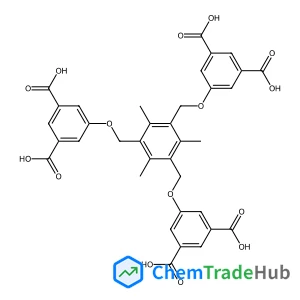
![tert-Butyl 6-chloro-4-oxospiro[chroman-2,4'-piperidine]-1'-carboxylate structure](https://static.chemtradehub.com/structs/101/1011482-37-3-88a5.webp "tert-Butyl 6-chloro-4-oxospiro[chroman-2,4'-piperidine]-1'-carboxylate structure")