













A detailed comparison of centrifugal sudden and J-shift estimates of the reactive properties of the N + N2 reaction
Literature Information
Publication Date
2009-10-27
DOI
10.1039/B915409D
Impact Factor
3.676
Authors
Antonio Laganà, Dimitris Skouteris
View Original
Abstract
An extended comparison of the reactive properties of the N + N2 exchange reaction calculated on a non-collinear dominant potential energy surface using both a centrifugal sudden and a J-shift quantum method is reported. The choice of carrying out such an investigation for N + N2 is motivated by the fact that the best available (and currently used for spacecraft re-entry simulations) computed set of kinetic data has been worked out using the low level J-shift approximation though based on exact quantum zero total angular momentum probabilities. The fact that our investigation is carried out for a heavy system and a potential energy surface free of wells in the strong interaction region minimizes the occurrence of tunnel, resonance and interference effects which would make the rationalization of the result difficult and the centrifugal sudden treatment less accurate. The study has provided evidence of two important limits of the J-shift approximation: the wrong determination of the maximum value of the total angular momentum quantum number J contributing to reactivity and the lack of deformation of the partial reactive probability dependence on energy at fixed J value. Accordingly, it has been found that the J-shift state-specific cross sections underestimate the corresponding CS values when the initial diatomic rotational energy is low while the situation reverses when the initial diatomic rotational energy is high.
Related Literature
Stabilizing effect of TMAO on globular PNIPAM states: preferential attraction induces preferential hydration
Julian Michalowsky, Birgit Fischer, Jens Smiatek
2016-11-03
Paper
DOI: 10.1039/C6CP05991K
Deprotonation of formic acid in collisions with a liquid water surface studied by molecular dynamics and metadynamics simulations
Garold Murdachaew, Gilbert M. Nathanson, Lauri Halonen
2016-10-10
Paper
DOI: 10.1039/C6CP06071D
In situ growth of sulfide/g-C3N4 nano-heterostructures with an adjusted band gap toward enhanced visible photocatalysis
Yumeng Liu, Xiao Zhang, Junpeng Wang, Ping Yang
2016-10-19
Paper
DOI: 10.1039/C6CP06371C
A ReaxFF force field for sodium intrusion in graphitic cathodes
Eirik Hjertenæs, Anh Quynh Nguyen
2016-11-02
Paper
DOI: 10.1039/C6CP06774C
How does ammonia bind to the oxygen-evolving complex in the S2 state of photosynthetic water oxidation? Theoretical support and implications for the W1 substitution mechanism
Yu Guo, Lan-Lan He, Dong-Xia Zhao, Li-Dong Gong, Cui Liu, Zhong-Zhi Yang
2016-10-21
Paper
DOI: 10.1039/C6CP05725J
Transferability of a coarse-grained atactic polystyrene model: the non-bonded potential effect
2016-10-04
Paper
DOI: 10.1039/C6CP03753D
A comparative study of Ni–Mn layered double hydroxide/carbon composites with different morphologies for supercapacitors
M. Li, F. Liu, X. B. Zhang, J. P. Cheng
2016-10-06
Paper
DOI: 10.1039/C6CP05119G
A new, double-inversion mechanism of the F− + CH3Cl SN2 reaction in aqueous solution
Peng Liu, Dunyou Wang, Yulong Xu
2016-10-31
Paper
DOI: 10.1039/C6CP06195H
Time-gated luminescence bioimaging with new luminescent nanocolloids based on [Mo6I8(C2F5COO)6]2− metal atom clusters
Chrystelle Neaime, Maria Amela-Cortes, Yann Molard, Stéphane Cordier, Benjamin Dierre, Michel Mortier, Toshiaki Takei, Kohsei Takahashi, Hajime Haneda, Marc Verelst, Séverine Lechevallier
2016-10-07
Paper
DOI: 10.1039/C6CP05290H
You might also like
Compound Q&A
What precautions should be taken when handling 2-Chloro-1,2-bis(4-methylphenyl)ethanone (CAS: 71193-32-3)?
When handling 2-Chloro-1,2-bis(4-methylphenyl)ethanone (CAS: 71193-32-3), it is ...
71193-32-32-Chloro-1,2-bis(4-m...
Compound Q&A
What industries use 4-Ethoxy-3-(5-methyl-4-oxo-7-propyl-1,4-dihydroimidazo[5,1-f][1,2,4]triazin-2-yl)benzenesulfonyl chloride (CAS: 224789-26-8)?
4-Ethoxy-3-(5-methyl-4-oxo-7-propyl-1,4-dihydroimidazo[5,1-f][1,2,4]triazin-2-yl...
224789-26-84-Ethoxy-3-(5-methyl...
Compound Q&A
How should Methyl 3-Oxo-4-Androsten-17-Carboxylate (CAS: 2681-55-2) be stored?
Methyl 3-Oxo-4-Androsten-17-Carboxylate (CAS: 2681-55-2) should be stored in a c...
2681-55-2Methyl 3-Oxo-4-Andro...
Compound Q&A
What are the main uses of (R)-3-Amino-4-(3-hexylphenylamino)-4-oxobutylphosphonic acid (CAS: 909725-61-7)?
(R)-3-Amino-4-(3-hexylphenylamino)-4-oxobutylphosphonic acid is primarily used i...
909725-61-7(R)-3-Amino-4-(3-hex...
Compound Q&A
What regulatory guidelines apply to 2-Methyl-2-propanyl 3-amino-3-carbamoyl-1-azetidinecarboxylate (CAS: 1254120-14-3)?
2-Methyl-2-propanyl 3-amino-3-carbamoyl-1-azetidinecarboxylate (CAS: 1254120-14-...
1254120-14-32-Methyl-2-propanyl ...
Compound Q&A
Are there alternatives to (E)-4-(tert-Butoxy)-4-oxobut-2-enoic acid (CAS: 135355-96-3) in synthesis?
There are alternative reagents that can be used in synthesis instead of (E)-4-(t...
135355-96-3(E)-4-(tert-Butoxy)-...
Compound Q&A
What are the physical and chemical properties of [2-(3-Chlorophenyl)-1,3-thiazol-4-yl]methanol (CAS: 121202-20-8)?
[2-(3-Chlorophenyl)-1,3-thiazol-4-yl]methanol (CAS: 121202-20-8) is a crystallin...
121202-20-8[2-(3-Chlorophenyl)-...
Compound Q&A
What is the market or research trend for Methyl (2S)-[(4S)-2,2-dimethyl-1,3-dioxolan-4-yl]{[(4-methylphenyl)sulfonyl]oxy}acetate (CAS: 166249-17-8)?
The market and research trends for Methyl (2S)-[(4S)-2,2-dimethyl-1,3-dioxolan-4...
166249-17-8Methyl (2S)-[(4S)-2,...
Compound Q&A
What is the market or research trend for 1-Bromo-2-isocyanatoethane (CAS: 42865-19-0)?
The market for 1-Bromo-2-isocyanatoethane (CAS: 42865-19-0) is driven by its use...
42865-19-01-Bromo-2-isocyanato...
Compound Q&A
What are the main uses of 4-Nitro-D-phenylalanine hydrochloride (CAS: 147065-06-3)?
4-Nitro-D-phenylalanine hydrochloride (CAS: 147065-06-3) is primarily used in re...
147065-06-34-Nitro-D-phenylalan...
Source Journal
Physical Chemistry Chemical Physics

CiteScore:
5.5
Self-citation Rate:
10.3%
Articles per Year:
3036
Physical Chemistry Chemical Physics (PCCP) is an international journal co-owned by 19 physical chemistry and physics societies from around the world. This journal publishes original, cutting-edge research in physical chemistry, chemical physics and biophysical chemistry. To be suitable for publication in PCCP, articles must include significant innovation and/or insight into physical chemistry; this is the most important criterion that reviewers and Editors will judge against when evaluating submissions. The journal has a broad scope and welcomes contributions spanning experiment, theory, computation and data science. Topical coverage includes spectroscopy, dynamics, kinetics, statistical mechanics, thermodynamics, electrochemistry, catalysis, surface science, quantum mechanics, quantum computing and machine learning. Interdisciplinary research areas such as polymers and soft matter, materials, nanoscience, energy, surfaces/interfaces, and biophysical chemistry are welcomed if they demonstrate significant innovation and/or insight into physical chemistry. Joined experimental/theoretical studies are particularly appreciated when complementary and based on up-to-date approaches.
Recommended Compounds
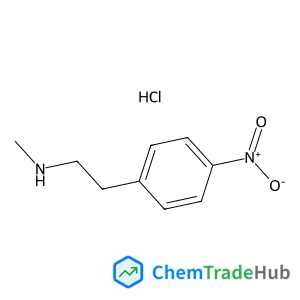
N-Methyl-2-(4-nitrophenyl)ethanamine hydrochloride (1:1)
CAS Number:
166943-39-1
Molecular Formula:
C9H13ClN2O2
![(1R)-3-Bromo-1,7,7-trimethylbicyclo[2.2.1]heptan-2-one structure](https://static.chemtradehub.com/structs/102/10293-06-8-dd8a.webp "(1R)-3-Bromo-1,7,7-trimethylbicyclo[2.2.1]heptan-2-one structure")
(1R)-3-Bromo-1,7,7-trimethylbicyclo[2.2.1]heptan-2-one
CAS Number:
10293-06-8
Molecular Formula:
C10H15BrO

Recommended Suppliers





Disclaimer
This page provides academic journal information for reference and research purposes only. We are not affiliated with any journal publishers and do not handle publication submissions. For publication-related inquiries, please contact the respective journal publishers directly.
If you notice any inaccuracies in the information displayed, please contact us at support@chemtradehub.com. We will promptly review and address your concerns.