![4-Penten-1-yl 2-[(2-furylmethyl)(1H-imidazol-1-ylcarbonyl)amino]butanoate structure](https://static.chemtradehub.com/structs/101/101903-30-4-ac34.webp "4-Penten-1-yl 2-[(2-furylmethyl)(1H-imidazol-1-ylcarbonyl)amino]butanoate structure")
4-Penten-1-yl 2-[(2-furylmethyl)(1H-imidazol-1-ylcarbonyl)amino]butanoate
CAS Number:
101903-30-4
Molecular Formula:
C18H23N3O4
Paul N. Davey, Martyn J. Earle, Jennifer T. Hamill, Suhas P. Katdare, David W. Rooney, Kenneth R. Seddon
Acid catalysed direct hydration of dihydromyrcene to dihydromyrcenol proceeds selectively in ionic liquid media. By making use of the tuneable physicochemical properties of ionic liquids, and depending upon the process requirement, either biphasic or triphasic systems can be developed. The selectivity to dihydromyrcenol remains extremely high over a wide range of reaction conditions.

Journal of Peptide Science

Russian Journal of Applied Chemistry

Russian Chemical Bulletin

Russian Journal of Organic Chemistry

Acta Materialia

Current Opinion in Solid State & Materials Science

Russian Journal of Bioorganic Chemistry

Drug Discovery Today

Russian Journal of Coordination Chemistry

Nature Medicine
Mengyang Niu, Zheng Zhao, Baokai Wang, Chang Yu, Mengyi Li, Jiajun Hu, Lifeng Zhu, Xu Hao, Shiqin Wan, Ming Yue, Weiwei Xuan, Qipeng Lu, Wenbin Cao, Kexin Chen, Qi Wang
DOI: 10.1039/D3TA04770A
Wei Tao, Qiaoya Tang, Jianqiang Hu, Zhipeng Wang, Baojiang Jiang, Yuting Xiao, Renjie Song, Shien Guo
DOI: 10.1039/D3TA05388A
Arun Richard Chandrasekaran
DOI: 10.1039/D3NH90040A
Zongbao Li, Mingjie Feng, Bin Yan
DOI: 10.1039/D3TA04530G
Yanyan Liu, Shuyue Wang, Minghao Sun, Min Ling, Shaodong Zhou, Chengdu Liang
DOI: 10.1039/D3TA05203F
DOI: 10.1039/D3TA05214A
6-Bromo-2-methylimidazo[1,2-a]pyrimidine (CAS: 1111638-05-1) falls under various...
While there are no direct alternatives, similar compounds like 1-Pyrrolidineetha...
4-Methyl-2,6-bis(2-methyl-2-propanyl)phenyl methylcarbamate (CAS: 1918-11-2) is ...
2-(3-Bromo-4-fluorophenyl)-1,3-dioxolane (CAS: 77771-04-1) should be stored in a...
4,5,6,7-Tetrahydro-1H-indazole hydrochloride is a white crystalline solid with a...
(2R)-1-Methoxy-3-phenyl-2-propanamine is a chiral organic compound with the CAS ...
Ethyl 1-(1-phenylethyl)-1H-imidazole-5-carboxylate is used in various industries...
4-[(1E,3S)-1-(4-Hydroxyphenyl)-1,4-pentadien-3-yl]phenol (CAS: 17676-24-3) falls...
(S)-3-Amino-5-phenylpentanoic acid hydrochloride is primarily used in the pharma...
7-Methoxy-1-benzothiophene-2-carboxylic acid is typically synthesized by reactin...

Green Chemistry provides a unique forum for the publication of innovative research on the development of alternative green and sustainable technologies. The scope of Green Chemistry is based on, but not limited to, the definition proposed by Anastas and Warner (Green Chemistry: Theory and Practice, P T Anastas and J C Warner, Oxford University Press, Oxford, 1998). Green chemistry is the utilisation of a set of principles that reduces or eliminates the use or generation of hazardous substances in the design, manufacture and application of chemical products. Green Chemistry is at the frontiers of this continuously-evolving interdisciplinary science and publishes research that attempts to reduce the environmental impact of the chemical enterprise by developing a technology base that is inherently non-toxic to living things and the environment. Submissions on all aspects of research relating to the endeavour are welcome. The journal publishes original and significant cutting-edge research that is likely to be of wide general appeal. To be published, work must present a significant advance in green chemistry. Papers must contain a comparison with existing methods and demonstrate advantages over those methods before publication can be considered. For more information please see this Editorial. Coverage includes the following, but is not limited to: Design (e.g. biomimicry, design for degradation/recycling/reduced toxicity…) Reagents & Feedstocks (e.g. renewables, CO2, solvents, auxiliary agents, waste utilization…) Synthesis (e.g. organic, inorganic, synthetic biology…) Catalysis (e.g. homogeneous, heterogeneous, enzyme, whole cell…) Process (e.g. process design, intensification, separations, recycling, efficiency…) Energy (e.g. renewable energy, fuels, photovoltaics, fuel cells, energy storage, energy carriers…) Applications (e.g. electronics, dyes, consumer products, coatings, pharmaceuticals, preservatives, building materials, chemicals for industry/agriculture/mining…) Impact (e.g. safety, metrics, LCA, sustainability, (eco)toxicology…) Green chemistry is, by definition, a continuously-evolving frontier. Therefore, the inclusion of a particular material or technology does not, of itself, guarantee that a paper is suitable for the journal. To be suitable, the novel advance should have the potential for reduced environmental impact relative to the state of the art. Green Chemistry does not normally deal with research associated with 'end-of-pipe' or remediation issues.
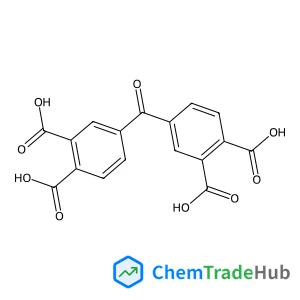
![Benzeneacetic acid, 2-[(2,6-dichlorophenyl)amino]-, compd. with 1-pyrrolidineethanol (1:1) structure](https://static.chemtradehub.com/structs/119/119623-66-4-5301.webp "Benzeneacetic acid, 2-[(2,6-dichlorophenyl)amino]-, compd. with 1-pyrrolidineethanol (1:1) structure")