













Inside front cover
Literature Information
Publication Date
DOI
10.1039/B822115B
Impact Factor
0
Authors
View Original
Abstract
The first page of this article is displayed as the abstract.
Related Literature
The cis-isomer performs better than the trans-isomer in porphyrin-sensitized solar cells: interfacial electron transport and charge recombination investigations
Liyang Luo, Ram B. Ambre, Sandeep B. Mane, Eric Wei-Guang Diau, Chen-Hsiung Hung
2015-06-30
Paper
DOI: 10.1039/C5CP02367J
Molecular basis for competitive solvation of the Burkholderia cepacia lipase by sorbitol and urea
Ivan P. Oliveira, Leandro Martínez
2016-07-08
Paper
DOI: 10.1039/C6CP01789D
An ultrafast spectroscopic and quantum mechanical investigation of multiple emissions in push–pull pyridinium derivatives bearing different electron donors
B. Carlotti, E. Benassi, A. Cesaretti, C. G. Fortuna, A. Spalletti, V. Barone, F. Elisei
2015-07-08
Paper
DOI: 10.1039/C5CP03207E
Ultra-fast single-file transport of a simple liquid beyond the collective behavior zone
Jiaye Su, Keda Yang, Decai Huang
2016-01-22
Communication
DOI: 10.1039/C5CP07253K
Facile hydrothermal synthesis of NiMoO4@CoMoO4 hierarchical nanospheres for supercapacitor applications
2015-07-13
Paper
DOI: 10.1039/C5CP03331D
Separation of benzene from mixtures with water, methanol, ethanol, and acetone: highlighting hydrogen bonding and molecular clustering influences in CuBTC
Rajamani Krishna
2015-07-07
Paper
DOI: 10.1039/C5CP02726H
Formic acid oxidation on platinum: a simple mechanistic study
Kathleen A. Schwarz, Ravishankar Sundararaman, Thomas P. Moffat, Thomas C. Allison
2015-07-15
Paper
DOI: 10.1039/C5CP03045E
Topography evolution of 500 keV Ar4+ ion beam irradiated InP(100) surfaces – formation of self-organized In-rich nano-dots and scaling laws
Indra Sulania, Dinesh C. Agarwal, Manish Kumar, Sunil Kumar, Pravin Kumar
2016-07-04
Paper
DOI: 10.1039/C6CP03409H
Electronic structures of bare and terephthalic acid adsorbed TiO2(110)-(1 × 2) reconstructed surfaces: origin and reactivity of the band gap states
Wenhua Zhang, Liming Liu, Li Wan, Lingyun Liu, Liang Cao, Faqiang Xu
2015-07-02
Paper
DOI: 10.1039/C5CP01298H
You might also like
Compound Q&A
What is Ethyl 3-cyclohexylpropanoate (CAS: 10094-36-7)?
Ethyl 3-cyclohexylpropanoate is a clear, colorless to light yellow liquid with a...
10094-36-7Ethyl 3-cyclohexylpr...
Compound Q&A
How should waste containing 2-(Hydroxymethyl)-5-(methoxycarbonyl)-6-methyl-4-(2-nitrophenyl)nicotinic acid (CAS: 34783-31-8) be handled?
Waste containing 2-(Hydroxymethyl)-5-(methoxycarbonyl)-6-methyl-4-(2-nitrophenyl...
34783-31-82-(Hydroxymethyl)-5-...
Compound Q&A
How should waste containing 2,4,6-Tris(pentafluoroethyl)-1,3,5-triazine (CAS: 858-46-8) be handled?
Waste containing 2,4,6-Tris(pentafluoroethyl)-1,3,5-triazine (CAS: 858-46-8) sho...
858-46-82,4,6-Tris(pentafluo...
Compound Q&A
What precautions should be taken when handling Chloroac-nle-oh (CAS: 56787-36-1)?
When handling Chloroac-nle-oh (CAS: 56787-36-1), it is essential to wear appropr...
56787-36-1Chloroac-nle-oh
Compound Q&A
What industries use Ethyl 6-phenylimidazo[2,1-b][1,3]thiazole-3-carboxylate (CAS: 752244-05-6)?
Ethyl 6-phenylimidazo[2,1-b][1,3]thiazole-3-carboxylate is primarily used in the...
752244-05-6Ethyl 6-phenylimidaz...
Compound Q&A
Are there alternatives to alpha-(2-Bromophenyl)benzylamine (CAS: 55095-15-3) in synthesis?
Alternatives to alpha-(2-Bromophenyl)benzylamine (CAS: 55095-15-3) in synthesis ...
55095-15-3alpha-(2-Bromophenyl...
Compound Q&A
How should waste containing 2-Chloro-5-methoxypyridine (CAS: 139585-48-1) be handled?
Waste containing 2-Chloro-5-methoxypyridine (CAS: 139585-48-1) should be managed...
139585-48-12-Chloro-5-methoxypy...
Compound Q&A
What industries use 1-(4-Methoxyphenyl)-2,5-dimethyl-1H-pyrrole (CAS: 5044-27-9)?
1-(4-Methoxyphenyl)-2,5-dimethyl-1H-pyrrole (CAS: 5044-27-9) is used in various ...
5044-27-91-(4-Methoxyphenyl)-...
Compound Q&A
Are there alternatives to 3-Bromo-5-(N-Boc)aminomethylisoxazole (CAS: 903131-45-3) in synthesis?
There are alternative reagents and compounds that can be used in the synthesis o...
903131-45-33-Bromo-5-(N-Boc)ami...
Compound Q&A
What is Tungsten(IV) oxide (CAS: 12036-22-5)?
Tungsten(IV) oxide, also known as tungsten dioxide, is a chemical compound with ...
12036-22-5Tungsten(IV) oxide
Source Journal
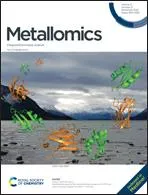
Metallomics
CiteScore:
7
Self-citation Rate:
6.9%
Articles per Year:
77
Metallomics publishes cutting-edge investigations aimed at elucidating the identification, distribution, dynamics, role and impact of metals and metalloids in biological systems. Studies that address the “what, where, when, how and why” of these inorganic elements in cells, tissues, organisms, and various environmental niches are welcome, especially those employing multidisciplinary approaches drawn from the analytical, bioinorganic, medicinal, environmental, biophysical, cell biology, plant biology and chemical biology communities. We are particularly interested in articles that enhance our chemical and/or physical understanding of the molecular mechanisms of metal-dependent life processes, and those that probe the common space between metallomics and other ‘omics approaches to uncover new insights into biological processes. Metallomics seeks to position itself at the forefront of those advances in analytical chemistry destined to clarify the enormous complexity of biological systems. As such, we particularly welcome those papers that outline cutting-edge analytical technologies, e.g., in the development and application of powerful new imaging, spectroscopic and mass spectrometric modalities. Work that describes new insights into metal speciation, trafficking and dynamics in complex systems or as a function of microenvironment are also strongly encouraged. Studies that examine the interconnectivity of metal-dependent processes with systems level responses relevant to organismal health or disease are also strongly encouraged, for example those that probe the effect of chemical exposure on metal homeostasis or the impact of metal-based drugs on cellular processes.
Recommended Compounds



Recommended Suppliers






Disclaimer
This page provides academic journal information for reference and research purposes only. We are not affiliated with any journal publishers and do not handle publication submissions. For publication-related inquiries, please contact the respective journal publishers directly.
If you notice any inaccuracies in the information displayed, please contact us at support@chemtradehub.com. We will promptly review and address your concerns.