












Direct spectroscopic detection of framework-incorporated vanadium in mesoporous silica materials‡§
Literature Information
Publication Date
2009-05-08
DOI
10.1039/B819442B
Impact Factor
3.676
Authors
Sepideh Zamani, Vera Meynen, Myrjam Mertens, Eveline Popovici, Sabine Van Doorslaer, Pegie Cool
View Original
Abstract
Framework-incorporated vanadium mesoporous silica materials with different contents in vanadium were obtained by a facile, direct synthesis at room temperature, using VOSO4·5H2O as the vanadium precursor. The porous characteristics of the samples and the coordination environment of the vanadia in the structure were studied by a combination of techniques: X-ray diffraction, N2-adsorption/desorption, FT-Raman, FTIR-PAS and UV-Vis-DR, electron paramagnetic resonance (EPR) and electron nuclear double resonance (ENDOR) spectroscopy. A structural comparison is made using pulsed EPR and ENDOR spectroscopic techniques between vanadia deposited on the surface of MCM-41 by the Molecular Designed Dispersion method and as-synthesised samples of vanadia incorporated in the mesoporous silica framework using the above-mentioned synthesis method. The EPR study on the non-calcined samples proves the incorporation of a high amount of vanadium in the silica framework by the observation of a strong hyperfine coupling of the unpaired electron with 29Si. It demonstrates the feasibility for EPR to reveal structural information on true incorporation of metal ions in framework positions leading to metal oxides.
Related Literature
Strategies toward improving the performance of fluorescence-based sensors for inorganic anions
Radek Pohl, Dmitry Aldakov, Pavel Kubát, Karolina Jursíková, Manuel Marquez, Pavel Anzenbacher, Jr.
2004-05-10
Communication
DOI: 10.1039/B315268E
Soluble μ-Fi bridged niobium clusters: synthesis and crystal structures of (Et4N)6[Nb6Fi6Bri6(NCS)a6]Br2 and Cs1.6K2.4[Nb6Fi6Ii6(NCS)a6]
Nikolaï G. Naumov, Stéphane Cordier, Christiane Perrin
2004-04-07
Communication
DOI: 10.1039/B400668B
Javaniside, a novel DNA cleavage agent from Alangium javanicum having an unusual oxindole skeleton
Ji Ma, Sidney M. Hecht
2004-04-14
Communication
DOI: 10.1039/B402925A
Soft nanotubes from amphiphilic ABA triblock macromonomers
Julie Grumelard, Andreas Taubert, Wolfgang Meier
2004-05-25
Communication
DOI: 10.1039/B405671J
Poly(vinyl alcohol) star polymers prepared via MADIX/RAFT polymerisation
Martina H. Stenzel, Thomas P. Davis, Christopher Barner-Kowollik
2004-06-02
Communication
DOI: 10.1039/B404763J
Mechanistic and stereochemical aspects of the asymmetric cyclocarbonylation of 1,6-enynes with rhodium catalysts
Thomas M. Schmid, Giambattista Consiglio
2004-09-06
Communication
DOI: 10.1039/B407843H
Washing-free electrochemical DNA detection using double-stranded probes and competitive hybridization reaction
Kyuwon Kim, Haesik Yang, Se Ho Park, Dae-Sik Lee, Sung-Jin Kim, Yong Taik Lim, Youn Tae Kim
2004-05-28
Communication
DOI: 10.1039/B402914C
[2 + 2]Photocyclization in a single-crystal-to-single-crystal transformation of a TTF-amido-pyridine
Thomas Devic, Patrick Batail, Narcis Avarvari
2004-05-25
Communication
DOI: 10.1039/B404482G
Synergistic effects in controlling excited-state photodimerisation using multiple supramolecular interactions
Yolanda Vida Pol, Rafael Suau, Ezequiel Perez-Inestrosa, Dario M. Bassani
2004-04-29
Communication
DOI: 10.1039/B402298J
Encapsulation of gases in the solid state
Alexander V. Leontiev, Dmitry M. Rudkevich
2004-06-01
Communication
DOI: 10.1039/B402997F
You might also like
Compound Q&A
What precautions should be taken when handling 2-Chloro-1,2-bis(4-methylphenyl)ethanone (CAS: 71193-32-3)?
When handling 2-Chloro-1,2-bis(4-methylphenyl)ethanone (CAS: 71193-32-3), it is ...
71193-32-32-Chloro-1,2-bis(4-m...
Compound Q&A
What industries use 4-Ethoxy-3-(5-methyl-4-oxo-7-propyl-1,4-dihydroimidazo[5,1-f][1,2,4]triazin-2-yl)benzenesulfonyl chloride (CAS: 224789-26-8)?
4-Ethoxy-3-(5-methyl-4-oxo-7-propyl-1,4-dihydroimidazo[5,1-f][1,2,4]triazin-2-yl...
224789-26-84-Ethoxy-3-(5-methyl...
Compound Q&A
How should Methyl 3-Oxo-4-Androsten-17-Carboxylate (CAS: 2681-55-2) be stored?
Methyl 3-Oxo-4-Androsten-17-Carboxylate (CAS: 2681-55-2) should be stored in a c...
2681-55-2Methyl 3-Oxo-4-Andro...
Compound Q&A
What are the main uses of (R)-3-Amino-4-(3-hexylphenylamino)-4-oxobutylphosphonic acid (CAS: 909725-61-7)?
(R)-3-Amino-4-(3-hexylphenylamino)-4-oxobutylphosphonic acid is primarily used i...
909725-61-7(R)-3-Amino-4-(3-hex...
Compound Q&A
What regulatory guidelines apply to 2-Methyl-2-propanyl 3-amino-3-carbamoyl-1-azetidinecarboxylate (CAS: 1254120-14-3)?
2-Methyl-2-propanyl 3-amino-3-carbamoyl-1-azetidinecarboxylate (CAS: 1254120-14-...
1254120-14-32-Methyl-2-propanyl ...
Compound Q&A
Are there alternatives to (E)-4-(tert-Butoxy)-4-oxobut-2-enoic acid (CAS: 135355-96-3) in synthesis?
There are alternative reagents that can be used in synthesis instead of (E)-4-(t...
135355-96-3(E)-4-(tert-Butoxy)-...
Compound Q&A
What are the physical and chemical properties of [2-(3-Chlorophenyl)-1,3-thiazol-4-yl]methanol (CAS: 121202-20-8)?
[2-(3-Chlorophenyl)-1,3-thiazol-4-yl]methanol (CAS: 121202-20-8) is a crystallin...
121202-20-8[2-(3-Chlorophenyl)-...
Compound Q&A
What is the market or research trend for Methyl (2S)-[(4S)-2,2-dimethyl-1,3-dioxolan-4-yl]{[(4-methylphenyl)sulfonyl]oxy}acetate (CAS: 166249-17-8)?
The market and research trends for Methyl (2S)-[(4S)-2,2-dimethyl-1,3-dioxolan-4...
166249-17-8Methyl (2S)-[(4S)-2,...
Compound Q&A
What is the market or research trend for 1-Bromo-2-isocyanatoethane (CAS: 42865-19-0)?
The market for 1-Bromo-2-isocyanatoethane (CAS: 42865-19-0) is driven by its use...
42865-19-01-Bromo-2-isocyanato...
Compound Q&A
What are the main uses of 4-Nitro-D-phenylalanine hydrochloride (CAS: 147065-06-3)?
4-Nitro-D-phenylalanine hydrochloride (CAS: 147065-06-3) is primarily used in re...
147065-06-34-Nitro-D-phenylalan...
Source Journal
Physical Chemistry Chemical Physics

CiteScore:
5.5
Self-citation Rate:
10.3%
Articles per Year:
3036
Physical Chemistry Chemical Physics (PCCP) is an international journal co-owned by 19 physical chemistry and physics societies from around the world. This journal publishes original, cutting-edge research in physical chemistry, chemical physics and biophysical chemistry. To be suitable for publication in PCCP, articles must include significant innovation and/or insight into physical chemistry; this is the most important criterion that reviewers and Editors will judge against when evaluating submissions. The journal has a broad scope and welcomes contributions spanning experiment, theory, computation and data science. Topical coverage includes spectroscopy, dynamics, kinetics, statistical mechanics, thermodynamics, electrochemistry, catalysis, surface science, quantum mechanics, quantum computing and machine learning. Interdisciplinary research areas such as polymers and soft matter, materials, nanoscience, energy, surfaces/interfaces, and biophysical chemistry are welcomed if they demonstrate significant innovation and/or insight into physical chemistry. Joined experimental/theoretical studies are particularly appreciated when complementary and based on up-to-date approaches.
Recommended Compounds
![4-[2-(Trichlorosilyl)ethyl]benzenesulfonyl chloride structure](https://static.chemtradehub.com/structs/797/79793-00-3-de16.webp "4-[2-(Trichlorosilyl)ethyl]benzenesulfonyl chloride structure")
4-[2-(Trichlorosilyl)ethyl]benzenesulfonyl chloride
CAS Number:
79793-00-3
Molecular Formula:
C8H8Cl4O2SSi
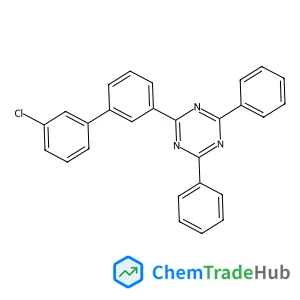
2-(3'-Chlorobiphenyl-3-yl)-4,6-diphenyl-1,3,5-triazine
CAS Number:
1443049-83-9
Molecular Formula:
C27H18ClN3
Recommended Suppliers





Disclaimer
This page provides academic journal information for reference and research purposes only. We are not affiliated with any journal publishers and do not handle publication submissions. For publication-related inquiries, please contact the respective journal publishers directly.
If you notice any inaccuracies in the information displayed, please contact us at support@chemtradehub.com. We will promptly review and address your concerns.