












Acetone on silicon (001): ambiphilic molecule meets ambiphilic surface
Literature Information
Publication Date
2009-02-25
DOI
10.1039/B815542A
Impact Factor
3.676
Authors
Steven R. Schofield, Daniel R. Belcher, Marian W. Radny, Sherin A. Saraireh, Phillip V. Smith
View Original
Abstract
Using density functional theory, we report detailed reaction path calculations for the reaction of acetone with the silicon (001) surface. We identify the key reaction intermediates of dissociative adsorption and the transition states between them. This resolves the identity of the one-dimer intermediate observed in STM experiments and its role in the formation of several two-dimer-wide end products of dissociation. Key to the understanding of the dissociation mechanism is the ambiphilic character of the two reactants, that is the simultaneous expression of electrophilic and nucleophilic reactivities in both the surface and the acetone molecule.
Related Literature
Synthesis of functionalized tetrahydrodibenzo[b,g][1,8]naphthyridin-1(2H)-ones through base-promoted annulation of quinoline-derived dipolarophiles and cyclic enaminones
Wenjun Luo, Xinghua Zheng, Fanglian Zhang, Qiuya Luo, Wen-Ting Deng, Lipeng Long, Daohong Yu, Zhong-Xia Wang, Zhengwang Chen
2023-11-16
Communication
DOI: 10.1039/D3OB01547E
Copper-mediated [3 + 2] oxidative cyclization of oxime acetate and its utility in the formal synthesis of fentiazac
Harish B. Musale, Vivek T. Humne
2023-12-01
Paper
DOI: 10.1039/D3OB01882B
Glycosylation of n-pentenyl glycosides using bromodiethylsulfonium salt as an activator: interception of the glycosyl intermediate by chloride ion transfer
Supanat Buntasana, Panuwat Padungros
2023-11-23
Paper
DOI: 10.1039/D3OB01618H
Synthesis of the aminocyclopentenediol fragment of queuosine by way of the stereoselective addition of an organometallic reagent to a N-t-butanesulfinyl glycosylamine
Floriane Heis, Estelle Gallienne, Olivier R. Martin
2023-11-28
Paper
DOI: 10.1039/D3OB01713C
Electronic effects of conjugated aryl groups on the properties and reactivities of di(arylethynyl)tetracenes
Yu Yan, Valentina Brega, Manuel M. Pina, Samuel W. Thomas, III
2023-11-20
Paper
DOI: 10.1039/D3OB01601C
Photo-induced radical transformations of tosyl cyanide
Ya Liu, Rui Li, Bing Yu
2023-11-29
Review Article
DOI: 10.1039/D3OB01771K
Two distinct protocols for the synthesis of unsymmetrical 3,4-disubstituted maleimides based on transition-metal catalysts
Farzaneh Bandehali-Naeini, Zahra Tanbakouchian, Noushin Farajinia-Lehi, Nicolas Mayer, Morteza Shiri, Martin Breugst
2023-12-05
Paper
DOI: 10.1039/D3OB01620J
Conversion of amino-terephthalonitriles to multi-substituted single benzene fluorophores with utility in bioimaging
Tanya Raghava, Anjan Chattopadhyay, Nivedita Sarkar
2023-12-12
Paper
DOI: 10.1039/D3OB01761C
Selective S-arylation of thiols with o-OTf-substituted diaryliodonium salts toward diarylsulfides
Yuxuan Zhang, Yu Wang, Limin Wang, Jianwei Han
2023-12-13
Communication
DOI: 10.1039/D3OB01922E
Carbenes from cyclopropanated aromatics
Alexander D. Roth, Dasan M. Thamattoor
2023-11-16
Review Article
DOI: 10.1039/D3OB01525D
You might also like
Compound Q&A
What regulatory guidelines apply to 4-Amino-3-bromophenol (CAS: 74440-80-5)?
4-Amino-3-bromophenol (CAS: 74440-80-5) falls under the classification of a haza...
74440-80-54-Amino-3-bromopheno...
Compound Q&A
How should (17beta)-3-Oxoestr-4-en-17-yl acetate (CAS: 1425-10-1) be stored?
(17beta)-3-Oxoestr-4-en-17-yl acetate should be stored in a cool, dry place away...
1425-10-1(17beta)-3-Oxoestr-4...
Compound Q&A
What are the physical and chemical properties of 2-[(2,2-Diethoxyethyl)disulfanyl]-1,1-diethoxyethane (CAS: 76505-71-0)?
2-[(2,2-Diethoxyethyl)disulfanyl]-1,1-diethoxyethane (CAS: 76505-71-0) is a colo...
76505-71-02-[(2,2-Diethoxyethy...
Compound Q&A
What is the market or research trend for 1-(β-D-ribofuranosyl)-1H-imidazo[4,5-c]pyridin-4-amine?
The market and research for 1-(β-D-ribofuranosyl)-1H-imidazo[4,5-c]pyridin-4-ami...
6736-58-91-(beta-D-Ribofurano...
Compound Q&A
How should waste containing Conjugated Estrogen (CAS: 12126-59-9) be handled?
Waste containing Conjugated Estrogen (CAS: 12126-59-9) should be collected and d...
12126-59-9Conjugated Estrogen
Compound Q&A
What is the market or research trend for Bis(2,2,2-trifluoroethyl) (methoxycarbonylmethyl)phosphonate?
The market for Bis(2,2,2-trifluoroethyl) (methoxycarbonylmethyl)phosphonate (CAS...
88738-78-7Bis(2,2,2-trifluoroe...
Compound Q&A
Are there alternatives to 3,4'-Di-O-methylellagic acid (CAS: 57499-59-9) in synthesis?
There are several alternatives to 3,4'-Di-O-methylellagic acid (CAS: 57499-59-9)...
57499-59-93,4'-Di-O-methylella...
Compound Q&A
What regulatory guidelines apply to 2-Chloro-N,N-dimethylpyridin-4-amine (CAS: 59047-70-0)?
2-Chloro-N,N-dimethylpyridin-4-amine (CAS: 59047-70-0) is regulated under the Gl...
59047-70-02-Chloro-N,N-dimethy...
Compound Q&A
What is cerium(3+);oxygen(2-);vanadium(5+) (CAS: 13597-19-8)?
Cerium(3+);oxygen(2-);vanadium(5+) (CAS: 13597-19-8) is a complex inorganic comp...
13597-19-8cerium(3+);oxygen(2-...
Compound Q&A
Is 7-Chloro-1-iodoisoquinoline (CAS: 1203579-27-4) safe?
7-Chloro-1-iodoisoquinoline (CAS: 1203579-27-4) is generally considered safe whe...
1203579-27-47-Chloro-1-iodoisoqu...
Source Journal
Physical Chemistry Chemical Physics

CiteScore:
5.5
Self-citation Rate:
10.3%
Articles per Year:
3036
Physical Chemistry Chemical Physics (PCCP) is an international journal co-owned by 19 physical chemistry and physics societies from around the world. This journal publishes original, cutting-edge research in physical chemistry, chemical physics and biophysical chemistry. To be suitable for publication in PCCP, articles must include significant innovation and/or insight into physical chemistry; this is the most important criterion that reviewers and Editors will judge against when evaluating submissions. The journal has a broad scope and welcomes contributions spanning experiment, theory, computation and data science. Topical coverage includes spectroscopy, dynamics, kinetics, statistical mechanics, thermodynamics, electrochemistry, catalysis, surface science, quantum mechanics, quantum computing and machine learning. Interdisciplinary research areas such as polymers and soft matter, materials, nanoscience, energy, surfaces/interfaces, and biophysical chemistry are welcomed if they demonstrate significant innovation and/or insight into physical chemistry. Joined experimental/theoretical studies are particularly appreciated when complementary and based on up-to-date approaches.
Recommended Compounds
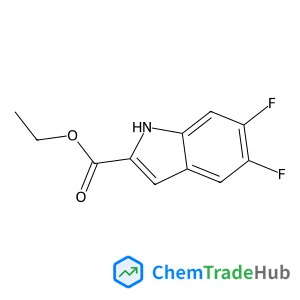
Recommended Suppliers






Disclaimer
This page provides academic journal information for reference and research purposes only. We are not affiliated with any journal publishers and do not handle publication submissions. For publication-related inquiries, please contact the respective journal publishers directly.
If you notice any inaccuracies in the information displayed, please contact us at support@chemtradehub.com. We will promptly review and address your concerns.