












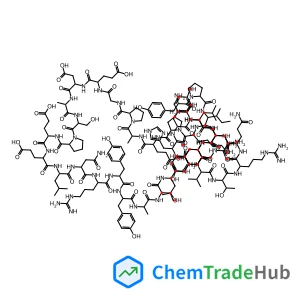
Ruthenium polypyridyl peptide conjugates: membrane permeable probes for cellular imaging
Literature Information
Publication Date
2008-09-12
DOI
10.1039/B810403D
Impact Factor
6.222
Authors
Ute Neugebauer, Yann Pellegrin, Marc Devocelle, William Signac, Niamh Moran
View Original
Abstract
Two novel polyarginine labelled ruthenium polypyridyl dyes are reported, one conjugated to five, (Ru–Ahx–R5), and one to eight arginine residues, (Ru–Ahx–R8); both complexes exhibit long-lived, intense, and oxygen-sensitive luminescence; (Ru–R8) is passively, efficiently and very rapidly transported across the cell membrane into the cytoplasm without requirement for its permeablisation.
Related Literature
Preparation and structure of 2-iodoxybenzoate esters: soluble and stable periodinane oxidizing reagents
Viktor V. Zhdankin, Dmitry N. Litvinov, Alexey Y. Koposov, Thanh Luu, Michael J. Ferguson, Robert McDonald, Rik R. Tykwinski
2003-11-18
Communication
DOI: 10.1039/B312961F
Excavations in molecular crystals
Erwan Le Fur, Eric Demers, Thierry Maris, James D. Wuest
2003-11-06
Communication
DOI: 10.1039/B308355A
Two contrasting ethynyl hydroboration pathways in the formation of a novel tris-hydroboration product from reaction of dimesitylborane with 2,5-diethynylpyridine
Christopher D. Entwistle, Andrei S. Batsanov, Judith A. K. Howard, Mark A. Fox, Todd B. Marder
2004-02-13
Communication
DOI: 10.1039/B316250H
Heterogeneous colorimetric sensor for mercuric salts
Emilio Palomares, Ramón Vilar, James R. Durrant
2004-01-19
Communication
DOI: 10.1039/B314138A
Self-indicating amine scavenger resins
Jin Ku Cho, Peter D. White, Wolfgang Klute, Tony W. Dean, Mark Bradley
2004-01-27
Communication
DOI: 10.1039/B315426B
Relative importance of hydrogen bonding and coordinating groups in modulating the zinc–water acidity
Juan C. Mareque-Rivas, Ravi Prabaharan, Rafael Torres Martín de Rosales
2003-11-04
Communication
DOI: 10.1039/B310956A
Amine elimination synthesis of a titanium(IV) N-heterocyclic carbene complex with short intramolecular Cl⋯Ccarbene contacts
Colin D. Abernethy
2004-01-15
Communication
DOI: 10.1039/B314558A
Preparation of highly accessible mordenite coatings on ceramic monoliths at loadings exceeding 50% by weight
M. A. Ulla, E. Miro, R. Mallada, J. Coronas, J. Santamaría
2004-01-29
Communication
DOI: 10.1039/B315386J
Cubane-like structure of a silanethiol – primary amineassembly – a novel, unusual hydrogen bond pattern
Barbara Becker, Katarzyna Baranowska, Jarosław Chojnacki, Wiesław Wojnowski
2004-01-28
Communication
DOI: 10.1039/B313576D
Electrospray mass spectrometry of undiluted ionic liquids
Glen P. Jackson, Douglas C. Duckworth
2004-01-27
Communication
DOI: 10.1039/B314754A
You might also like
Compound Q&A
What are the main uses of 1H-Indazole-6-carbonitrile (CAS: 141290-59-7)?
1H-Indazole-6-carbonitrile finds applications in pharmaceuticals, where it serve...
141290-59-71H-Indazole-6-carbon...
Compound Q&A
How should waste containing Dioctyl (2E)-2-butenedioate (CAS: 2997-85-5) be handled?
Waste containing Dioctyl (2E)-2-butenedioate (CAS: 2997-85-5) should be collecte...
2997-85-5Dioctyl (2E)-2-buten...
Compound Q&A
What industries use Sodium [(1,2-benzoxazol-3-ylmethyl)sulfonyl]azanide (CAS: 68291-98-5)?
Sodium [(1,2-benzoxazol-3-ylmethyl)sulfonyl]azanide is primarily used in pharmac...
68291-98-5Sodium [(1,2-benzoxa...
Compound Q&A
Are there alternatives to Dimethyl 4-(4,4,5,5-tetramethyl-1,3,2-dioxaborolan-2-yl)-2,6-pyridinedicarboxylate (CAS: 741709-66-0) in synthesis?
Dimethyl 4-(4,4,5,5-tetramethyl-1,3,2-dioxaborolan-2-yl)-2,6-pyridinedicarboxyla...
741709-66-0Dimethyl 4-(4,4,5,5-...
Compound Q&A
How should waste containing 2-Fluoro-6-hydrazinopyridine (CAS: 80714-39-2) be handled?
Waste containing 2-Fluoro-6-hydrazinopyridine (CAS: 80714-39-2) should be manage...
80714-39-22-Fluoro-6-hydrazino...
Compound Q&A
What is 6-Formyl-2-pyridinecarboxylic acid (CAS: 499214-11-8)?
6-Formyl-2-pyridinecarboxylic acid is an organic compound with the molecular for...
499214-11-86-Formyl-2-pyridinec...
Compound Q&A
What is the market or research trend for 3-(3,4-dimethoxyphenyl)-2,5-dimethyl-N-(2-morpholin-4-ylethyl)pyrazolo[1,5-a]pyrimidin-7-amine (CAS: 900874-91-1)?
Research trends for this compound indicate a focus on its potential applications...
900874-91-13-(3,4-dimethoxyphen...
Compound Q&A
How is 9H-Tribenzo[b,d,f]azepine (CAS: 29875-73-8) typically synthesized?
9H-Tribenzo[b,d,f]azepine is typically synthesized via a multi-step process invo...
29875-73-89H-Tribenzo[b,d,f]az...
Compound Q&A
How is 1-Cyclopropyl-7-ethoxy-6-fluoro-8-methoxy-4-oxo-1,4-dihydro-3-quinolinecarboxylic acid (CAS: 1797982-51-4) typically synthesized?
1-Cyclopropyl-7-ethoxy-6-fluoro-8-methoxy-4-oxo-1,4-dihydro-3-quinolinecarboxyli...
1797982-51-41-Cyclopropyl-7-etho...
Compound Q&A
How should waste containing Methyl 3-oxo-1,2,3,4-tetrahydro-6-quinoxalinecarboxylate (CAS: 671820-52-3) be handled?
Waste containing Methyl 3-oxo-1,2,3,4-tetrahydro-6-quinoxalinecarboxylate (CAS: ...
671820-52-3Methyl 3-oxo-1,2,3,4...
Source Journal
Chemical Communications

CiteScore:
8.6
Self-citation Rate:
4.7%
Articles per Year:
2458
ChemComm publishes urgent research which is of outstanding significance and interest to experts in the field, while also appealing to the journal’s broad chemistry readership. Our communication format is ideally suited to short, urgent studies that are of such importance that they require accelerated publication. Our scope covers all topics in chemistry, and research at the interface of chemistry and other disciplines (such as materials science, nanoscience, physics, engineering and biology) where there is a significant novelty in the chemistry aspects. Major topic areas covered include: Analytical Chemistry Catalysis Chemical Biology and medicinal chemistry Computational Chemistry and Machine Learning Energy and sustainable chemistry Environmental Chemistry Green Chemistry Inorganic Chemistry Materials Chemistry Nanoscience Organic Chemistry Physical Chemistry Polymer Chemistry Supramolecular Chemistry
Recommended Compounds
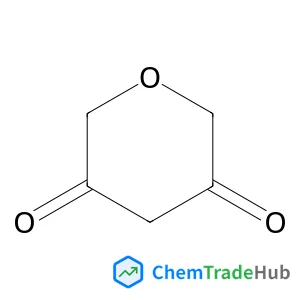
![Benzeneacetic acid, 2-[(2,6-dichlorophenyl)amino]-, compd. with 1-pyrrolidineethanol (1:1) structure](https://static.chemtradehub.com/structs/119/119623-66-4-5301.webp "Benzeneacetic acid, 2-[(2,6-dichlorophenyl)amino]-, compd. with 1-pyrrolidineethanol (1:1) structure")
Benzeneacetic acid, 2-[(2,6-dichlorophenyl)amino]-, compd. with 1-pyrrolidineethanol (1:1)
CAS Number:
119623-66-4
Molecular Formula:
C20H24Cl2N2O3
Recommended Suppliers




Disclaimer
This page provides academic journal information for reference and research purposes only. We are not affiliated with any journal publishers and do not handle publication submissions. For publication-related inquiries, please contact the respective journal publishers directly.
If you notice any inaccuracies in the information displayed, please contact us at support@chemtradehub.com. We will promptly review and address your concerns.