













N,N'-(1R,2R)-1,2-Cyclohexanediyldi(2-pyridinecarboxamide)
CAS Number:
218290-24-5
Molecular Formula:
C18H20N4O2
Tomoo Mizugaki, Makoto Murata, Sayaka Fukubayashi, Takato Mitsudome, Koichiro Jitsukawa
Dendron stabilised Pd nanoparticles were prepared using the self-assembly of dendrons, which could catalyze a highly selective hydrogenation of dienes and acetylenes to monoenes.
Yasmine Piette, Antoine Debuigne, Christine Jérôme, Vincent Bodart, Christophe Detrembleur
DOI: 10.1039/C2PY20413D
Ying Jin, Wei Wang, Zhaohui Su
DOI: 10.1039/C2PY20259J
Jithin John Varghese, Samir H. Mushrif
DOI: 10.1039/C8RE00226F
Vikas Nandwana, Brian Fitzpatrick, Kyril M. Solntsev, Xi Yu, Gülen Yesilbag Tonga, Serkan Eymur, Murat Tonga, Graeme Cooke, Vincent M. Rotello
DOI: 10.1039/C2PY20353G
Péter Bana, Áron Szigetvári, János Kóti, János Éles, István Greiner
DOI: 10.1039/C8RE00266E
Fahed Javed, Zufishan Shamair, Shahzad Ali, Ainy Hafeez, Tahir Fazal, William B. Zimmerman, Fahad Rehman
DOI: 10.1039/C8RE00328A
Yang Bai, Antonio José Expósito
DOI: 10.1039/C8RE00046H
Massimo Benaglia, Angelo Alberti, Loris Giorgini, Francesco Magnoni, Silvia Tozzi
DOI: 10.1039/C2PY20646C
Ribhu Gautam, R. Vinu
DOI: 10.1039/C8RE00227D
6-Bromo-2-methylimidazo[1,2-a]pyrimidine (CAS: 1111638-05-1) falls under various...
While there are no direct alternatives, similar compounds like 1-Pyrrolidineetha...
4-Methyl-2,6-bis(2-methyl-2-propanyl)phenyl methylcarbamate (CAS: 1918-11-2) is ...
2-(3-Bromo-4-fluorophenyl)-1,3-dioxolane (CAS: 77771-04-1) should be stored in a...
4,5,6,7-Tetrahydro-1H-indazole hydrochloride is a white crystalline solid with a...
(2R)-1-Methoxy-3-phenyl-2-propanamine is a chiral organic compound with the CAS ...
Ethyl 1-(1-phenylethyl)-1H-imidazole-5-carboxylate is used in various industries...
4-[(1E,3S)-1-(4-Hydroxyphenyl)-1,4-pentadien-3-yl]phenol (CAS: 17676-24-3) falls...
(S)-3-Amino-5-phenylpentanoic acid hydrochloride is primarily used in the pharma...
7-Methoxy-1-benzothiophene-2-carboxylic acid is typically synthesized by reactin...

ChemComm publishes urgent research which is of outstanding significance and interest to experts in the field, while also appealing to the journal’s broad chemistry readership. Our communication format is ideally suited to short, urgent studies that are of such importance that they require accelerated publication. Our scope covers all topics in chemistry, and research at the interface of chemistry and other disciplines (such as materials science, nanoscience, physics, engineering and biology) where there is a significant novelty in the chemistry aspects. Major topic areas covered include: Analytical Chemistry Catalysis Chemical Biology and medicinal chemistry Computational Chemistry and Machine Learning Energy and sustainable chemistry Environmental Chemistry Green Chemistry Inorganic Chemistry Materials Chemistry Nanoscience Organic Chemistry Physical Chemistry Polymer Chemistry Supramolecular Chemistry
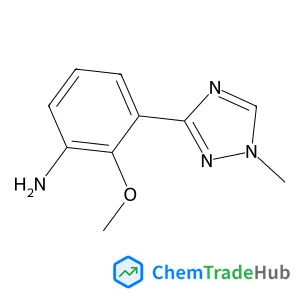
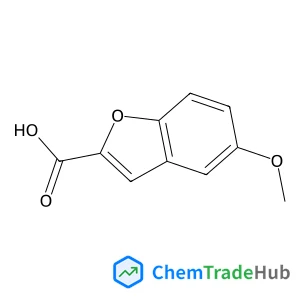
![Benzeneacetic acid, 2-[(2,6-dichlorophenyl)amino]-, compd. with 1-pyrrolidineethanol (1:1) structure](https://static.chemtradehub.com/structs/119/119623-66-4-5301.webp "Benzeneacetic acid, 2-[(2,6-dichlorophenyl)amino]-, compd. with 1-pyrrolidineethanol (1:1) structure")
![(3R)-4-(4-Chlorophenyl)-3-({[(2-methyl-2-propanyl)oxy]carbonyl}amino)butanoic acid structure](https://static.chemtradehub.com/structs/218/218608-96-9-f871.webp "(3R)-4-(4-Chlorophenyl)-3-({[(2-methyl-2-propanyl)oxy]carbonyl}amino)butanoic acid structure")





