













Contents
Literature Information
Publication Date
DOI
10.1039/B704153P
Impact Factor
6.222
Authors
View Original
Abstract
The first page of this article is displayed as the abstract.
Recommended Journals
Related Literature
Monolithic poly(N-vinylcarbazole-co-1,4-divinylbenzene) capillary columns for the separation of biomolecules
Rainer Koeck, Rania Bakry, Richard Tessadri, Guenther K. Bonn
2013-05-29
Paper
DOI: 10.1039/C3AN00377A
Rapid recognition of drug-resistance/sensitivity in leukemic cells by Fourier transform infrared microspectroscopy and unsupervised hierarchical cluster analysis‡
Gianfelice Cinque, Marzia Vezzalini, Elisabetta Moratti, Giovannino Silvestri, Sara Redaelli, Carlo Gambacorti Passerini, Katia Wehbe, Claudio Sorio
2013-01-04
Paper
DOI: 10.1039/C2AN36393C
A theophyllinequartz crystal microbalance biosensor based on recognition of RNA aptamer and amplification of signal
Zong-Mu Dong, Guang-Chao Zhao
2013-02-14
Paper
DOI: 10.1039/C3AN36775D
Chemical imaging analysis of environmental particles using the focused ion beam/scanning electron microscopy technique: microanalysis insights into atmospheric chemistry of fly ash
Haihan Chen, Laxmikant V. Saraf, Alexander Laskin
2012-11-08
Paper
DOI: 10.1039/C2AN36318F
Fluorescence quenching in luminescent porous silicon nanoparticles for the detection of intracellular Cu2+
Bing Xia, Wenyi Zhang, Jisen Shi, Shoujun Xiao
2013-04-17
Communication
DOI: 10.1039/C3AN00503H
A multiscalar photoluminescence approach to discriminate among semiconducting historical zinc white pigments
Matthieu Réfrégiers, Barbara Berrie, Jean-Philippe Échard, Mathieu Thoury
2013-03-14
Paper
DOI: 10.1039/C3AN36874B
Use of a large Stokes-shift fluorophore to increase the multiplexing capacity of a point-of-care DNA diagnostic device
James A. Richardson, Trevor Morgan, Michael Andreou, Tom Brown
2013-05-09
Communication
DOI: 10.1039/C3AN00593C
You might also like
Compound Q&A
What precautions should be taken when handling lithium chloride hydrate (1:1:1) (CAS: 16712-20-2)?
When handling lithium chloride hydrate (1:1:1) (CAS: 16712-20-2), it is importan...
16712-20-2Lithium chloride hyd...
Compound Q&A
Is 4-(4H-1,2,4-Triazol-4-yl)piperidine (CAS: 690261-92-8) safe?
4-(4H-1,2,4-Triazol-4-yl)piperidine is generally considered safe for use in phar...
690261-92-84-(4H-1,2,4-Triazol-...
Compound Q&A
How should waste containing 1,3-Thiazole-2-carboxamide (CAS: 16733-85-0) be handled?
Waste containing 1,3-Thiazole-2-carboxamide (CAS: 16733-85-0) should be collecte...
16733-85-01,3-Thiazole-2-carbo...
Compound Q&A
What regulatory guidelines apply to 5-(Difluoromethyl)-2-fluorobenzonitrile (CAS: 934175-58-3)?
5-(Difluoromethyl)-2-fluorobenzonitrile (CAS: 934175-58-3) is subject to regulat...
934175-58-35-(Difluoromethyl)-2...
Compound Q&A
How is Methyl 3-acetamido-2-thiophenecarboxylate (CAS: 22288-79-5) typically synthesized?
Methyl 3-acetamido-2-thiophenecarboxylate can be synthesized by the reaction of ...
22288-79-5Methyl 3-acetamido-2...
Compound Q&A
What is 4-Isoquinolinecarbonitrile (CAS: 34846-65-6)?
4-Isoquinolinecarbonitrile is a chemical compound with the CAS number 34846-65-6...
34846-65-64-Isoquinolinecarbon...
Compound Q&A
How should Methyl 1H-1,2,3-triazole-4-carboxylate (CAS: 877309-59-6) be stored?
Store Methyl 1H-1,2,3-triazole-4-carboxylate (CAS: 877309-59-6) in a cool, dry p...
877309-59-6Methyl 1H-1,2,3-tria...
Compound Q&A
What regulatory guidelines apply to 6-Bromo[1,3]thiazolo[5,4-b]pyridin-2-amine (CAS: 1160791-13-8)?
6-Bromo[1,3]thiazolo[5,4-b]pyridin-2-amine (CAS: 1160791-13-8) is subject to the...
1160791-13-86-Bromo[1,3]thiazolo...
Compound Q&A
Is (2S,3S)-2-Ammonio-3-(3,4-dihydroxyphenyl)-3-hydroxypropanoate (CAS: 23651-95-8) safe?
(2S,3S)-2-Ammonio-3-(3,4-dihydroxyphenyl)-3-hydroxypropanoate (CAS: 23651-95-8) ...
23651-95-8(2S,3S)-2-Ammonio-3-...
Compound Q&A
What are the physical and chemical properties of 7-bromo-3-methyl-3,4-dihydroquinazolin-4-one (CAS: 1293987-84-4)?
7-Bromo-3-methyl-3,4-dihydroquinazolin-4-one is a solid with a crystalline form....
1293987-84-47-bromo-3-methyl-3,4...
Source Journal
Chemical Communications

CiteScore:
8.6
Self-citation Rate:
4.7%
Articles per Year:
2458
ChemComm publishes urgent research which is of outstanding significance and interest to experts in the field, while also appealing to the journal’s broad chemistry readership. Our communication format is ideally suited to short, urgent studies that are of such importance that they require accelerated publication. Our scope covers all topics in chemistry, and research at the interface of chemistry and other disciplines (such as materials science, nanoscience, physics, engineering and biology) where there is a significant novelty in the chemistry aspects. Major topic areas covered include: Analytical Chemistry Catalysis Chemical Biology and medicinal chemistry Computational Chemistry and Machine Learning Energy and sustainable chemistry Environmental Chemistry Green Chemistry Inorganic Chemistry Materials Chemistry Nanoscience Organic Chemistry Physical Chemistry Polymer Chemistry Supramolecular Chemistry
Recommended Compounds
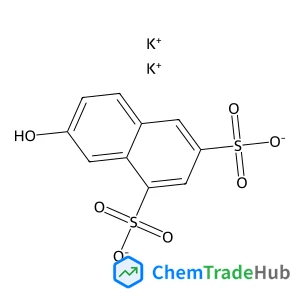
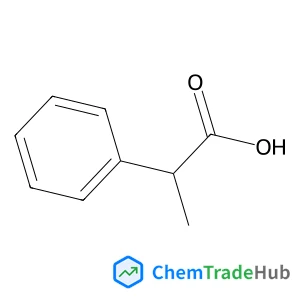

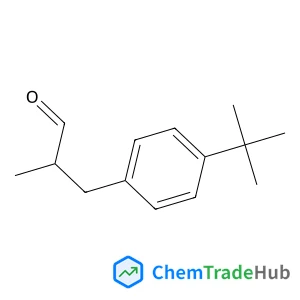
Recommended Suppliers





Disclaimer
This page provides academic journal information for reference and research purposes only. We are not affiliated with any journal publishers and do not handle publication submissions. For publication-related inquiries, please contact the respective journal publishers directly.
If you notice any inaccuracies in the information displayed, please contact us at support@chemtradehub.com. We will promptly review and address your concerns.