


Challenging the absence of observable hydrogens in the assignment of absolute configurations by NMR: application to chiral primary alcohols
Literature Information
Publication Date
2007-01-30
DOI
10.1039/B617184B
Impact Factor
6.222
Authors
Félix Freire, José Manuel Seco, Emilio Quiñoá, Ricardo Riguera
View Original
Abstract
The absolute configuration of β-chiral primary alcohols devoid of observable hydrogens on one of the β-substituents at the asymmetric carbon (L1/L2) can be determined by comparison of the 1H NMR of their (R)- and (S)-9-AMA ester derivatives and analysis of the ΔδRS for the L substituent and the Cβ-H.
Recommended Journals

Bioorganic & Medicinal Chemistry

Medicinal Chemistry Research

Cellulose

Chinese Journal of Chemistry

Heteroatom Chemistry

Polycyclic Aromatic Compounds

Journal of Chemical Sciences

Critical Reviews in Solid State and Materials Sciences

Journal of the Indian Institute of Science

Biocatalysis and Biotransformation
Related Literature
Elastic strain at interfaces and its influence on ionic conductivity in nanoscaled solid electrolyte thin films—theoretical considerations and experimental studies
N. Schichtel, C. Korte, D. Hesse, J. Janek
2009-03-20
Paper
DOI: 10.1039/B900148D
Spectroscopical properties of organic/metal nanohybrids
Giovanna Dellepiane, Carla Cuniberti, Marina Alloisio, Anna Demartini
2010-02-03
Paper
DOI: 10.1039/B912921A
Electron spin relaxation at low field
Per-Olof Westlund, Håkan Wennerström
2009-11-06
Paper
DOI: 10.1039/B916999G
Parameterizations for ice nucleation in biological and atmospheric systems
Thomas Koop
2009-09-30
Paper
DOI: 10.1039/B914289D
Relationships between center atom species (N, P) and ionic conductivity, viscosity, density, self-diffusion coefficient of quaternary cation room-temperature ionic liquids
Shiro Seki, Kikuko Hayamizu, Seiji Tsuzuki, Kenta Fujii, Yasuhiro Umebayashi, Takushi Mitsugi, Takeshi Kobayashi, Yasutaka Ohno, Yo Kobayashi, Yuichi Mita, Hajime Miyashiro, Shin-ichi Ishiguro
2009-02-26
Paper
DOI: 10.1039/B820343A
Manipulation and characterisation of accumulation and coarse mode aerosol particles using a Bessel beam trap
Helena Meresman, Jon B. Wills, Michael Summers, David McGloin, Jonathan P. Reid
2009-11-05
Paper
DOI: 10.1039/B914165K
Partial oxidation of methanol on well-ordered V2O5(001)/Au(111) thin films
J. M. Sturm, D. Göbke, H. Kuhlenbeck, J. Döbler, U. Reinhardt, M. V. Ganduglia-Pirovano, J. Sauer, H.-J. Freund
2009-03-11
Paper
DOI: 10.1039/B822384J
Enhancing the fluorescence of tyr-59 in ubiquitin by blocking proton transfer
Hana Gerbelová, Tiago Q. Faria, Maria Manuel Sampaio, Rainer Rudolph, António L. Maçanita, Helena Santos
2009-03-03
Paper
DOI: 10.1039/B819365G
You might also like
Compound Q&A
What precautions should be taken when handling 2-Chloro-1,2-bis(4-methylphenyl)ethanone (CAS: 71193-32-3)?
When handling 2-Chloro-1,2-bis(4-methylphenyl)ethanone (CAS: 71193-32-3), it is ...
71193-32-32-Chloro-1,2-bis(4-m...
Compound Q&A
What industries use 4-Ethoxy-3-(5-methyl-4-oxo-7-propyl-1,4-dihydroimidazo[5,1-f][1,2,4]triazin-2-yl)benzenesulfonyl chloride (CAS: 224789-26-8)?
4-Ethoxy-3-(5-methyl-4-oxo-7-propyl-1,4-dihydroimidazo[5,1-f][1,2,4]triazin-2-yl...
224789-26-84-Ethoxy-3-(5-methyl...
Compound Q&A
How should Methyl 3-Oxo-4-Androsten-17-Carboxylate (CAS: 2681-55-2) be stored?
Methyl 3-Oxo-4-Androsten-17-Carboxylate (CAS: 2681-55-2) should be stored in a c...
2681-55-2Methyl 3-Oxo-4-Andro...
Compound Q&A
What are the main uses of (R)-3-Amino-4-(3-hexylphenylamino)-4-oxobutylphosphonic acid (CAS: 909725-61-7)?
(R)-3-Amino-4-(3-hexylphenylamino)-4-oxobutylphosphonic acid is primarily used i...
909725-61-7(R)-3-Amino-4-(3-hex...
Compound Q&A
What regulatory guidelines apply to 2-Methyl-2-propanyl 3-amino-3-carbamoyl-1-azetidinecarboxylate (CAS: 1254120-14-3)?
2-Methyl-2-propanyl 3-amino-3-carbamoyl-1-azetidinecarboxylate (CAS: 1254120-14-...
1254120-14-32-Methyl-2-propanyl ...
Compound Q&A
Are there alternatives to (E)-4-(tert-Butoxy)-4-oxobut-2-enoic acid (CAS: 135355-96-3) in synthesis?
There are alternative reagents that can be used in synthesis instead of (E)-4-(t...
135355-96-3(E)-4-(tert-Butoxy)-...
Compound Q&A
What are the physical and chemical properties of [2-(3-Chlorophenyl)-1,3-thiazol-4-yl]methanol (CAS: 121202-20-8)?
[2-(3-Chlorophenyl)-1,3-thiazol-4-yl]methanol (CAS: 121202-20-8) is a crystallin...
121202-20-8[2-(3-Chlorophenyl)-...
Compound Q&A
What is the market or research trend for Methyl (2S)-[(4S)-2,2-dimethyl-1,3-dioxolan-4-yl]{[(4-methylphenyl)sulfonyl]oxy}acetate (CAS: 166249-17-8)?
The market and research trends for Methyl (2S)-[(4S)-2,2-dimethyl-1,3-dioxolan-4...
166249-17-8Methyl (2S)-[(4S)-2,...
Compound Q&A
What is the market or research trend for 1-Bromo-2-isocyanatoethane (CAS: 42865-19-0)?
The market for 1-Bromo-2-isocyanatoethane (CAS: 42865-19-0) is driven by its use...
42865-19-01-Bromo-2-isocyanato...
Compound Q&A
What are the main uses of 4-Nitro-D-phenylalanine hydrochloride (CAS: 147065-06-3)?
4-Nitro-D-phenylalanine hydrochloride (CAS: 147065-06-3) is primarily used in re...
147065-06-34-Nitro-D-phenylalan...
Source Journal
Chemical Communications

CiteScore:
8.6
Self-citation Rate:
4.7%
Articles per Year:
2458
ChemComm publishes urgent research which is of outstanding significance and interest to experts in the field, while also appealing to the journal’s broad chemistry readership. Our communication format is ideally suited to short, urgent studies that are of such importance that they require accelerated publication. Our scope covers all topics in chemistry, and research at the interface of chemistry and other disciplines (such as materials science, nanoscience, physics, engineering and biology) where there is a significant novelty in the chemistry aspects. Major topic areas covered include: Analytical Chemistry Catalysis Chemical Biology and medicinal chemistry Computational Chemistry and Machine Learning Energy and sustainable chemistry Environmental Chemistry Green Chemistry Inorganic Chemistry Materials Chemistry Nanoscience Organic Chemistry Physical Chemistry Polymer Chemistry Supramolecular Chemistry
Recommended Compounds

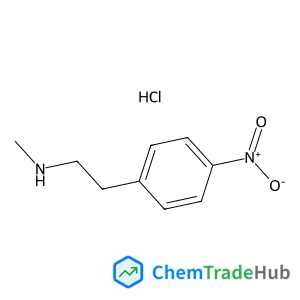
N-Methyl-2-(4-nitrophenyl)ethanamine hydrochloride (1:1)
CAS Number:
166943-39-1
Molecular Formula:
C9H13ClN2O2
![4-[2-(Trichlorosilyl)ethyl]benzenesulfonyl chloride structure](https://static.chemtradehub.com/structs/797/79793-00-3-de16.webp "4-[2-(Trichlorosilyl)ethyl]benzenesulfonyl chloride structure")
4-[2-(Trichlorosilyl)ethyl]benzenesulfonyl chloride
CAS Number:
79793-00-3
Molecular Formula:
C8H8Cl4O2SSi
Recommended Suppliers





Disclaimer
This page provides academic journal information for reference and research purposes only. We are not affiliated with any journal publishers and do not handle publication submissions. For publication-related inquiries, please contact the respective journal publishers directly.
If you notice any inaccuracies in the information displayed, please contact us at support@chemtradehub.com. We will promptly review and address your concerns.