












Examination of (e,2e) scattering models by comparison of momentum profiles of noble gases between experiment and theory
Literature Information
Publication Date
2006-05-03
DOI
10.1039/B603117J
Impact Factor
3.676
Authors
Yusuke Miyake, Yugal Khajuria, Yasuo Udagawa, Yasuhiro Sakai, Takeshi Mukoyama
View Original
Abstract
Momentum profiles have been measured for the two outermost atomic orbitals of noble gases, Ar, Kr and Xe, at incident electron energy of about 2 keV using a newly developed multichannel (e,2e) spectrometer. The experimental results exhibit significantly improved statistics compared with those achieved in previous studies while covering a wide range of momenta up to 3.6 a.u. The results are compared with theoretical calculations using four (e,2e) scattering models, the plane-wave impulse and Born approximations (PWIA and PWBA), and the distorted-wave impulse and Born approximations (DWIA and DWBA). The DWIA and DWBA scattering models have been found to satisfactorily reproduce the experimental momentum profiles in terms of both shape and intensity over the entire momentum range covered, indicating the importance of distorted wave effects for quantitatively describing (e,2e) reaction.
Related Literature
A stable ratiometric fluorescent probe for hypochlorous acid detection and rheumatoid arthritis evaluation
Liuwei Gu, Yinghao Li, Xiaojie Kong, Ke Zhang, Yuling Qin, Xiaobo Zhou, Haiwei Ji, Guo Li, Li Wu
2023-12-21
Communication
DOI: 10.1039/D3BM01576A
SERS combined with QuEChERS using NBC and Fe3O4 MNPs as cleanup agents to rapidly and reliably detect chlorpyrifos pesticide in citrus
Xu Wang, Shirong Ai, Aihua Xiong, Weiqi Zhou, Liang He, Jie Teng, Xiang Geng, Ruimei Wu
2023-11-13
Paper
DOI: 10.1039/D3AY01604H
Turn-on detection of Al3+ and Zn2+ ions by a NSN donor probe: reversibility, logic gates and DFT calculations
Sudhanshu Naithani, Nidhi Goswami, Sain Singh, Vikas Yadav, Pramod Kumar, Amit Kumar, Tapas Goswami, Sushil Kumar
2023-10-19
Paper
DOI: 10.1039/D3AY01534C
Recent advances in small-molecule fluorescent probes with the function of targeting cancer receptors
Xinke Li, Caiyun Liu, Hanchuang Zhu, Kun Wang, Xiaohua Ren, Lixue Ma, Xiaohui Zhang, Mengyuan Liu, Baocun Zhu
2023-11-01
Critical Review
DOI: 10.1039/D3AY01387A
3D bioprinting of GelMA with enhanced extrusion printability through coupling sacrificial carrageenan
Yudong Yao
2023-12-07
Paper
DOI: 10.1039/D3BM01489D
High-resolution magic-angle spinning NMR metabolic profiling with spatially localized spectroscopy under slow sample spinning
2023-11-15
Technical Note
DOI: 10.1039/D3AY01812A
Constructing a 3D interconnected network of Ag nanostructures for high-performance SERS detection of food coloring agents
Pei Zeng, Huan Zhang, Qi Guan, Qianqian Zhang, Xianzai Yan, Lili Yu, Luying Duan, Chunrong Wang
2023-11-07
Paper
DOI: 10.1039/D3AY01515G
PVA-based bulk microneedles capable of high insulin loading and pH-triggered degradation for multi-responsive and sustained hypoglycemic therapy
Yuhong Ma, Wei Wang, Mujiao He, Yunzhu Liu, Caihua Li, Yinan Zhong, Quanmin Bu, Dechun Huang, Hongliang Qian, Wei Chen
2023-12-01
Paper
DOI: 10.1039/D3BM01760E
Delivery of gefitinib loaded nanoparticles for effectively inhibiting prostate cancer progression
Tong Tong, Qiang Jia
2023-12-19
Paper
DOI: 10.1039/D3BM01735D
You might also like
Compound Q&A
What regulatory guidelines apply to 6-Bromo-2-methylimidazo[1,2-a]pyrimidine (CAS: 1111638-05-1)?
6-Bromo-2-methylimidazo[1,2-a]pyrimidine (CAS: 1111638-05-1) falls under various...
1111638-05-16-Bromo-2-methylimid...
Compound Q&A
Are there alternatives to 1-Pyrrolidineethanol, β-methyl-α-phenyl-, (αS,βR) (CAS: 123620-80-4) in synthesis?
While there are no direct alternatives, similar compounds like 1-Pyrrolidineetha...
123620-80-41-Pyrrolidineethanol...
Compound Q&A
Is 4-Methyl-2,6-bis(2-methyl-2-propanyl)phenyl methylcarbamate (CAS: 1918-11-2) safe?
4-Methyl-2,6-bis(2-methyl-2-propanyl)phenyl methylcarbamate (CAS: 1918-11-2) is ...
1918-11-24-Methyl-2,6-bis(2-m...
Compound Q&A
How should 2-(3-Bromo-4-fluorophenyl)-1,3-dioxolane (CAS: 77771-04-1) be stored?
2-(3-Bromo-4-fluorophenyl)-1,3-dioxolane (CAS: 77771-04-1) should be stored in a...
77771-04-12-(3-Bromo-4-fluorop...
Compound Q&A
What are the physical and chemical properties of 4,5,6,7-Tetrahydro-1H-indazole hydrochloride (CAS: 18161-11-0)?
4,5,6,7-Tetrahydro-1H-indazole hydrochloride is a white crystalline solid with a...
18161-11-04,5,6,7-Tetrahydro-1...
Compound Q&A
What is (2R)-1-Methoxy-3-phenyl-2-propanamine (CAS: 59919-07-2)?
(2R)-1-Methoxy-3-phenyl-2-propanamine is a chiral organic compound with the CAS ...
59919-07-2(2R)-1-Methoxy-3-phe...
Compound Q&A
What industries use Ethyl 1-(1-phenylethyl)-1H-imidazole-5-carboxylate (CAS: 56649-47-9)?
Ethyl 1-(1-phenylethyl)-1H-imidazole-5-carboxylate is used in various industries...
56649-47-9Ethyl 1-(1-phenyleth...
Compound Q&A
What regulatory guidelines apply to 4-[(1E,3S)-1-(4-Hydroxyphenyl)-1,4-pentadien-3-yl]phenol (CAS: 17676-24-3)?
4-[(1E,3S)-1-(4-Hydroxyphenyl)-1,4-pentadien-3-yl]phenol (CAS: 17676-24-3) falls...
17676-24-34-[(1E,3S)-1-(4-Hydr...
Compound Q&A
What industries use (S)-3-Amino-5-phenylpentanoic acid hydrochloride (CAS: 331846-97-0)?
(S)-3-Amino-5-phenylpentanoic acid hydrochloride is primarily used in the pharma...
331846-97-0(S)-3-Amino-5-phenyl...
Compound Q&A
How is 7-methoxy-1-benzothiophene-2-carboxylic acid (CAS: 88791-07-5) typically synthesized?
7-Methoxy-1-benzothiophene-2-carboxylic acid is typically synthesized by reactin...
88791-07-57-methoxy-1-benzothi...
Source Journal
Physical Chemistry Chemical Physics

CiteScore:
5.5
Self-citation Rate:
10.3%
Articles per Year:
3036
Physical Chemistry Chemical Physics (PCCP) is an international journal co-owned by 19 physical chemistry and physics societies from around the world. This journal publishes original, cutting-edge research in physical chemistry, chemical physics and biophysical chemistry. To be suitable for publication in PCCP, articles must include significant innovation and/or insight into physical chemistry; this is the most important criterion that reviewers and Editors will judge against when evaluating submissions. The journal has a broad scope and welcomes contributions spanning experiment, theory, computation and data science. Topical coverage includes spectroscopy, dynamics, kinetics, statistical mechanics, thermodynamics, electrochemistry, catalysis, surface science, quantum mechanics, quantum computing and machine learning. Interdisciplinary research areas such as polymers and soft matter, materials, nanoscience, energy, surfaces/interfaces, and biophysical chemistry are welcomed if they demonstrate significant innovation and/or insight into physical chemistry. Joined experimental/theoretical studies are particularly appreciated when complementary and based on up-to-date approaches.
Recommended Compounds
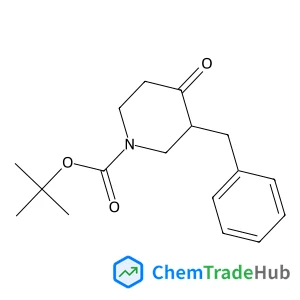
2-Methyl-2-propanyl 3-benzyl-4-oxo-1-piperidinecarboxylate
CAS Number:
193274-82-7
Molecular Formula:
C17H23NO3
Recommended Suppliers







Disclaimer
This page provides academic journal information for reference and research purposes only. We are not affiliated with any journal publishers and do not handle publication submissions. For publication-related inquiries, please contact the respective journal publishers directly.
If you notice any inaccuracies in the information displayed, please contact us at support@chemtradehub.com. We will promptly review and address your concerns.