![1-[(4-Methylphenyl)sulfonyl]-3-(4,4,5,5-tetramethyl-1,3,2-dioxaborolan-2-yl)-1H-pyrrolo[2,3-b]pyridine-5-carbonitrile structure](https://static.chemtradehub.com/structs/143/1434747-57-5-fc0d.webp "1-[(4-Methylphenyl)sulfonyl]-3-(4,4,5,5-tetramethyl-1,3,2-dioxaborolan-2-yl)-1H-pyrrolo[2,3-b]pyridine-5-carbonitrile structure")
1-[(4-Methylphenyl)sulfonyl]-3-(4,4,5,5-tetramethyl-1,3,2-dioxaborolan-2-yl)-1H-pyrrolo[2,3-b]pyridine-5-carbonitrile
CAS Number:
1434747-57-5
Molecular Formula:
C21H22BN3O4S
Xinke Li, Caiyun Liu, Hanchuang Zhu, Kun Wang, Xiaohua Ren, Lixue Ma, Xiaohui Zhang, Mengyuan Liu, Baocun Zhu
Cancer is “the sword of Damocles” that threatens human life and health. Therefore, the diagnosis and treatment of cancer have been receiving much attention. Many overexpressed receptors on the surface of cancer cells provide us with an effective way to specifically identify the cancer cells, and receptor targeting strategies are becoming one of the hot ideas to enhance the ability of fluorescent probes to target tumors. Fluorescent probes connected to ligands are targeted at cancer cell surfaces through receptor-mediated endocytosis. Receptor-targeting probes can image and track cancer cells, determine tumor boundaries, monitor deep lesions, and play a role in clinical medicine, such as fluorescent imaging-guided surgery. In this review, based on the perspective of small molecule fluorescent probes, we reviewed the design ideas, photophysical properties, and applications of receptor-targeting probes for detecting biomarkers in imaging and tracing cancer cells and prospected the future developmental direction of such probes. We hope that this review will provide more ideas for the design and development of active targeting probes for receptors and lead to more applications in the medical field.
Saurabh Mishra, Jer-Lai Kuo, G. Naresh Patwari
DOI: 10.1039/C8CP02448K
Puja Adhikari, Neng Li, Paul Rulis, Wai-Yim Ching
DOI: 10.1039/C8CP05610B
Alexander I. Kuklin, Martina Požar, Anthony Baptista, Aurélien Perera
DOI: 10.1039/C9CP01137D
Silvana S. S. Cardoso
DOI: 10.1039/C8CP03064B
Chao Xu, Feng Long Gu
DOI: 10.1039/C8CP04164D
Amund Ruud, Jonas Sottmann, Ponniah Vajeeston, Helmer Fjellvåg
DOI: 10.1039/C8CP05330H
Lorenz Kranabetter, Paul Martini, Norbert Gitzl, Martin Kuhn, Fatima Saleem, Bilal Rasul, Masoomeh Mahmoodi Darian, Elias Jabbour Al Maalouf, Ivan Sukuba, Alexander Kaiser, Marcelo Goulart, Diethard K. Böhme, Paul Scheier
DOI: 10.1039/C8CP02207K
Gaoqi Weng, Ercheng Wang, Fu Chen, Huiyong Sun, Zhe Wang
DOI: 10.1039/C9CP01674K
Nelson R. Vinueza, Bartłomiej J. Jankiewicz, Vanessa A. Gallardo, John J. Nash, Hilkka I. Kenttämaa
DOI: 10.1039/C8CP03350A
Vasilii Dubrovin, Bernd Büchner, Alexey A. Popov, Stanislav M. Avdoshenko
DOI: 10.1039/C9CP00634F
4-Nitrophenyl phosphate disodium salt hexahydrate is primarily used as a substra...
2-(Trifluoromethyl)-1,3-oxazole-4-carboxylic Acid (CAS: 1060816-01-4) is widely ...
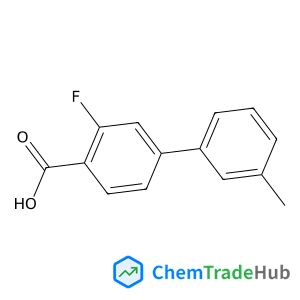
2-Fluoro-4-biphenylcarboxylic acid should be stored in a cool, dry place at room...
Prednisolone-21-Carboxylic Acid is primarily used in the pharmaceutical industry...
4-(Hydrazinomethyl)-1,2,3-benzenetriol (CAS: 3614-72-0) should be stored in a co...
4-Amino-1-methyl-1H-pyrazole-5-carboxylic acid hydrochloride (CAS: 92534-70-8) i...
Dehydropachymic acid (CAS: 77012-31-8) is regulated by various agencies. It fall...
The market and research trends for 6-[(2,2-Dimethylpropanoyl)amino]nicotinic aci...
1,10-Phenanthroline-2,9-dicarbaldehyde should be stored in a cool, dry place awa...
5-Carbamoyl-11-oxo-10,11-dihydro-5H-dibenzo[b,f]azepin-10-yl acetate can be synt...
Analytical Methods welcomes early applications of new analytical and bioanalytical methods and technology demonstrating the potential for societal impact. We require that methods and technology reported in the journal are sufficiently innovative, robust, accurate, and compared to other available methods for the intended application. Developments with interdisciplinary approaches are particularly welcome. Systems should be proven with suitably complex and analytically challenging samples. We encourage developments within, but not limited to, the following technologies and applications: global health, point-of-care and molecular diagnostics biosensors and bioengineering drug development and pharmaceutical analysis applied microfluidics and nanotechnology omics studies, such as proteomics, metabolomics or glycomics environmental, agricultural and food science neuroscience biochemical and clinical analysis forensic analysis industrial process and method development