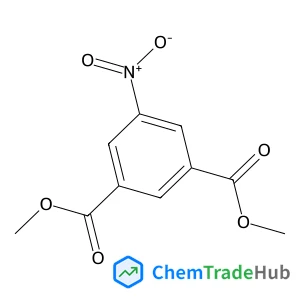
Tris(2-ethylhexyl) 4,4',4''-(1,3,5-triazine-2,4,6-triyltriimino)tribenzoate
CAS Number:
88122-99-0
Molecular Formula:
C48H66N6O6
Yulai Hu, Richard C. D. Brown
A synthesis of 21,22-diepi-membrarollin (14) is described, which employed sequential metal–oxo mediated oxidative cyclisations to introduce six of the seven stereogenic centres.
Adeline Huiling Loo, Alessandra Bonanni, Martin Pumera
DOI: 10.1039/C2AN36199J
Agata Spietelun, Łukasz Marcinkowski, Adam Kloskowski, Jacek Namieśnik
DOI: 10.1039/C3AN36851C
Ashwin Sachdeva, Joe Lee
DOI: 10.1039/C3AN00363A
Jingquan Liu, Na Kong, Xiong Luo, Liang Cui, Rui Wang, Shengyu Feng
DOI: 10.1039/C3AN36929C
Diana E. Bedolla, Saša Kenig, Elisa Mitri, Paolo Ferraris, Alessandro Marcello, Gianluca Grenci, Lisa Vaccari
DOI: 10.1039/C3AN00318C
Bing Xia, Wenyi Zhang, Jisen Shi, Shoujun Xiao
DOI: 10.1039/C3AN00503H
Henna Päkkilä, Sami Blom, Kari Kopra, Tero Soukka
DOI: 10.1039/C3AN00192J
Haihan Chen, Laxmikant V. Saraf, Alexander Laskin
DOI: 10.1039/C2AN36318F
Mark F. Wyatt, Bridget K. Stein, A. Gareth Brenton
DOI: 10.1039/B713073B
Xiaoping Jia, Minli Xu, Yuzhi Wang, Dan Ran, Shan Yang, Min Zhang
DOI: 10.1039/C2AN36313E
When handling lithium chloride hydrate (1:1:1) (CAS: 16712-20-2), it is importan...
4-(4H-1,2,4-Triazol-4-yl)piperidine is generally considered safe for use in phar...
Waste containing 1,3-Thiazole-2-carboxamide (CAS: 16733-85-0) should be collecte...
5-(Difluoromethyl)-2-fluorobenzonitrile (CAS: 934175-58-3) is subject to regulat...
Methyl 3-acetamido-2-thiophenecarboxylate can be synthesized by the reaction of ...
4-Isoquinolinecarbonitrile is a chemical compound with the CAS number 34846-65-6...
Store Methyl 1H-1,2,3-triazole-4-carboxylate (CAS: 877309-59-6) in a cool, dry p...
6-Bromo[1,3]thiazolo[5,4-b]pyridin-2-amine (CAS: 1160791-13-8) is subject to the...
(2S,3S)-2-Ammonio-3-(3,4-dihydroxyphenyl)-3-hydroxypropanoate (CAS: 23651-95-8) ...
7-Bromo-3-methyl-3,4-dihydroquinazolin-4-one is a solid with a crystalline form....

ChemComm publishes urgent research which is of outstanding significance and interest to experts in the field, while also appealing to the journal’s broad chemistry readership. Our communication format is ideally suited to short, urgent studies that are of such importance that they require accelerated publication. Our scope covers all topics in chemistry, and research at the interface of chemistry and other disciplines (such as materials science, nanoscience, physics, engineering and biology) where there is a significant novelty in the chemistry aspects. Major topic areas covered include: Analytical Chemistry Catalysis Chemical Biology and medicinal chemistry Computational Chemistry and Machine Learning Energy and sustainable chemistry Environmental Chemistry Green Chemistry Inorganic Chemistry Materials Chemistry Nanoscience Organic Chemistry Physical Chemistry Polymer Chemistry Supramolecular Chemistry