












Development of a highly sensitive monoclonal antibody based ELISA for detection of benzo[a]pyrene in potable water
Literature Information
Publication Date
2005-05-31
DOI
10.1039/B503636D
Impact Factor
4.616
Authors
Diana Matschulat, Anping Deng, Reinhard Niessner, Dietmar Knopp
View Original
Abstract
In Europe, a limit value of 10 ng L−1 was set by the European Commission for benzo[a]pyrene (B[a]P) in water intended for human consumption (Council Directive 98/83/EC) and, therefore, sensitive and reliable methods are needed to evaluate its presence. We report here on the development of a highly sensitive indirect competitive ELISA for the detection of B[a]P in potable water. Fourteen monoclonal antibodies were generated in mice using novel B[a]P derivatives. The immunoassay with the least interference and the best sensitivity was optimized and characterized. As co-solvent, ten percent methanol (v/v) was determined as the optimum concentration for B[a]P solubilization for use with the developed ELISA. With the purified antibody (clone 22F12) the average IC50 for B[a]P and corresponding detection limit at a signal ∶ noise (S/N) ratio of 3 was 65 ng L−1 and 24 ng L−1, respectively. From the 16 EPA-designated PAHs, only chrysene, indeno[1,2,3-cd]pyrene, and benzo[b]fluoranthene showed a cross-reactivity (CR) higher than 20%. No CR was observed for two- and three-ringed aromatics as well as dibenz[ah]anthracene and benzo[ghi]perylene. The effect of pH value (range 6.5–9.5), ionic strength (specific electric conductivity 1 µS cm−1–2.5 mS cm−1), and inorganic ions (sodium, copper, iron, aluminium, manganese, chloride, sulfate, nitrate, and nitrite at maximum permissible levels according to the Council Directive) on both signal and sensitivity of the ELISA was studied. No significant influence of these parameters on the ELISA competition curve was found. We suggest that the optimized ELISA can be used to monitor potable water samples without previous extraction from the samples. The assay should facilitate the cleanup of B[a]P contaminated sites where B[a]P levels fall close to the limit value of the new drinking water directive.
Related Literature
Electrical double layer properties of spherical oxide nanoparticles
Christian Hunley, Marcelo Marucho
2017-01-16
Paper
DOI: 10.1039/C6CP08174F
Steam reforming of methanol over oxide decorated nanoporous gold catalysts: a combined in situ FTIR and flow reactor study‡
J. Shi, C. Mahr, M. M. Murshed, T. M. Gesing, A. Rosenauer, M. Bäumer, A. Wittstock
2017-03-07
Paper
DOI: 10.1039/C6CP08849J
Selective-releasing-affected lubricant mechanism of a self-assembled MoS2/Mo–S–C nanoperiod multilayer film sliding in diverse atmospheres
J. Xu, T. F. He, L. Q. Chai, L. Qiao, X. Q. Zhang, P. Wang, W. M. Liu
2016-12-20
Paper
DOI: 10.1039/C6CP08356K
Co2SnO4 nanoparticles as a high performance catalyst for oxidative degradation of rhodamine B dye and pentachlorophenol by activation of peroxymonosulfate
Alexandre Barras, Ahmed Addad, Brigitte Sieber, Mokhtar Férid, Sabine Szunerits, Rabah Boukherroub
2017-02-02
Paper
DOI: 10.1039/C6CP08576H
CH3NH3PbI3 films prepared by combining 1- and 2-step deposition: how crystal growth conditions affect properties
Muhamad Z. Mokhtar, Mu Chen, Eric Whittaker, Bruce Hamilton, Nicholas Aristidou, Ali Gholinia, Saif A. Haque, Brian R. Saunders
2017-02-17
Paper
DOI: 10.1039/C7CP00471K
Partitioning of caffeine in lipid bilayers reduces membrane fluidity and increases membrane thickness
Adree Khondker, Alexander Dhaliwal, Richard J. Alsop, Jennifer Tang, An-Chang Shi, Maikel C. Rheinstädter
2017-02-13
Paper
DOI: 10.1039/C6CP08104E
Successive lithiation of acetylene, ethylene and benzene: a comprehensive computational study of large static second hyperpolarizability
Avijit Mondal, Kaushik Hatua, Ria Sinha Roy, Prasanta K. Nandi
2017-01-16
Paper
DOI: 10.1039/C6CP07845A
Theoretical analysis of electrochromism under redox of bis(3-thienyl)/(2-thienyl)hexafluorocyclopentene: effects of charged and substituted systems
Zhi-Xiang Zhang, Pi-Xia Wang, Fu-Quan Bai, Chui-Peng Kong, Hong-Xing Zhang
2017-03-07
Paper
DOI: 10.1039/C7CP00262A
Evidence for photosensitised hydrogen production from water in the absence of precious metals, redox-mediators and co-catalysts
S. Salzl, M. Ertl, G. Knör
2017-02-02
Communication
DOI: 10.1039/C6CP07725K
Ionic conductivity and mixed-ion effect in mixed alkali metaphosphate glasses
Jefferson Esquina Tsuchida, Fabio Aparecido Ferri
2017-02-16
Paper
DOI: 10.1039/C6CP07876A
You might also like
Compound Q&A
What are the main uses of 1H-Indazole-6-carbonitrile (CAS: 141290-59-7)?
1H-Indazole-6-carbonitrile finds applications in pharmaceuticals, where it serve...
141290-59-71H-Indazole-6-carbon...
Compound Q&A
How should waste containing Dioctyl (2E)-2-butenedioate (CAS: 2997-85-5) be handled?
Waste containing Dioctyl (2E)-2-butenedioate (CAS: 2997-85-5) should be collecte...
2997-85-5Dioctyl (2E)-2-buten...
Compound Q&A
What industries use Sodium [(1,2-benzoxazol-3-ylmethyl)sulfonyl]azanide (CAS: 68291-98-5)?
Sodium [(1,2-benzoxazol-3-ylmethyl)sulfonyl]azanide is primarily used in pharmac...
68291-98-5Sodium [(1,2-benzoxa...
Compound Q&A
Are there alternatives to Dimethyl 4-(4,4,5,5-tetramethyl-1,3,2-dioxaborolan-2-yl)-2,6-pyridinedicarboxylate (CAS: 741709-66-0) in synthesis?
Dimethyl 4-(4,4,5,5-tetramethyl-1,3,2-dioxaborolan-2-yl)-2,6-pyridinedicarboxyla...
741709-66-0Dimethyl 4-(4,4,5,5-...
Compound Q&A
How should waste containing 2-Fluoro-6-hydrazinopyridine (CAS: 80714-39-2) be handled?
Waste containing 2-Fluoro-6-hydrazinopyridine (CAS: 80714-39-2) should be manage...
80714-39-22-Fluoro-6-hydrazino...
Compound Q&A
What is 6-Formyl-2-pyridinecarboxylic acid (CAS: 499214-11-8)?
6-Formyl-2-pyridinecarboxylic acid is an organic compound with the molecular for...
499214-11-86-Formyl-2-pyridinec...
Compound Q&A
What is the market or research trend for 3-(3,4-dimethoxyphenyl)-2,5-dimethyl-N-(2-morpholin-4-ylethyl)pyrazolo[1,5-a]pyrimidin-7-amine (CAS: 900874-91-1)?
Research trends for this compound indicate a focus on its potential applications...
900874-91-13-(3,4-dimethoxyphen...
Compound Q&A
How is 9H-Tribenzo[b,d,f]azepine (CAS: 29875-73-8) typically synthesized?
9H-Tribenzo[b,d,f]azepine is typically synthesized via a multi-step process invo...
29875-73-89H-Tribenzo[b,d,f]az...
Compound Q&A
How is 1-Cyclopropyl-7-ethoxy-6-fluoro-8-methoxy-4-oxo-1,4-dihydro-3-quinolinecarboxylic acid (CAS: 1797982-51-4) typically synthesized?
1-Cyclopropyl-7-ethoxy-6-fluoro-8-methoxy-4-oxo-1,4-dihydro-3-quinolinecarboxyli...
1797982-51-41-Cyclopropyl-7-etho...
Compound Q&A
How should waste containing Methyl 3-oxo-1,2,3,4-tetrahydro-6-quinoxalinecarboxylate (CAS: 671820-52-3) be handled?
Waste containing Methyl 3-oxo-1,2,3,4-tetrahydro-6-quinoxalinecarboxylate (CAS: ...
671820-52-3Methyl 3-oxo-1,2,3,4...
Source Journal
Analyst

CiteScore:
7.8
Self-citation Rate:
5.6%
Articles per Year:
653
Analyst publishes analytical and bioanalytical research that reports premier fundamental discoveries and inventions, and the applications of those discoveries, unconfined by traditional discipline barriers.
Recommended Compounds
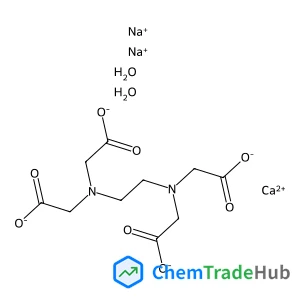
EthylenediaminetetraaceticacidcalciumDisodiumsalthydrate
CAS Number:
23411-34-9
Molecular Formula:
C10H16CaN2Na2O10
Recommended Suppliers






Disclaimer
This page provides academic journal information for reference and research purposes only. We are not affiliated with any journal publishers and do not handle publication submissions. For publication-related inquiries, please contact the respective journal publishers directly.
If you notice any inaccuracies in the information displayed, please contact us at support@chemtradehub.com. We will promptly review and address your concerns.