













Monitoring the effect of ultrafast deactivation of the electronic excited states of DNA bases and polynucleotides following 267 nm laser excitation using picosecond time-resolved infrared spectroscopy
Literature Information
Publication Date
2005-01-18
DOI
10.1039/B414450C
Impact Factor
6.222
Authors
Marina K. Kuimova, Joanne Dyer, Michael W. George, David C. Grills, John M. Kelly, Pavel Matousek, Anthony W. Parker, Xue Zhong Sun, Michael Towrie, Aine M. Whelan
View Original
Abstract
In this paper we demonstrate the use of picosecond time-resolved infrared spectroscopy (ps-TRIR) to monitor the early structural dynamics of DNA bases and polydeoxynucleotides following UV excitation in solution.
Recommended Journals
Related Literature
Surface-induced hydrogelation
Arno M. Bieser, Joerg C. Tiller
2005-06-22
Communication
DOI: 10.1039/B506160A
Synthetic gecko foot-hairs from multiwalled carbon nanotubes
Betul Yurdumakan, Nachiket R. Raravikar, Pulickel M. Ajayan, Ali Dhinojwala
2005-07-05
Communication
DOI: 10.1039/B506047H
Photocatalytic overall water splitting under visible light by TaON and WO3 with an IO3−/I− shuttle redox mediator
Ryu Abe, Tsuyoshi Takata, Hideki Sugihara, Kazunari Domen
2005-06-24
Communication
DOI: 10.1039/B505646B
Non-steady-state living polymerization: a new route to control cationic ring-opening polymerization (CROP) of oxetanevia an activation chain end (ACE) mechanism at ambient temperature
Hassen Bouchékif, Marcia I. Philbin, Eamon Colclough, Allan J. Amass
2005-06-15
Communication
DOI: 10.1039/B417076H
Formation of a long-lived charge-separated state of a zinc phthalocyanine-perylenediimide dyad by complexation with magnesium ion
Shunichi Fukuzumi, Kei Ohkubo, Javier Ortiz, Ana M. Gutiérrez, Fernando Fernández-Lázaro, Ángela Sastre-Santos
2005-06-28
Communication
DOI: 10.1039/B506412K
Size dependent interaction of biofunctionalized CdS nanoparticles with tyrosine at different pH
Amiya Priyam, Anindita Chatterjee, Satyen K. Das, Abhijit Saha
2005-07-13
Communication
DOI: 10.1039/B505960G
Superparamagnetic gadonanotubes are high-performance MRI contrast agents
Balaji Sitharaman, Kyle R. Kissell, Keith B. Hartman, Lesa A. Tran, Andrei Baikalov, Irene Rusakova, Yanyi Sun, Htet A. Khant, Steven J. Ludtke, Wah Chiu, Sabrina Laus, Éva Tóth, Lothar Helm, André E. Merbach, Lon J. Wilson
2005-07-08
Communication
DOI: 10.1039/B504435A
Exploiting isolobal relationships to create new ionic liquids: novel room-temperature ionic liquids based upon (N-alkylimidazole)(amine)BH2+ “boronium” ions
Phillip A. Fox, Scott T. Griffin, W. Matthew Reichert, E. Alan Salter, Ashley B. Smith, Morgan D. Tickell, Benjamin F. Wicker, Eugene A. Cioffi, Robin D. Rogers, Andrzej Wierzbicki
2005-06-16
Communication
DOI: 10.1039/B504631A
Axial bis(terpyridoxy)phosphorus(v) porphyrin: Modulation of PET and EET by Zn2+ or Cd2+ ions
P. Prashanth Kumar, G. Premaladha, Bhaskar G. Maiya
2005-06-24
Communication
DOI: 10.1039/B504029A
You might also like
Compound Q&A
How should waste containing N-Methoxy-N-methyl-1,3-thiazole-5-carboxamide (CAS: 898825-89-3) be handled?
Waste containing N-Methoxy-N-methyl-1,3-thiazole-5-carboxamide (CAS: 898825-89-3...
898825-89-3N-Methoxy-N-methyl-1...
Compound Q&A
How should N-(4-Biphenylyl)dibenzo[b,d]furan-4-amine (CAS: 1318338-47-4) be stored?
N-(4-Biphenylyl)dibenzo[b,d]furan-4-amine should be stored in a tightly sealed c...
1318338-47-4N-(4-Biphenylyl)dibe...
Compound Q&A
What is the market or research trend for 3-Acetamido-5-amino-2,4,6-triiodobenzoic acid (CAS: 1713-07-1)?
The market for 3-Acetamido-5-amino-2,4,6-triiodobenzoic acid (CAS: 1713-07-1) is...
1713-07-13-Acetamido-5-amino-...
Compound Q&A
How should Benzyl 2-O-acetyl-3,4,6-tri-O-benzyl-beta-D-galactopyranoside (CAS: 61820-03-9) be stored?
Benzyl 2-O-acetyl-3,4,6-tri-O-benzyl-beta-D-galactopyranoside (CAS: 61820-03-9) ...
61820-03-9Benzyl 2-O-acetyl-3,...
Compound Q&A
What regulatory guidelines apply to 2-Ethylpiperazine dihydrochloride (CAS: 438050-52-3)?
2-Ethylpiperazine dihydrochloride (CAS: 438050-52-3) is regulated under the Glob...
438050-52-32-Ethylpiperazine di...
Compound Q&A
What regulatory guidelines apply to 1,1'-[1,3-Phenylenebis(methylene)]bis(3-methyl-1H-pyrrole-2,5-dione) (CAS: 119462-56-5)?
1,1'-[1,3-Phenylenebis(methylene)]bis(3-methyl-1H-pyrrole-2,5-dione) (CAS: 11946...
119462-56-51,1'-[1,3-Phenyleneb...
Compound Q&A
Are there alternatives to 5-Fluoro-2-(1-pyrrolidinyl)pyridine (CAS: 1287217-79-1) in synthesis?
Several alternatives can be used in the synthesis of 5-Fluoro-2-(1-pyrrolidinyl)...
1287217-79-15-Fluoro-2-(1-pyrrol...
Compound Q&A
What precautions should be taken when handling 1-((2R,3R,4R,5R)-5-((bis(4-methoxyphenyl)(phenyl)methoxy)methyl)-4-hydroxy-3-methoxytetrahydrofuran-2-yl)-5-methylpyrimidine-2,4(1H,3H)-dione (CAS: 153631-19-7)?
Proper personal protective equipment (PPE) must be worn when handling this compo...
153631-19-71-((2R,3R,4R,5R)-5-(...
Compound Q&A
What precautions should be taken when handling 6-Bromoimidazo[1,2-a]pyridin-8-amine (CAS: 676371-00-9)?
When handling 6-Bromoimidazo[1,2-a]pyridin-8-amine, it is important to wear appr...
676371-00-96-Bromoimidazo[1,2-a...
Compound Q&A
Are there alternatives to (2S,4R)-4-(4-Nitrobenzyl)pyrrolidine-2-carboxylic acid hydrochloride (CAS: 1049740-22-8) in synthesis?
Alternatives to (2S,4R)-4-(4-Nitrobenzyl)pyrrolidine-2-carboxylic acid hydrochlo...
1049740-22-8(2S,4R)-4-(4-Nitrobe...
Source Journal
Chemical Communications

CiteScore:
8.6
Self-citation Rate:
4.7%
Articles per Year:
2458
ChemComm publishes urgent research which is of outstanding significance and interest to experts in the field, while also appealing to the journal’s broad chemistry readership. Our communication format is ideally suited to short, urgent studies that are of such importance that they require accelerated publication. Our scope covers all topics in chemistry, and research at the interface of chemistry and other disciplines (such as materials science, nanoscience, physics, engineering and biology) where there is a significant novelty in the chemistry aspects. Major topic areas covered include: Analytical Chemistry Catalysis Chemical Biology and medicinal chemistry Computational Chemistry and Machine Learning Energy and sustainable chemistry Environmental Chemistry Green Chemistry Inorganic Chemistry Materials Chemistry Nanoscience Organic Chemistry Physical Chemistry Polymer Chemistry Supramolecular Chemistry
Recommended Compounds


N1,N1-Bis(4-aminophenyl)benzene-1,4-diamine trihydrochloride
CAS Number:
114254-48-7
Molecular Formula:
C18H21Cl3N4
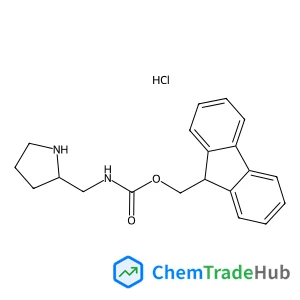
(S)-(9H-Fluoren-9-yl)methyl (pyrrolidin-2-ylmethyl)carbamate hydrochloride
CAS Number:
1217813-15-4
Molecular Formula:
C20H23ClN2O2

4-(Dimethylaminomethyl)phenylacetic acid hydrochloride
CAS Number:
99985-52-1
Molecular Formula:
C11H16ClNO2
Recommended Suppliers




Disclaimer
This page provides academic journal information for reference and research purposes only. We are not affiliated with any journal publishers and do not handle publication submissions. For publication-related inquiries, please contact the respective journal publishers directly.
If you notice any inaccuracies in the information displayed, please contact us at support@chemtradehub.com. We will promptly review and address your concerns.