












Oligomerization and cyclization reactions of acetylene
Literature Information
Publication Date
2004-12-10
DOI
10.1039/B412585A
Impact Factor
3.676
Authors
View Original
Abstract
Acetylene was pyrolyzed in a flow system at pressures between 104 and 403 Torr and temperatures between 854 and 971 K. Products were analyzed by gas chromatography with flame ionization and mass spectrometric detection. In some experiments the reactor was placed in the chromatographic oven to limit condensation. Twenty-four products were detected, of which fifteen were found to be primary. Orders and Arrhenius parameters were found for thirteen products. The results were interpreted in terms of a radical mechanism with 24 reactions for pure acetylene. Radical addition to acetylene produced chemically activated radicals, which could either eliminate a hydrogen atom or add more acetylene. If the radical contained five or more atoms, cyclization to form cyclopentadiene or an aromatic compound, respectively, was also possible. It was suggested that radical recombination could produce chemically activated intermediates that could cyclize to form cyclohexadienes. Addition of neopentane introduced methyl radicals, which could participate in another series of ten chemically activated acetylene addition and hydrogen elimination reactions to form propyne, cyclopentadiene and toluene. Five quotients of rate constants were calculated for competitive reactions.
Related Literature
Chemistry in one dimension
Pierre-François Loos, Caleb J. Ball, Peter M. W. Gill
2014-12-11
Paper
DOI: 10.1039/C4CP03571B
Topological states modulation of Bi and Sb thin films by atomic adsorption
Hongmei Liu, Xiaoli Wang, Guangliang Cui, Pinhua Zhang, Dapeng Zhao, Shuaihua Ji
2014-12-10
Paper
DOI: 10.1039/C4CP04502E
Ruthenium based nanostructures driven by morphological controls as efficient counter electrodes for dye-sensitized solar cells
Jeesoo Seok, Ka Yeon Ryu, Jin Ah Lee, Nam-Suk Lee, Jeong Min Baik, Joo Gon Kim, Min Jae Ko, Kyungkon Kim, Myung Hwa Kim
2014-12-18
Communication
DOI: 10.1039/C4CP04506H
Radiolysis of crown ether–ionic liquid systems: identification of radiolytic products and their effect on the removal of Sr2+ from nitric acid
Yinyong Ao, Weijin Yuan, Tianlin Yu, Jing Peng, Jiuqiang Li, Maolin Zhai, Long Zhao
2014-12-11
Paper
DOI: 10.1039/C4CP04294H
Accurate calibration and control of relative humidity close to 100% by X-raying a DOPC multilayer
Yicong Ma, Sajal K. Ghosh, Sambhunath Bera, Zhang Jiang, Stephanie Tristram-Nagle, Laurence B. Lurio, Sunil K. Sinha
2014-12-15
Paper
DOI: 10.1039/C4CP04407J
Oxygen reduction reaction on neighboring Fe–N4 and quaternary-N sites of pyrolized Fe/N/C catalyst
Adhitya G. Saputro
2014-12-03
Paper
DOI: 10.1039/C4CP04811C
Synergistic effects of nonmetal co-doping with sulfur in anatase TiO2: a DFT + U study
Zong-Yan Zhao, Qing-Ju Liu
2014-12-04
Paper
DOI: 10.1039/C4CP05065G
Pressure-induced phase transition of BiOF: novel two-dimensional layered structures
Dawei Zhou, Chunying Pu, Chaozheng He, Cheng Lu, Gang Bao
2015-01-06
Paper
DOI: 10.1039/C4CP05142D
Adsorbate-driven morphological changes on Cu(111) nano-pits
F. M. Hoffmann, J. Hrbek, I. Waluyo, J. A. Boscoboinik, D. J. Stacchiola
2014-12-09
Paper
DOI: 10.1039/C4CP05088F
Controlled direct growth of Al2O3-doped HfO2 films on graphene by H2O-based atomic layer deposition
Li Zheng, Xinhong Cheng, Yuehui Yu, Yahong Xie, Xiaolong Li, Zhongjian Wang
2014-12-11
Paper
DOI: 10.1039/C4CP04957H
You might also like
Compound Q&A
What precautions should be taken when handling 4-(2-Furylmethyl)thiomorpholine 1,1-dioxide (CAS: 79206-94-3)?
When handling 4-(2-Furylmethyl)thiomorpholine 1,1-dioxide (CAS: 79206-94-3), it ...
79206-94-34-(2-Furylmethyl)thi...
Compound Q&A
What precautions should be taken when handling 4-Chloro-N-[2-(4-morpholinyl)ethyl]benzamide (CAS: 71320-77-9)?
When handling 4-Chloro-N-[2-(4-morpholinyl)ethyl]benzamide (CAS: 71320-77-9), it...
71320-77-94-Chloro-N-[2-(4-mor...
Compound Q&A
How should waste containing 2-[2-(2-Methoxyethoxy)ethoxy]ethyl 4-methylbenzenesulfonate (CAS: 62921-74-8) be handled?
Waste containing this compound (CAS: 62921-74-8) should be handled according to ...
62921-74-82-[2-(2-Methoxyethox...
Compound Q&A
How should waste containing (S)-Methyl 2-amino-3-cyclohexylpropanoate be handled?
Waste containing (S)-Methyl 2-amino-3-cyclohexylpropanoate should be collected i...
40056-18-6(S)-Methyl 2-amino-3...
Compound Q&A
How is 5-({4-[(2S,4R)-4-Hydroxy-2-methyltetrahydro-2H-pyran-4-yl]-2-thienyl}sulfanyl)-1-methyl-1,3-dihydro-2H-indol-2-one (CAS: 166882-70-8) typically synthesized?
This compound can be synthesized using a multi-step process involving the conjug...
166882-70-85-({4-[(2S,4R)-4-Hyd...
Compound Q&A
Are there alternatives to (2E)-3-(3,4-Dichlorophenyl)acrylic acid (CAS: 7312-27-8) in synthesis?
There are several alternatives to (2E)-3-(3,4-Dichlorophenyl)acrylic acid in syn...
7312-27-8(2E)-3-(3,4-Dichloro...
Compound Q&A
How should Ethyl 6-(2-nitrophenyl)imidazo[2,1-b][1,3]thiazole-3-carboxylate (CAS: 925437-84-9) be stored?
Ethyl 6-(2-nitrophenyl)imidazo[2,1-b][1,3]thiazole-3-carboxylate (CAS: 925437-84...
925437-84-9Ethyl 6-(2-nitrophen...
Compound Q&A
How should waste containing 2-(1,3-Thiazol-2-yl)ethanamine (CAS: 18453-07-1) be handled?
Waste containing 2-(1,3-Thiazol-2-yl)ethanamine (CAS: 18453-07-1) should be coll...
18453-07-12-(1,3-Thiazol-2-yl)...
Compound Q&A
How is Methyl 5-iodo-2-methylbenzoate (CAS: 103440-54-6) typically synthesized?
Methyl 5-iodo-2-methylbenzoate can be synthesized through the iodination of meth...
103440-54-6Methyl 5-iodo-2-meth...
Compound Q&A
How is 5-Chloro[1,2,4]triazolo[1,5-a]pyridine (CAS: 1427399-34-5) typically synthesized?
5-Chloro[1,2,4]triazolo[1,5-a]pyridine is commonly synthesized via the condensat...
1427399-34-55-Chloro[1,2,4]triaz...
Source Journal
Physical Chemistry Chemical Physics

CiteScore:
5.5
Self-citation Rate:
10.3%
Articles per Year:
3036
Physical Chemistry Chemical Physics (PCCP) is an international journal co-owned by 19 physical chemistry and physics societies from around the world. This journal publishes original, cutting-edge research in physical chemistry, chemical physics and biophysical chemistry. To be suitable for publication in PCCP, articles must include significant innovation and/or insight into physical chemistry; this is the most important criterion that reviewers and Editors will judge against when evaluating submissions. The journal has a broad scope and welcomes contributions spanning experiment, theory, computation and data science. Topical coverage includes spectroscopy, dynamics, kinetics, statistical mechanics, thermodynamics, electrochemistry, catalysis, surface science, quantum mechanics, quantum computing and machine learning. Interdisciplinary research areas such as polymers and soft matter, materials, nanoscience, energy, surfaces/interfaces, and biophysical chemistry are welcomed if they demonstrate significant innovation and/or insight into physical chemistry. Joined experimental/theoretical studies are particularly appreciated when complementary and based on up-to-date approaches.
Recommended Compounds
![[4-(Heptyloxy)phenyl]boronic acid structure](https://static.chemtradehub.com/structs/136/136370-19-9-ad33.webp "[4-(Heptyloxy)phenyl]boronic acid structure")
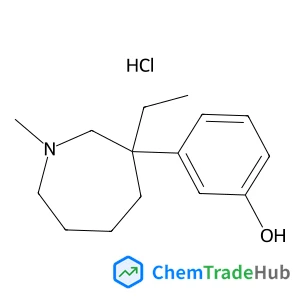
3-(3-Ethyl-1-methyl-3-azepanyl)phenol hydrochloride (1:1)
CAS Number:
59263-76-2
Molecular Formula:
C15H24ClNO
![4-{2-[4-(2-Methyl-2-propanyl)phenyl]ethoxy}quinazoline structure](https://static.chemtradehub.com/structs/120/120928-09-8-d3db.webp "4-{2-[4-(2-Methyl-2-propanyl)phenyl]ethoxy}quinazoline structure")
4-{2-[4-(2-Methyl-2-propanyl)phenyl]ethoxy}quinazoline
CAS Number:
120928-09-8
Molecular Formula:
C20H22N2O
Recommended Suppliers





Disclaimer
This page provides academic journal information for reference and research purposes only. We are not affiliated with any journal publishers and do not handle publication submissions. For publication-related inquiries, please contact the respective journal publishers directly.
If you notice any inaccuracies in the information displayed, please contact us at support@chemtradehub.com. We will promptly review and address your concerns.